
5 min read
Belt Guide: Widths, Materials and Tying
How to choose, tie and care for a martial arts belt, with a step by step tying method and notes on colour systems.
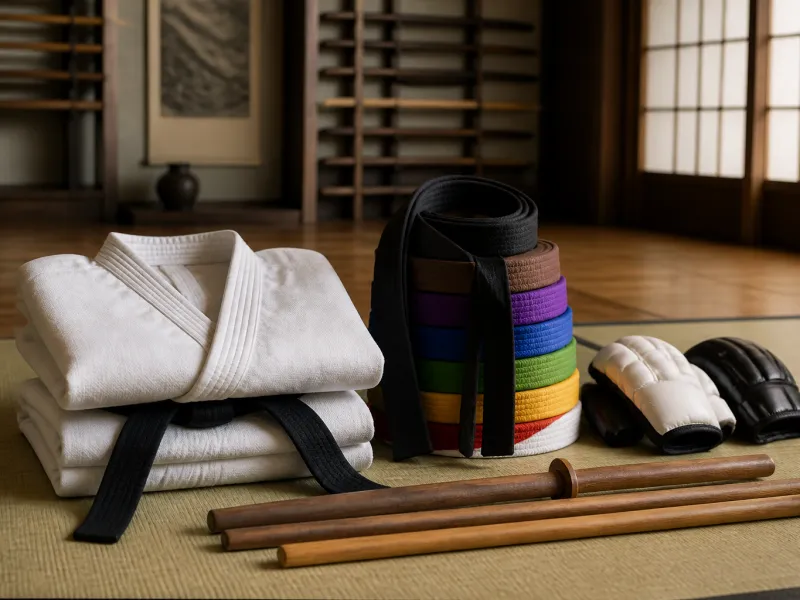
The belt is one of the simplest parts of a martial arts uniform, and also one of the most visible. It signals grade, holds the jacket closed, and for most practitioners becomes a small, personal marker of years of training. Getting the width, length and knot right matters more than it might first appear.
This guide covers common belt widths and lengths, the materials belts are made from, a step by step method for tying a standard martial arts belt, why colour systems vary between schools, and how to care for a belt over its working life.
01
Belt widths and lengths
Belts, sometimes called an obi, are generally sized to match both the width of the wearer's gi jacket and their waist measurement, since a belt needs to be long enough to wrap around the body twice and still leave two even ends for the knot. A belt that is too short will not tie securely, while one that is too long leaves loose, flapping ends that can be a nuisance in training.
| Approx. waist | Typical belt length | Typical width |
|---|---|---|
| Up to 60 cm | 220 to 240 cm | 3.5 to 4 cm |
| 60 to 80 cm | 240 to 260 cm | 4 to 4.5 cm |
| 80 to 100 cm | 260 to 280 cm | 4.5 to 5 cm |
| 100 cm and above | 280 to 300 cm | 5 cm |
Width generally scales with belt length in most ranges, since a longer belt is usually bought for a larger person who also wears a wider gi. As a rough check, a correctly sized belt should wrap around the waist twice and still leave both ends long enough to tie a secure knot with roughly equal length hanging on each side.
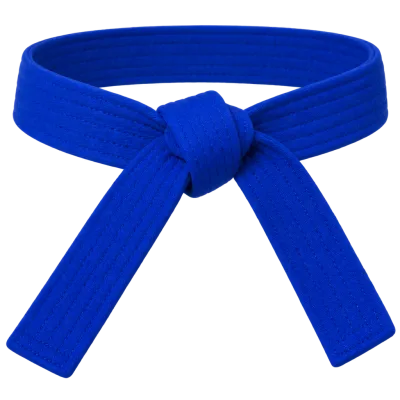 Matching productMartial arts beltAmazon →
02
Belt materials
Most training belts are made from cotton or a cotton and polyester blend, woven or stitched into several layers for strength and body, since a thin single layer of fabric would not hold a knot well or last under repeated tying and pulling. Some higher grade or ceremonial belts use heavier, more tightly woven cotton for a denser, more structured feel, while beginner and children's belts are often lighter and more flexible to make tying easier while a student is still learning.
- Cotton: breathable, common, and generally holds a knot well once broken in.
- Cotton and polyester blend: more resistant to fraying and colour fading, easier to care for.
- Satin: sometimes used for ceremonial, demonstration or rank stripe belts rather than everyday training.
03
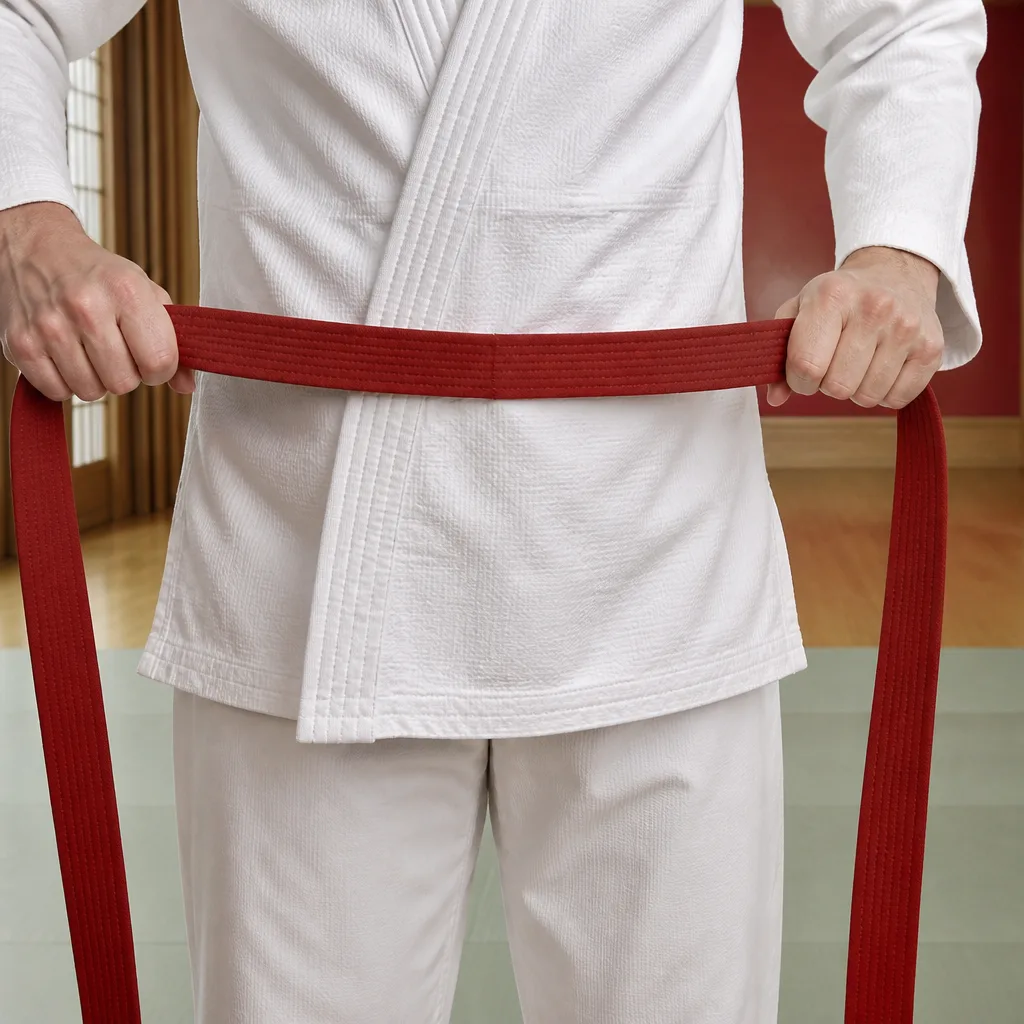
How to tie a belt step by step
The standard method used across most striking and grappling arts follows the same basic steps, though minor variations exist between schools.
- Find the middle of the belt and hold it against your stomach, just below the navel, with equal lengths hanging on each side.
- Wrap both ends around your back, crossing them behind you, and bring them back around to the front.
- Cross the right end over the left end at the front, then tuck the right end up and under both layers of belt, pulling it through so it points upward.
- Take that same end and cross it back over the other end, forming a loop.
- Pass the end through the loop from underneath, and pull both ends firmly outward and down to tighten the knot flat against your stomach.
- Adjust so both ends hang at roughly equal length, and check the knot sits flat rather than twisted.
A correctly tied belt should form a flat, square knot that stays secure through normal training movement without needing to be retied constantly. If your knot repeatedly slips or comes undone, the belt may be too long, too short, or simply need a firmer final pull before you let go.
 Matching productBo staffAmazon →
04
Why colour systems vary
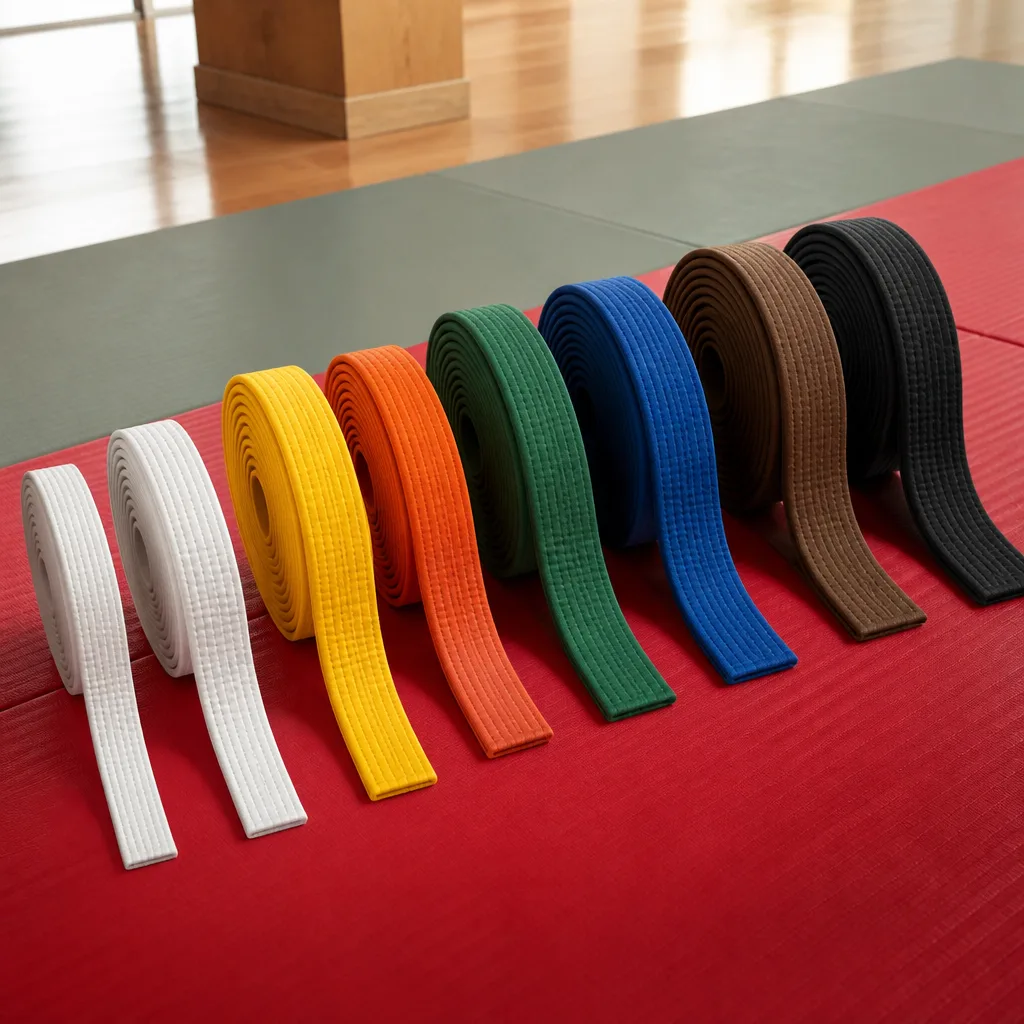
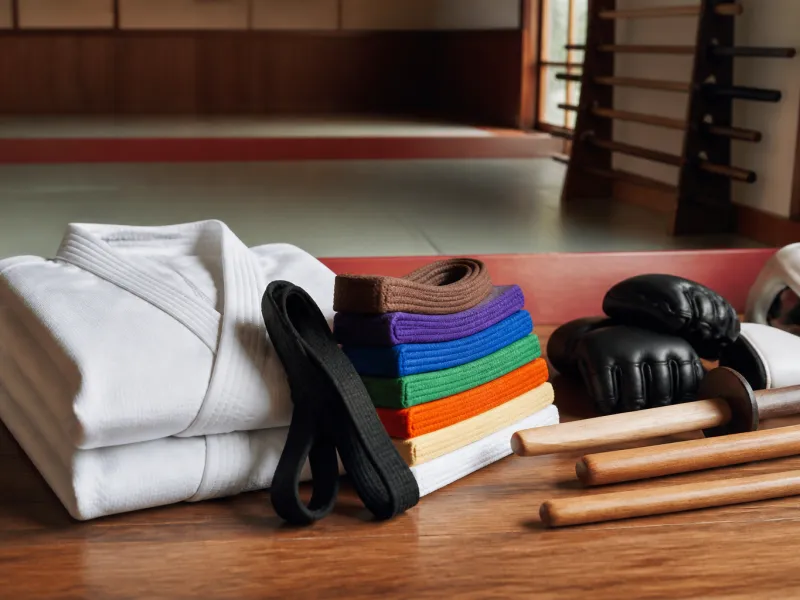
Belt colour progression is often assumed to be universal, but it is not. Different martial arts, and often different schools within the same art, use their own sequence of colours between white and black, sometimes with additional stripes or tabs marking progress within a single colour. A yellow belt in one school may represent a different stage of training than a yellow belt in another, even within the same discipline. Kyu grades below black belt and dan grades above it follow a similar pattern: the underlying idea is broadly shared, but the specific colours, stripes and requirements for each step vary by federation and by individual club.
| Common element | Why it varies |
|---|---|
| Number of colour grades | Different schools use different numbers of steps between white and black |
| Meaning of a specific colour | The same colour can sit at different points in different systems |
| Stripes and tabs | Used by some schools to mark progress within a colour, not by others |
| Requirements per grade | Set independently by each federation or club, not by a single global standard |
Because of this variation, always follow your own instructor's or federation's belt system rather than assuming a colour means the same thing everywhere. Our uniforms and belts overview brings the belt topic together with the wider uniform picture across styles.
05
Caring for your belt
Unlike a gi jacket, a belt is traditionally washed rarely, if ever, in many schools, partly out of respect for the training and history the belt is felt to represent, and partly because frequent washing can cause a belt to fray, fade or lose its shape faster than the jacket and trousers it accompanies. If a belt does need cleaning for hygiene reasons, a gentle hand wash in cool water, followed by air drying flat, is gentler than a machine cycle.
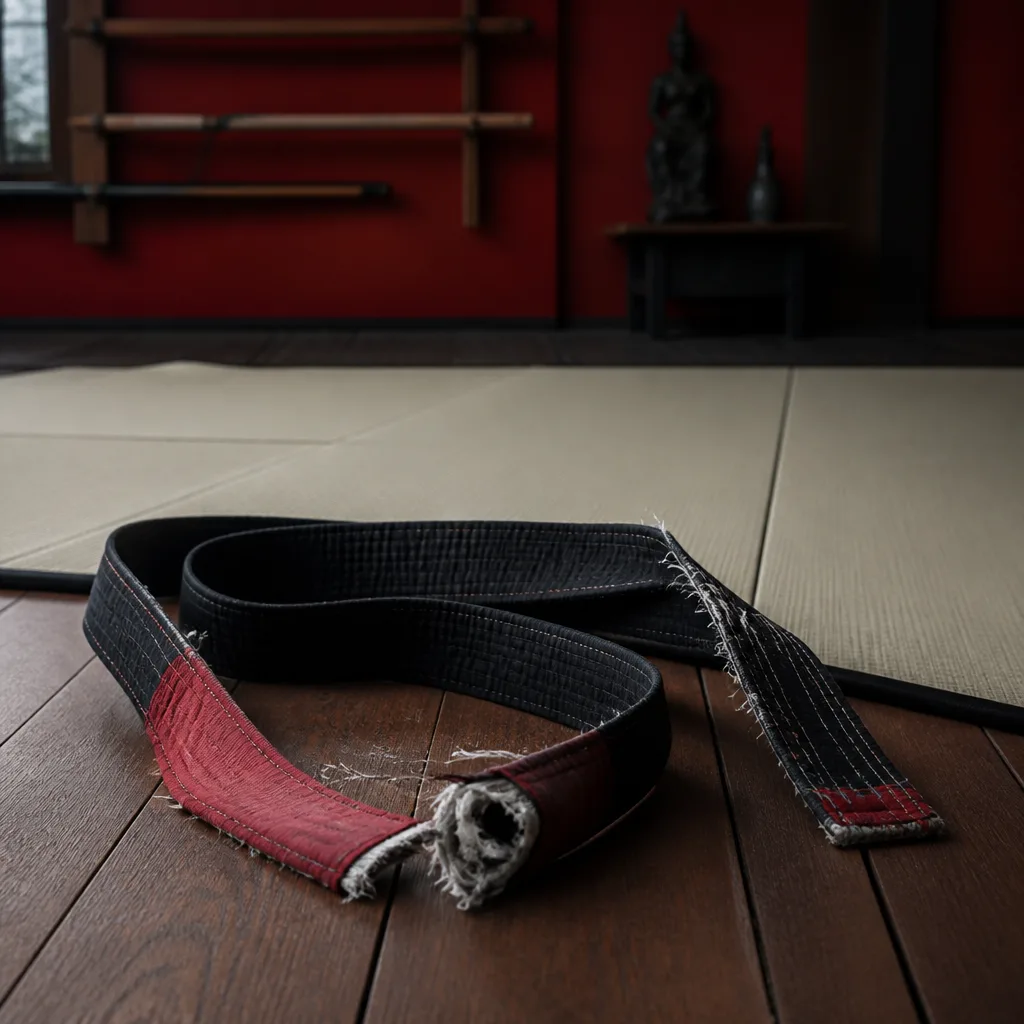
Frayed edges and a slightly softened, worn appearance are normal over years of use and are often seen as a natural record of time spent training rather than a fault to correct. If stitching begins to come apart at the ends, a simple repair or replacement is usually more practical than trying to reverse general wear.
 Matching productSports detergentAmazon →
06
Frequently asked questions
How do I know if my belt is the right length?
A well sized belt wraps around the waist twice and still leaves both ends long enough to tie a secure, flat knot with roughly equal length hanging on each side.
Is there a universal belt colour system?
No. Colour systems and the number of grades between white and black vary between martial arts and between individual schools, even within the same discipline.
Should I wash my belt like the rest of my gi?
Many schools avoid washing belts frequently, both for tradition and because frequent washing can wear them out faster. A gentle hand wash and air dry is the safer approach when cleaning is needed.
Why does my knot keep coming loose?
This usually points to incorrect length for your build, an incomplete final pull when tightening, or a knot that has been tied slightly twisted rather than flat.
What is the difference between kyu and dan grades?
Kyu grades generally run from beginner level up to black belt, often shown by different coloured belts, while dan grades represent black belt level and beyond, with specific stripe or bar systems varying by federation.
Explore
Read next
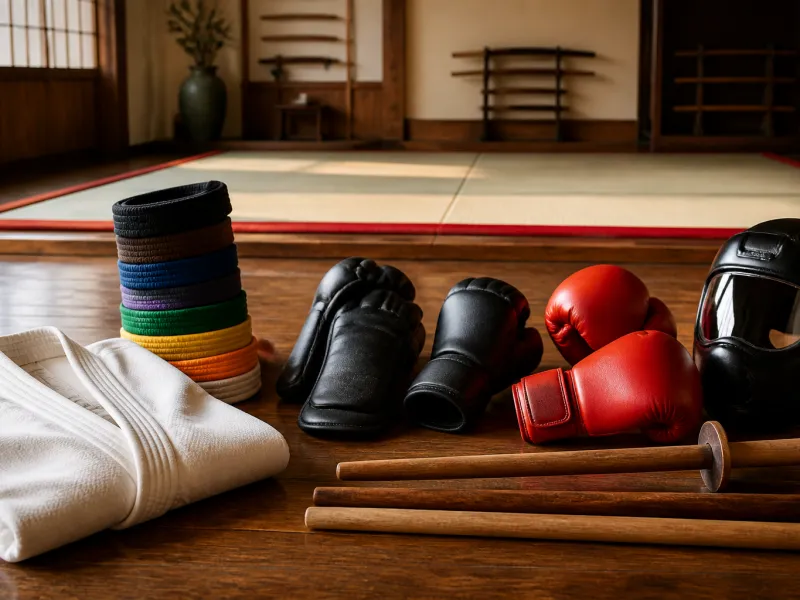 Martial Arts and Their Equipment: A Complete OverviewAn overview of the martial arts covered on budoshop.com and the uniforms, protective gear and training weapons each one typically uses.
 Martial Arts Equipment Buying GuideA practical, step by step guide to buying the right martial arts equipment for your art and level, from your first uniform to protective ge…
 Uniforms and Belts ExplainedA guide to how gi, dobok and hakama are constructed, what federations allow, and how belt colours and grading systems work across schools.