
6 min read
Uniforms and Belts Explained
A guide to how gi, dobok and hakama are constructed, what federations allow, and how belt colours and grading systems work across schools.
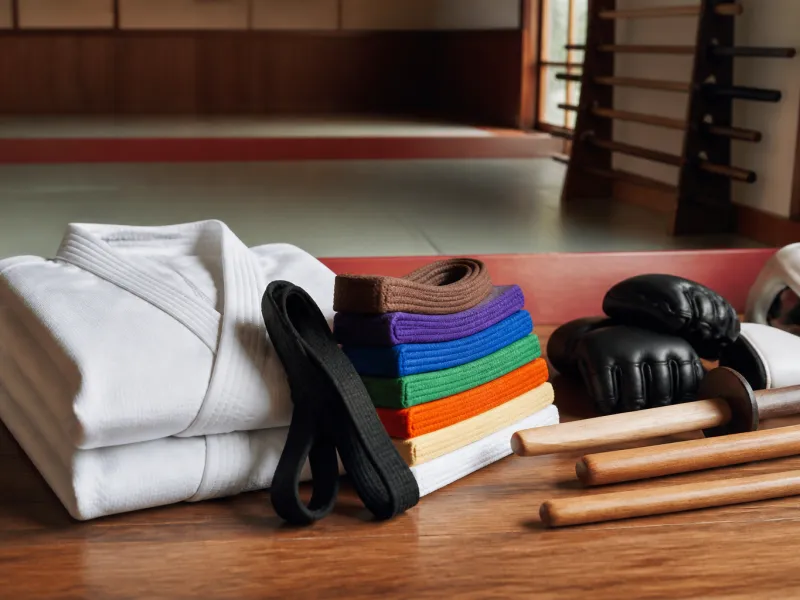
The uniform is the most visible piece of martial arts equipment, but its construction carries real practical meaning. The weave, weight and cut of a gi affect how it handles grips, strikes and washing, and the belt worn with it marks a student's progress through a grading system. This page explains both in plain language, so that the choices behind a uniform and a belt make sense before you buy either.
01
How a gi is built
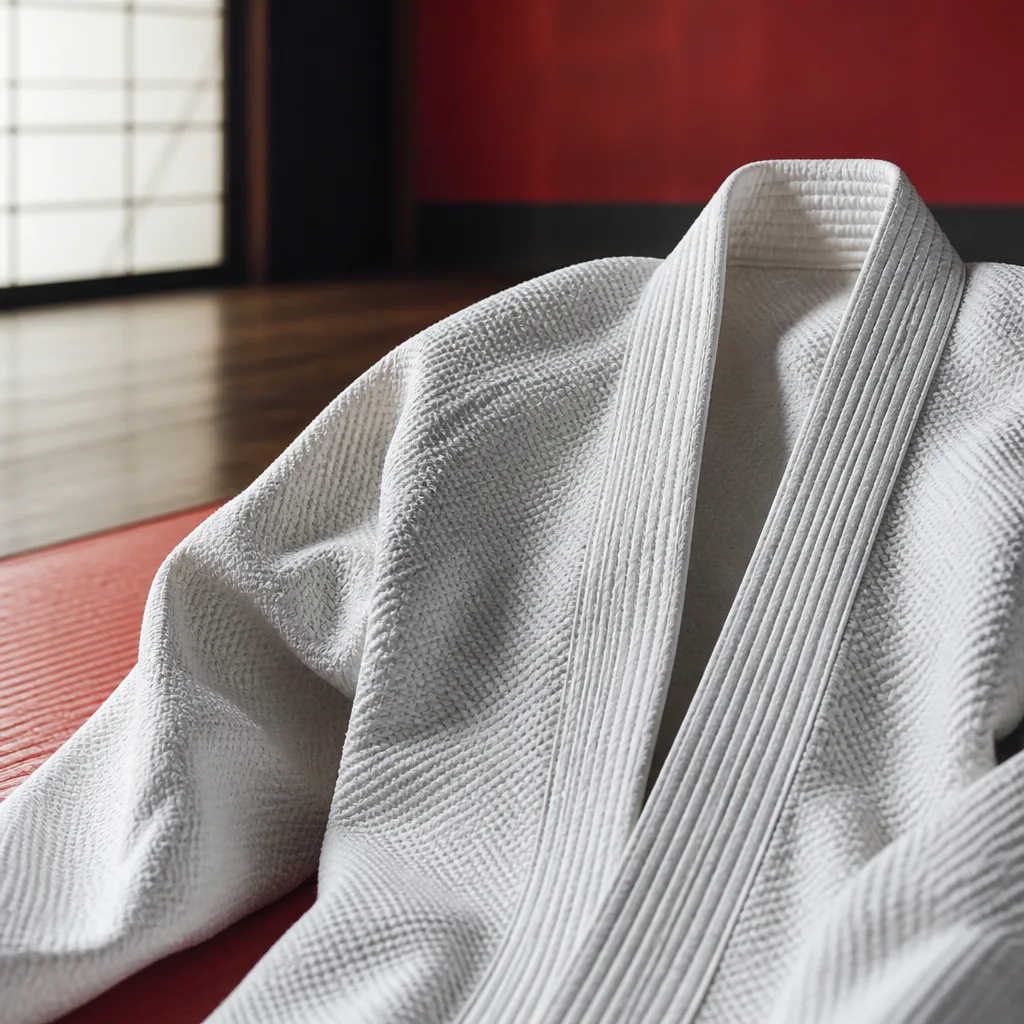
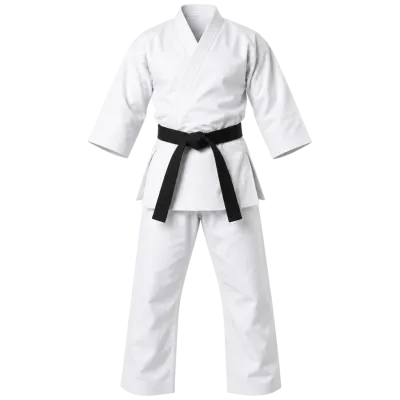
A gi, short for keikogi, usually consists of a jacket, trousers and a belt. The jacket is the part that varies most between arts, since it has to survive very different stresses. A judogi jacket is gripped, pulled and thrown against constantly, so it needs a dense, reinforced weave. A karategi jacket is worn for fast strikes and kicks, so it favours a lighter, more flexible weave. Trousers are generally simpler, cut for freedom of movement at the hips and knees, sometimes reinforced at the knees for arts with frequent kneeling or ground work.
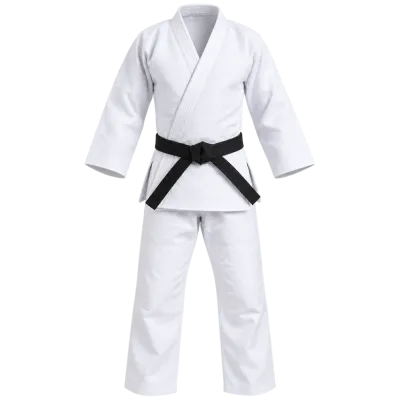 Matching productJudogiAmazon →
02
Weaves and weights
Gi fabric is woven in a few recognisable patterns, each suited to a different purpose.
| Weave | Description | Typical use |
|---|---|---|
| Single weave | A simple, lighter weave with fewer threads per pass | Karate, lightweight training and hot climates |
| Double weave | A denser weave, heavier and more durable | Judo and grappling where grip strength matters |
| Pearl weave | A textured weave often used in BJJ, balancing weight and grip resistance | Brazilian jiu jitsu |
| Ripstop | A reinforced weave with a grid pattern that resists tearing | Trousers and lightweight competition cuts |
Weight is usually described in grams per square metre (gsm) or, for some products, in ounces (oz). Competition judogi jackets are typically in the region of 450 to 750 gsm, while karategi and taekwondo dobok are usually lighter. A heavier gi tends to be more durable and slower to wear out under grip and pull, but it is also warmer to train in and takes longer to dry. See the gi weight glossary entry and the pearl weave, single weave and double weave entries for more detail on each term.
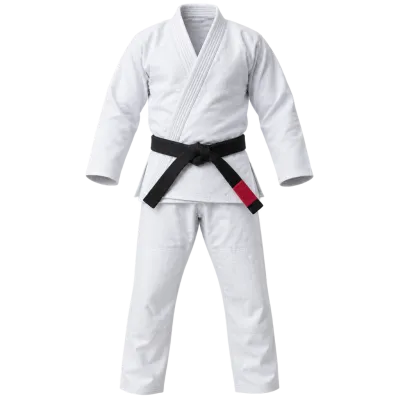 Matching productBJJ giAmazon →
03
Cuts, colours and what federations allow
Cut refers to how loosely or closely a gi is tailored. A competition cut is often trimmer through the body and sleeves, which can reduce how much fabric an opponent has to grip in grappling arts, while a training cut is usually roomier and more comfortable for long sessions. Federations that regulate competition, such as the IJF for judo, the IBJJF for Brazilian jiu jitsu and the WKF for karate, set limits on sleeve length, jacket length and how much space is allowed between the body and the fabric, precisely to prevent a cut that is too tight or too loose from giving an unfair advantage.
Colour is traditionally white in judo, karate and many other arts, since white was historically the plain, undyed cloth available and remains the standard for grading and most competition. Blue is also permitted in some judo competition formats to help officials and spectators tell competitors apart. BJJ competitions under organisations such as the IBJJF allow a wider range of approved colours, including white, blue and black, within specific shade rules. Always check your federation's current uniform rules before a competition, since an unapproved colour or cut can mean disqualification regardless of how well the gi performs in training.
 Matching productKarate giAmazon →
04
Dobok and hakama
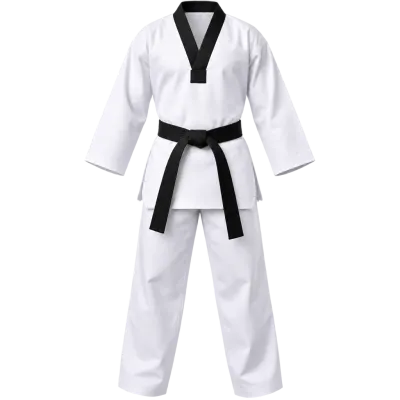
Not every art uses the same jacket and trouser combination. Taekwondo uses a dobok, which is generally lighter than a judogi or karategi and, for World Taekwondo style, is often cut with a V-neck top that is pulled over the head rather than wrapped and tied like a traditional jacket. This changes how it is put on and how it fits across the shoulders.
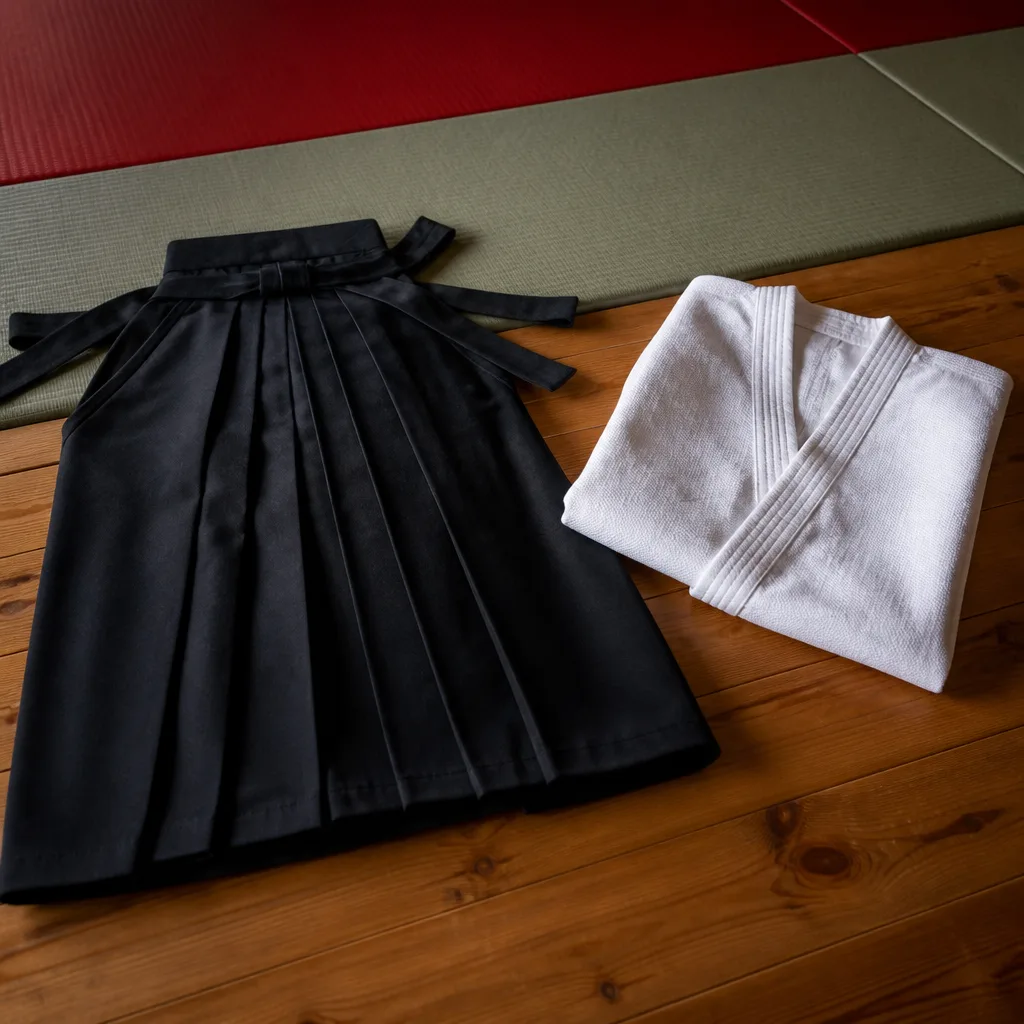
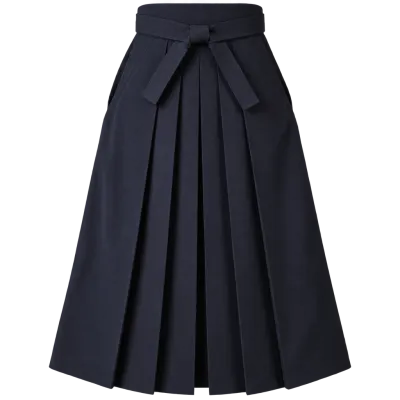
Aikido and some traditional Japanese arts add a hakama, a pleated, wide legged garment worn over the gi trousers that traditionally has seven pleats, each said to represent a virtue. A hakama is usually introduced at a certain grade rather than worn from the first class, and putting it on and folding it correctly is itself a skill many schools teach explicitly. See the aikido hakama guide for a full explanation, and the taekwondo dobok guide for details on dobok cuts and closures.
 Matching productTaekwondo dobokAmazon →
05
Rash guards and no-gi training
Some grappling training, particularly in BJJ and mixed martial arts, is done without a gi at all. A rash guard, a snug fitting long or short sleeved top made from stretch fabric, is worn instead, often paired with fitted shorts or spats. No-gi training removes the option of gripping fabric, which changes technique significantly, and rash guards are chosen for a tight fit that resists grips on the fabric itself and wicks sweat during hard training.
06
Belt colours and what they mean
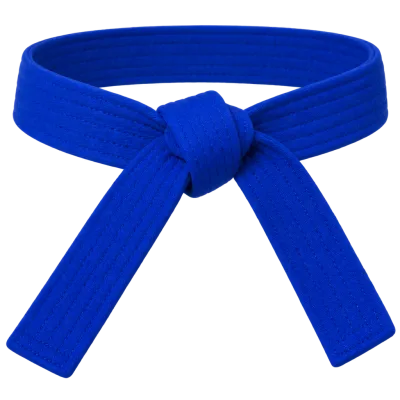
The belt, called obi in Japanese, does two jobs: it closes the jacket and it signals grade. Belt colour systems are one of the most varied parts of martial arts equipment, because while the general idea of progressing from a lighter colour towards black is widespread, the exact colours, the number of steps and the order between them are set by each school or federation rather than by any single universal standard.
| Element | Typical range | Notes |
|---|---|---|
| Belt colours | White through to black, with various colours between | Order and exact colours vary by school and art |
| Belt width | Roughly 4 to 5 cm | Wider for adult sizes, narrower for children's belts |
| Belt length | Long enough to wrap twice around the waist and tie with both ends reaching a similar length | Sized against waist measurement, not height |
| Kyu grades | Coloured belts below black belt | Usually counted downward, for example from a higher number to a lower one as skill increases |
| Dan grades | Black belt and beyond | Usually counted upward from first dan |
 Matching productMartial arts beltAmazon →
07
Kyu and dan systems vary by school
Kyu grades are the coloured belt ranks a student passes through before reaching black belt, and dan grades are the ranks held once black belt is achieved. Both systems trace back to Japanese arts and have since been adopted, with local variations, by many other martial arts. The number of kyu grades, the colours assigned to each, and how quickly a student can test between them differ from school to school and from federation to federation, even within the same art. Some schools add a stripe or tab to a belt to mark progress within a grade rather than issuing a new belt colour each time. Because of this variation, always follow the specific colour and grading structure your own instructor uses rather than assuming another school's system applies. See the kyu grades and dan grades glossary entries for more background, and our dedicated belt guide and tying instructions for how to size, care for and tie a belt correctly.
08
Choosing and caring for a uniform
When choosing a gi, dobok or hakama, prioritise the weave and weight suited to your art over appearance alone, and check your federation's rules if you compete. For sizing, compare your height in centimetres, and where given your chest and sleeve length, against the seller's chart, since gi sizing systems are not standardised across all makers. New cotton gi can also shrink noticeably after the first few washes, so many students choose a slightly larger size initially or follow the maker's guidance. Our gi sizing and shrinkage guide and gi care and washing guide cover both topics in depth, and our general buying guide walks through the wider purchase process.
 Matching productSports detergentAmazon →
09
Frequently asked questions
What is the difference between a judogi and a karategi?
A judogi is generally heavier and more reinforced to withstand gripping and throwing, while a karategi is lighter and cut for freedom of movement in striking. Wearing the wrong type for your art can affect comfort, durability and, in competition, approval.
Can I wear any belt colour I like?
No. Belt colour is awarded by your instructor at grading and reflects your current level within that school's system. Wearing an unearned colour is considered disrespectful in most traditions.
Why do belt systems differ between schools?
Kyu and dan grading was developed and adapted independently by many schools and federations over time, so colours, the number of grades and the pace of progress vary. There is no single worldwide standard.
Do I need a hakama as a beginner?
Usually not. Many schools introduce the hakama at a certain grade rather than from the first class. Ask your instructor when it becomes appropriate for you.
Is a rash guard a replacement for a gi?
Only for no-gi training. If your class or competition format requires a gi, a rash guard alone is not a substitute, though it may be worn underneath the jacket by some students.
 Matching productHakamaAmazon →
Explore
Read next
 Martial Arts and Their Equipment: A Complete OverviewAn overview of the martial arts covered on budoshop.com and the uniforms, protective gear and training weapons each one typically uses.
 Martial Arts Equipment Buying GuideA practical, step by step guide to buying the right martial arts equipment for your art and level, from your first uniform to protective ge…
 Martial Arts Glossary: Terms Explained from A to ZA quick reference glossary of martial arts equipment terms from A to Z, from uniform names to grading and weapons vocabulary.