
5 min read
Gi Sizing and Shrinkage Guide
General size charts by height and weight, pre-shrunk versus untreated fabric, and how to control gi shrinkage.
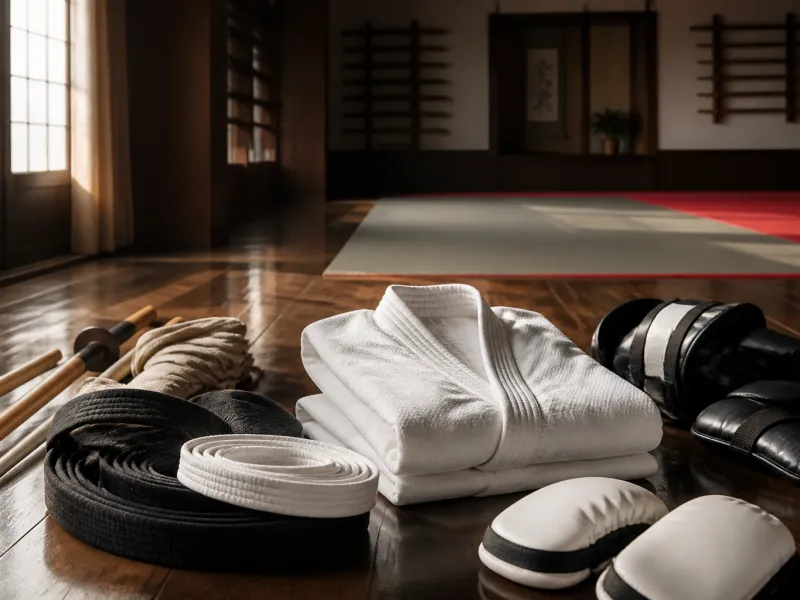
Almost every question about buying a gi eventually comes back to two things: will it fit, and will it still fit after it has been washed. Because most gi fabric shrinks to some degree, sizing and shrinkage really need to be considered together rather than as two separate problems.
This guide brings together general size charts by height and weight across gi styles, explains the difference between pre-shrunk and untreated fabric, walks through how to shrink a gi that is too large or prevent one shrinking too far, and covers the sleeve and trouser length rules that competitors need to watch most closely.
01
Why gi sizing differs from everyday clothing
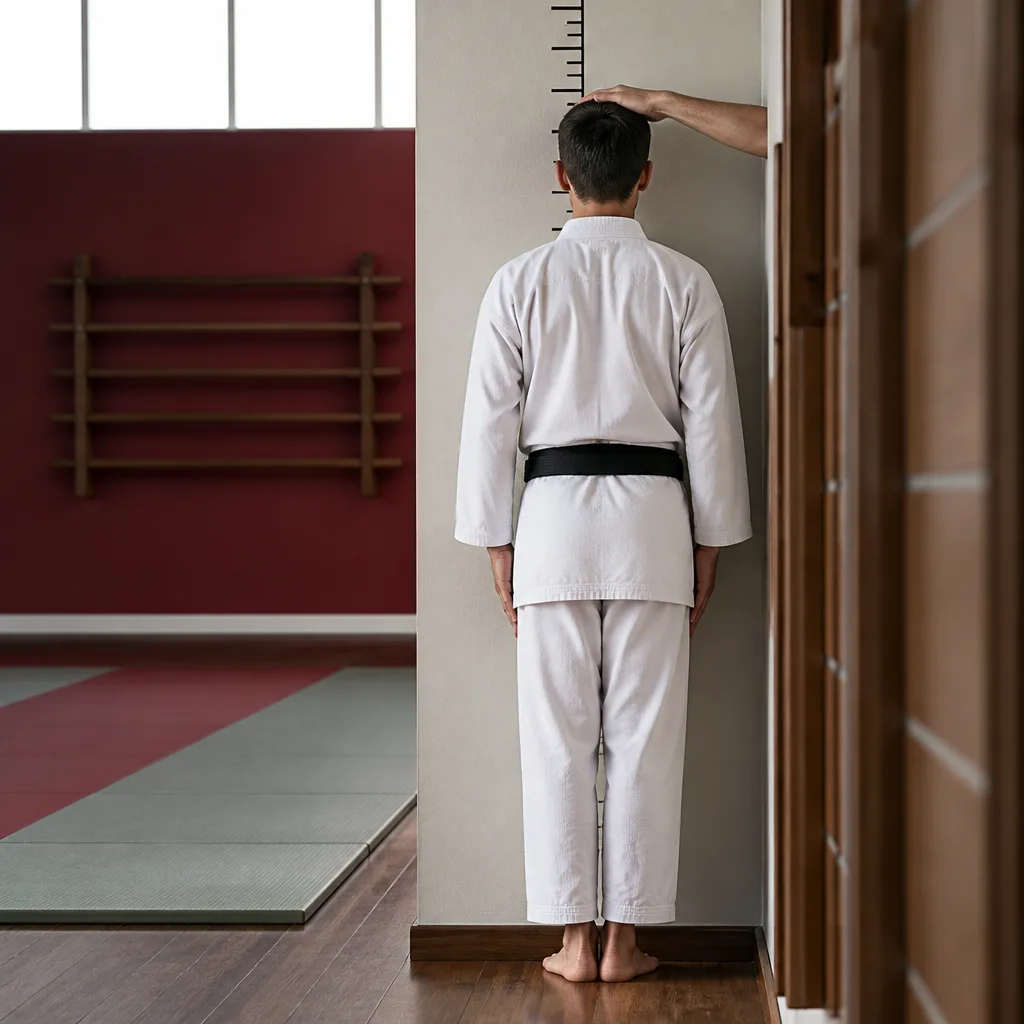
Gi are not sized like ordinary clothing. Instead of chest or waist measurements alone, sizing is usually built primarily around height, since a gi has to allow a full range of motion through the shoulders, hips and legs rather than simply fitting the torso. Weight is often used as a secondary check, particularly in heavier, more muscular builds where a height only chart can run too narrow through the body.
02
General size charts by height and weight
Exact sizing varies between brands and between gi styles such as karate gi, judogi, BJJ gi and taekwondo dobok, so always check a specific product's own chart where one is available. The table below gives a general starting point that broadly applies across most adult gi styles.
| Approx. height | Approx. weight | Typical size range |
|---|---|---|
| 150 to 160 cm | 45 to 60 kg | 1 to 2 / A0 |
| 160 to 170 cm | 55 to 70 kg | 2 to 3 / A1 |
| 170 to 178 cm | 65 to 80 kg | 3 to 4 / A2 |
| 178 to 185 cm | 75 to 95 kg | 4 to 5 / A3 |
| 185 to 193 cm | 90 to 110 kg | 5 to 6 / A4 |
| 193 cm and above | 105 kg and above | 6 to 7 / A5 |
If your height and weight fall in different rows, favour the size matching your height first, then check the brand's chart to see whether a wider cut at the same length is offered, sometimes labelled with a "W" for wide or an "L" for a longer limb length. Discipline specific detail is available in our karate gi guide, judogi guide, BJJ gi guide and taekwondo dobok guide.
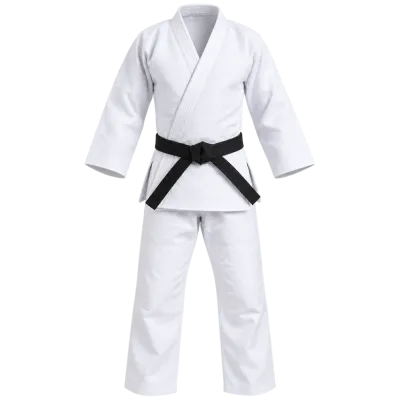 Matching productJudogiAmazon →
03
Pre-shrunk versus untreated fabric
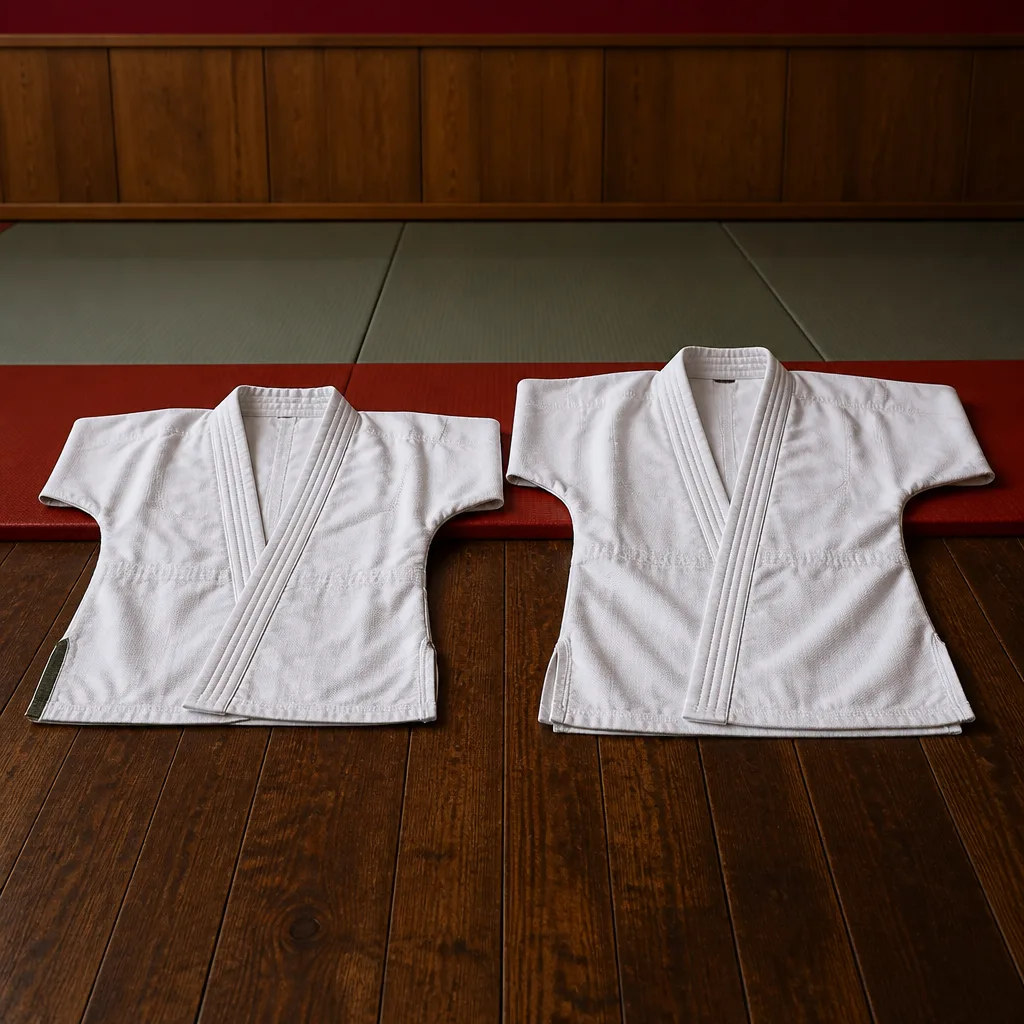
Some gi are labelled pre-shrunk, meaning the fabric has already been through a shrinking process during manufacture, so the finished garment should change size only slightly, if at all, during normal washing. Untreated, or "raw", fabric has not been through this process and can shrink significantly, sometimes several centimetres in length and width, over its first few washes.
Pre-shrunk gi are generally more predictable and easier to size correctly from the start, which suits anyone who needs the finished gi to sit close to competition tolerances straight away. Untreated fabric can still be a good choice, particularly for a lower cost gi or one bought for a child who is expected to grow, as long as you size up deliberately and plan for the fabric to settle after a handful of washes.
 Matching productSports detergentAmazon →
04
How to shrink a gi that is too large
If a gi arrives noticeably too large, particularly in sleeve or trouser length, washing it on the warmest cycle the fabric allows, then drying it on a hot tumble dryer setting, will usually shrink it further and faster than a cool wash and air dry. This works best with untreated cotton fabric and has much less effect on pre-shrunk or heavily blended fabric, which is designed specifically to resist this kind of change.
- Wash on the warmest safe setting for the fabric.
- Tumble dry on medium to high heat rather than air drying.
- Check fit after each wash and drying cycle rather than repeating several cycles at once.
- Stop as soon as the fit is right, since shrinkage can overshoot with repeated hot cycles.
05
How to prevent a gi shrinking too far
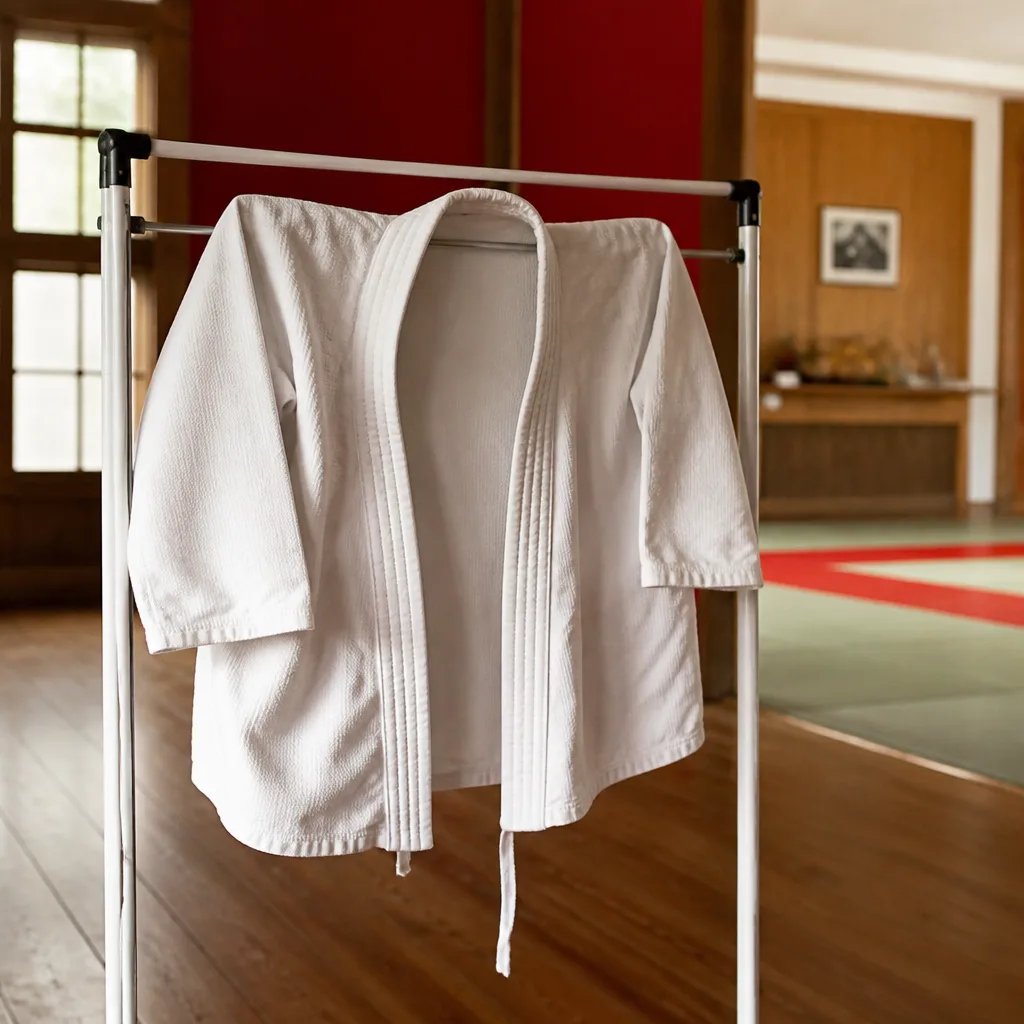
If you have sized correctly and simply want to keep that fit, the opposite approach applies: wash on a cool or warm cycle rather than hot, and air dry or use only low heat in a dryer. Turning the gi inside out before washing can also help protect the surface of the fabric and any embroidery.
- Wash cool or warm, never hot, unless you are deliberately shrinking the gi.
- Air dry or use low heat only.
- Avoid leaving a wet gi bunched up for long periods, which can set uneven creases and stress seams.
- Follow the care label on the specific gi, since fabric blends respond differently.
Our gi care and washing guide covers the full ongoing care routine, including odour control and stain handling, beyond shrinkage alone.
06
Sleeve and trouser length rules
For anyone training toward competition, sleeve and trouser length are not just about comfort. Federations such as WKF, IJF and IBJJF set specific tolerances for how far a jacket sleeve may fall short of or extend past the wrist, and how far trousers must reach down the leg, checked closely at official weigh ins. A gi that shrinks past these tolerances, even if it still feels comfortable, can fail an equipment check.
| Measurement | General guidance |
|---|---|
| Jacket sleeve length | Should reach the wrist, within a federation specific tolerance |
| Jacket length | Should cover the hips |
| Trouser length | Should reach the ankle area, within a federation specific tolerance |
Because exact tolerances differ by federation and are reviewed periodically, always check the current rulebook for your specific discipline, such as our karate gi guide for WKF or our judogi guide for IJF, rather than relying on general figures alone before an official event.
 Matching productKarate giAmazon →
07
Frequently asked questions
How much does a typical gi shrink?
It depends heavily on the fabric. Pre-shrunk and blended fabrics may change very little, while untreated cotton can shrink several centimetres in length and width over the first few washes.
Should I always buy a size larger to be safe?
For untreated cotton fabric, sizing up slightly is often sensible. For pre-shrunk or blended fabric, the standard size chart is usually reliable enough on its own.
Can I stop a gi shrinking any further once it fits?
Washing cool and air drying from that point on will slow further shrinkage considerably, though fabric can continue to change gradually over a long working life of regular washing.
What if my gi has already shrunk too much for competition?
A gi that fails sleeve or trouser length checks generally needs to be replaced for competition use, since stretching a shrunk gi back into tolerance is unreliable and rarely lasts.
Does shrinkage affect all gi styles equally?
No. Heavier, untreated cotton fabrics, common in some karate and judo gi, tend to shrink more than the lighter pearl weave and ripstop fabrics common in modern BJJ gi and taekwondo dobok.
Is it better to buy true to size or slightly large?
For a pre-shrunk gi bought for regular adult training, true to size is usually fine. For an untreated cotton gi, a growing child, or a gi that must meet strict competition tolerances after washing, sizing slightly large gives useful room to absorb shrinkage without the garment ending up too small.
 Matching productBJJ giAmazon →
Explore
Read next
 Martial Arts and Their Equipment: A Complete OverviewAn overview of the martial arts covered on budoshop.com and the uniforms, protective gear and training weapons each one typically uses.
 Martial Arts Equipment Buying GuideA practical, step by step guide to buying the right martial arts equipment for your art and level, from your first uniform to protective ge…
 Uniforms and Belts ExplainedA guide to how gi, dobok and hakama are constructed, what federations allow, and how belt colours and grading systems work across schools.