
7 min read
Karate Gi Guide: Cuts, Weights and Sizing
Everything you need to choose a karate gi that fits your training: cuts, weights, fabrics, competition rules and sizing.
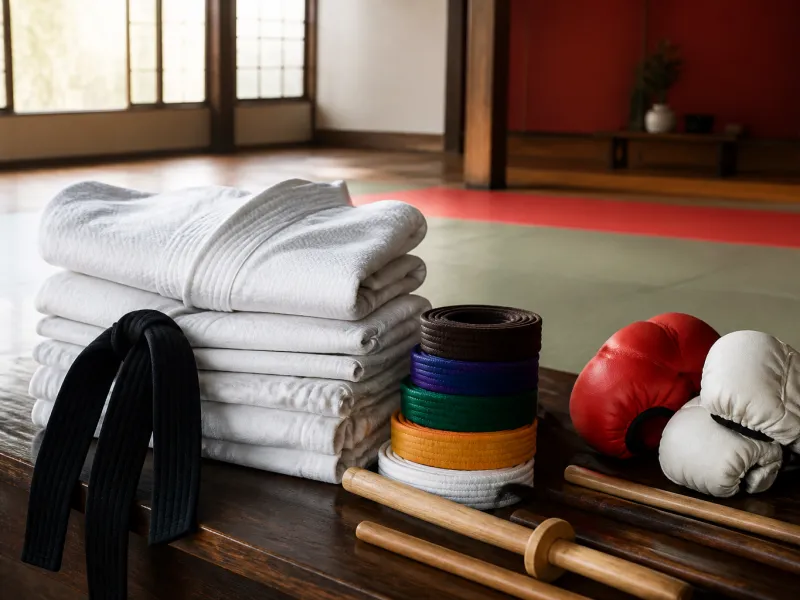
A karate gi is more than a uniform. It is training equipment that has to move with you through blocks, strikes, turns and throws, wash after wash, for years. Understanding how the cut, weight and fabric of a gi affect the way it feels and lasts helps you choose one that actually suits your training.
This guide explains the difference between kumite cuts and kata cuts, looks at gi weight in ounces and grams per square metre (gsm), covers common fabrics, explains what WKF approval means for competitors, and walks through sizing and shrinkage so your gi fits well from the first class to the hundredth.
01
What a karate gi is made of
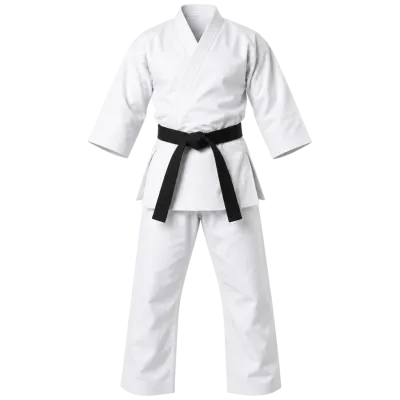
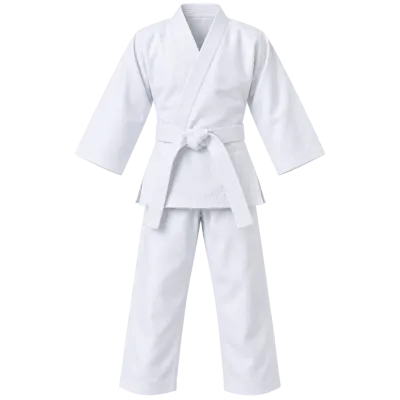
A traditional karate gi (also called karategi) consists of a jacket, trousers and a belt, or obi. The jacket wraps left over right and is held closed by the belt rather than by buttons or a zip. Most gi are woven cotton or a cotton and polyester blend, chosen for a balance of durability, breathability and ease of care.
Within that basic pattern, manufacturers cut gi in two broad families: those built for freedom of movement in sparring, and those built for a crisp, structured line in forms. Knowing which family you are looking at will tell you a great deal about how a particular gi will feel on the floor.
 Matching productKarate giAmazon →
02
Kumite cuts versus kata cuts
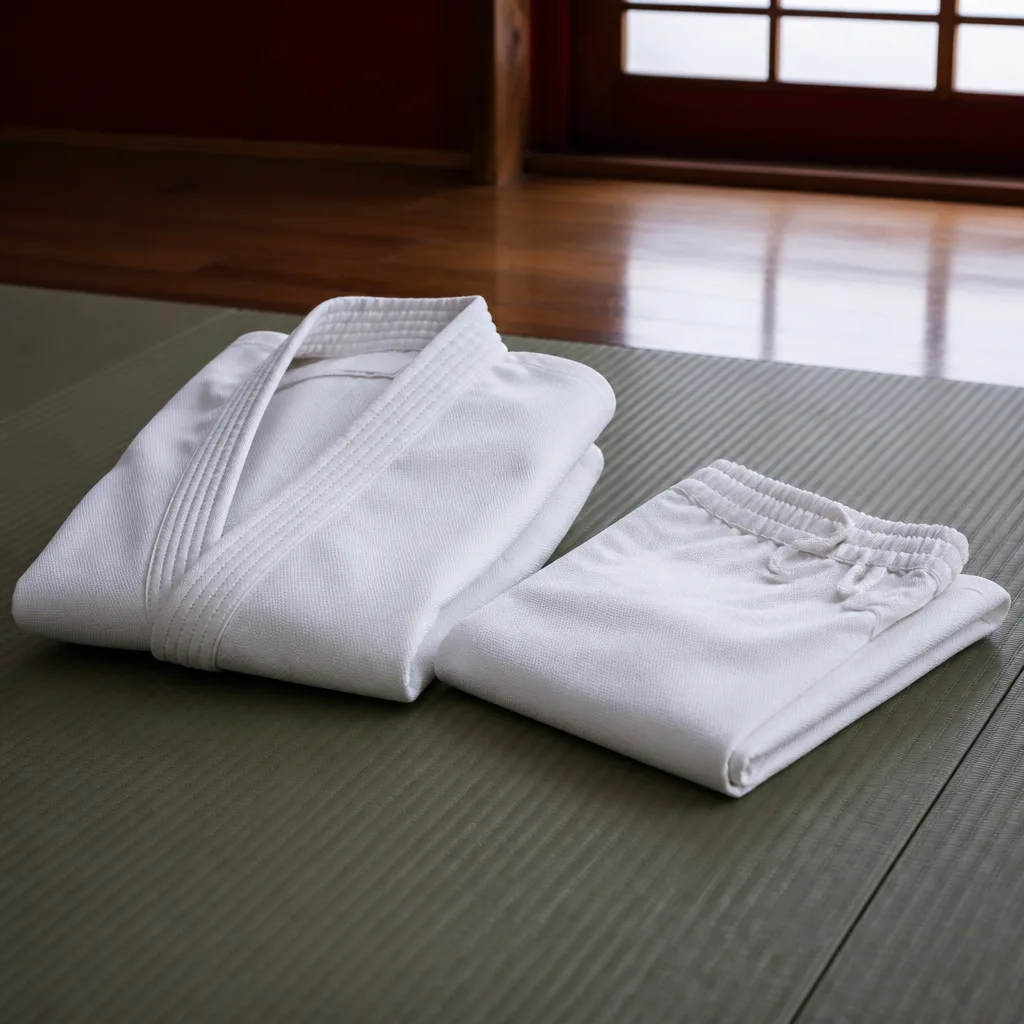
A kumite cut gi is designed for sparring (kumite). It uses a lighter fabric, a closer, more athletic fit through the shoulders and torso, and shorter sleeves and trouser legs so nothing catches or restricts a fast kick or a quick step in. Seams are often reinforced at points of stress rather than throughout the whole garment, which keeps the gi light while still holding up to grabbing and pulling during exchanges.
A kata cut gi, by contrast, is made for forms (kata) and for everyday kihon practice. It is usually cut fuller through the body and sleeves, giving a crisp, structured silhouette that shows technique clearly and produces the sharp cracking sound many stylists associate with a well executed strike. The fabric tends to be heavier, which adds visual weight to the movement but also makes the gi warmer and slower to dry.
Neither cut is objectively better. Many practitioners train in a mid weight, all round gi that borrows from both families, and only move to a dedicated kumite or kata gi once their focus in a particular discipline becomes clear. Instructors can usually advise on what is common in a given school or federation.
 Matching productBo staffAmazon →
03
Gi weight explained: ounces and gsm
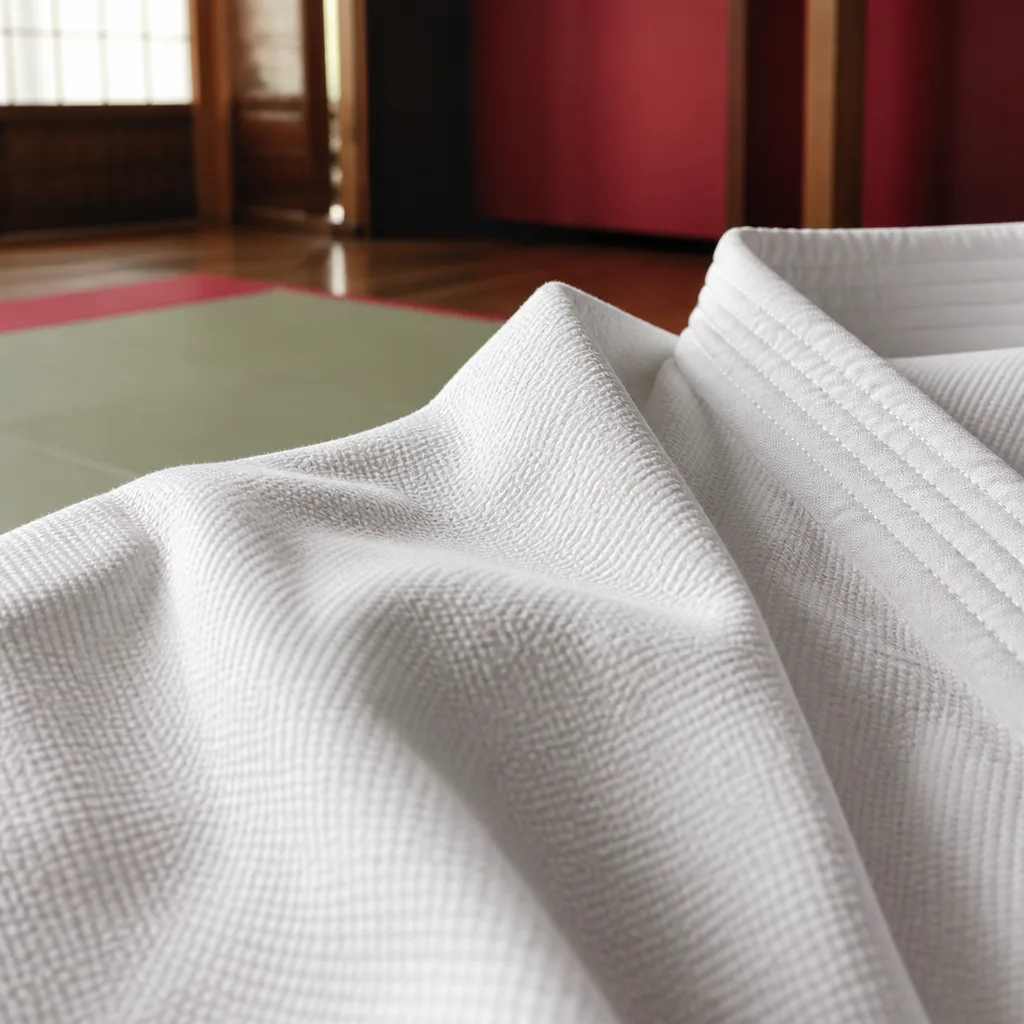
Gi are commonly described by the weight of their fabric, given either in ounces (oz) per square yard or in grams per square metre (gsm). Both numbers describe how dense and heavy the woven cloth is. A higher number means a thicker, heavier fabric that is generally more durable and holds its shape better, at the cost of being warmer and slower to dry. A lower number means a lighter, cooler gi that packs small and dries quickly but wears out sooner under hard use.
| Weight class | Approx. oz | Approx. gsm | Typical use |
|---|---|---|---|
| Lightweight | 6 to 8 oz | 200 to 280 gsm | Sparring, hot climates, children's gi |
| Middleweight | 8 to 10 oz | 280 to 340 gsm | All round training, beginners |
| Heavyweight | 10 to 14 oz | 340 to 480 gsm | Kata, demonstration, durability focused training |
These ranges vary between manufacturers, and there is no single industry standard, so treat the table as a general guide rather than a fixed rule. If you train several times a week in a warm hall, a lightweight or middleweight gi will usually be more comfortable. If you train mainly kata or compete in demonstration events, a heavier weave often gives a cleaner line and a longer working life.
04
Fabric and weave choices
Most gi fabric is woven cotton, a cotton and polyester blend, or, in a smaller number of premium heavyweight gi, a canvas style weave. Pure cotton breathes well and feels natural against the skin but shrinks more and takes longer to dry. Cotton and polyester blends resist shrinkage, dry faster and often cost less to maintain, though some practitioners find the finish less crisp than pure cotton.
- Single weave: light, flexible fabric, common in kumite gi and children's gi.
- Pearl weave and canvas weave: a tighter, more structured weave giving a firmer feel and sharper look, common in kata and heavyweight gi.
- Ripstop and reinforced weave: a grid pattern woven into lighter fabric to resist tearing, sometimes used in competition kumite gi.
- Brushed or gauze finish: a softer surface texture found on some lightweight gi, chosen mainly for comfort.
Whichever fabric you choose, look for even, tight stitching, flat felled seams at points of stress such as the underarm and crotch, and a triple stitched hem. These details matter more to a gi's working life than the fabric's name alone.
05
WKF approval for competition
If you compete at the higher levels of karate sport, you may need a gi that carries approval from the World Karate Federation (WKF). WKF approval means a specific gi model has been checked against the federation's competition rules and listed as legal for use at WKF sanctioned events. Outside that context, for club training, gradings and local tournaments, an approved gi is rarely required.
WKF competition rules set general expectations for cut and fit rather than a single fixed pattern: the jacket should be long enough to cover the hips without reaching the knees, sleeves should reach no further than the wrist and no shorter than roughly the mid forearm, and the jacket must be secured by the belt with enough overlap to stay closed during vigorous movement. Trousers should reach no shorter than the mid calf. Always confirm current requirements with your federation or event organiser before a competition, since specifications are reviewed periodically.
 Matching productMartial arts beltAmazon →
06
Sizing your karate gi
Karate gi are typically sold in numbered sizes, often running from around 000 for young children up to size 7 or 8 for very tall adults, alongside height based guidance. Because sizing differs between brands, height is usually the more reliable starting point than a numbered size alone.
| Approx. height | Typical size label | Notes |
|---|---|---|
| 110 to 130 cm | 000 to 1 | Common children's range |
| 130 to 150 cm | 1 to 2 | Older children, smaller teens |
| 150 to 170 cm | 3 to 4 | Teens and smaller adults |
| 170 to 185 cm | 5 to 6 | Average to tall adults |
| 185 cm and above | 6 to 8 | Tall adults |
Jacket sleeves should reach roughly to the wrist bone when the arms hang loosely, and trouser legs should reach roughly to the ankle bone, since both will shorten slightly after washing. If you are between sizes, or you expect a pure cotton gi to shrink more than a blend, sizing up by one step is usually safer than sizing down. See our dedicated sizing and shrinkage guide for a fuller breakdown by weight as well as height.
 Matching productKids karate giAmazon →
07
Shrinkage and first wash
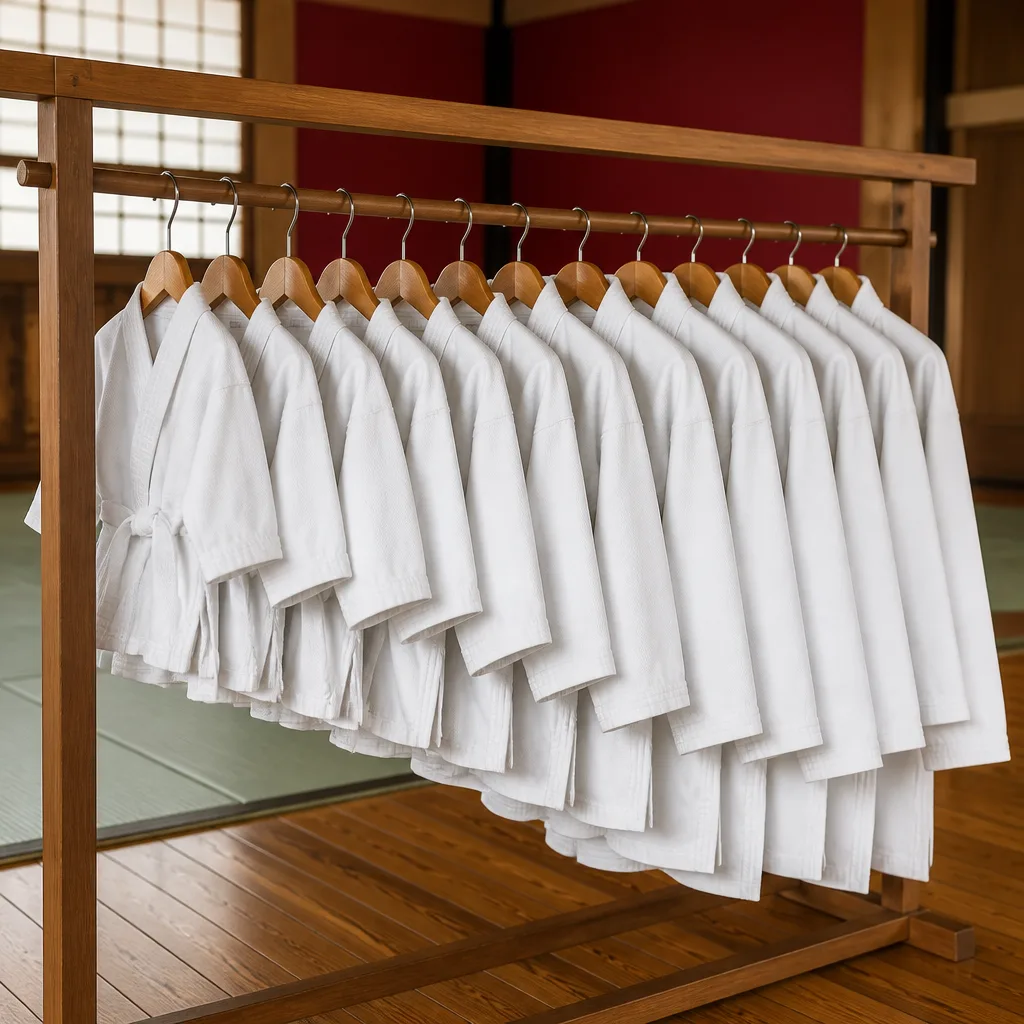
Almost every karate gi shrinks to some degree after its first few washes, and cotton gi generally shrink more than cotton and polyester blends. A gi that fits perfectly straight out of the packet is often slightly too small once it has been washed a handful of times, which is why many instructors recommend buying a little roomy, particularly for a growing child or a pure cotton gi.
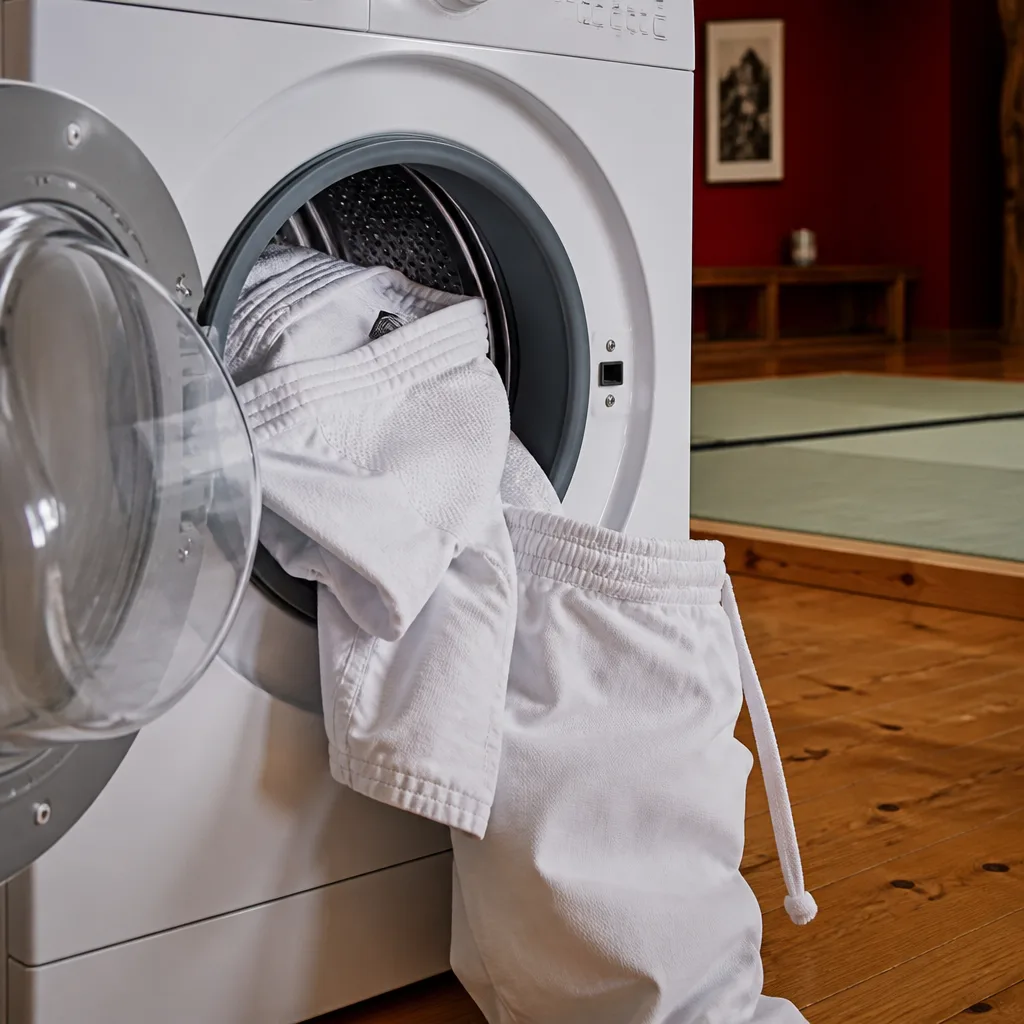
To reduce shrinkage, wash on a cool or warm cycle rather than hot, avoid a hot tumble dryer, and hang or lay the gi flat to dry whenever possible. A gi that has already shrunk more than expected can sometimes be stretched gently back into shape while damp, though results vary. For a complete step by step approach to washing, drying and caring for your gi over its whole life, see our gi care and washing guide.
 Matching productSports detergentAmazon →
08
Frequently asked questions
How much does a karate gi weigh?
Karate gi fabric is usually described as lightweight, middleweight or heavyweight, roughly corresponding to 6 to 14 oz per square yard, or around 200 to 480 gsm. The finished garment's total weight also depends on its size.
Do I need a WKF approved gi?
Only for competitions run under WKF rules at a level where approved equipment is required. For everyday training, grading and local tournaments, a well made gi that meets your club's or federation's general cut and colour requirements is normally enough.
Should I buy a size larger to allow for shrinkage?
Sizing up by one step is a common and sensible approach, particularly for a pure cotton gi or a fast growing child, since most gi shrink noticeably after their first few washes.
Can I wash a karate gi in a machine?
Yes, most gi can be machine washed on a cool or warm cycle. Air drying or low heat drying will help control shrinkage and keep the fabric in good condition for longer.
Is a heavier gi always better?
Not necessarily. A heavier gi tends to be more durable and can look crisper in kata, but it is also warmer, slower to dry and takes longer to break in. The right weight depends on your training focus, climate and personal comfort.
Explore
Read next
 Martial Arts and Their Equipment: A Complete OverviewAn overview of the martial arts covered on budoshop.com and the uniforms, protective gear and training weapons each one typically uses.
 Martial Arts Equipment Buying GuideA practical, step by step guide to buying the right martial arts equipment for your art and level, from your first uniform to protective ge…
 Uniforms and Belts ExplainedA guide to how gi, dobok and hakama are constructed, what federations allow, and how belt colours and grading systems work across schools.