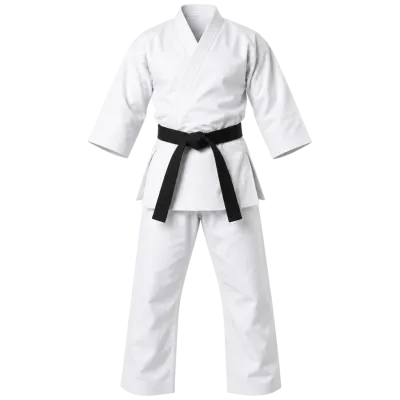
Kata is a Japanese term for a set, prearranged sequence of movements, most closely associated with karate but also found, in different forms, in judo, aikido and several other martial arts. A kata is typically performed solo, against an imagined opponent, and follows a fixed pattern of stances, strikes, blocks and turns that has usually been passed down largely unchanged for generations within a school or style.
Practising kata trains precision, balance, timing and the correct application of technique outside the pressure of live sparring, which makes it a useful complement to kumite and free practice. In competition, kata is judged on criteria such as correct technique, power, rhythm and the performer's focus and presence, rather than on contact with an opponent, and judges are looking for how faithfully and convincingly the set pattern is executed.
Our karate gi guide notes how uniform choice can differ for kata performance, and the entry on kihon covers the basic techniques that kata build on.