
5 min read
Taekwondo Dobok Guide: Styles, Fabric and Sizing
A guide to taekwondo dobok styles, from WT V-neck sparring uniforms to ITF cross collar and poomsae doboks.
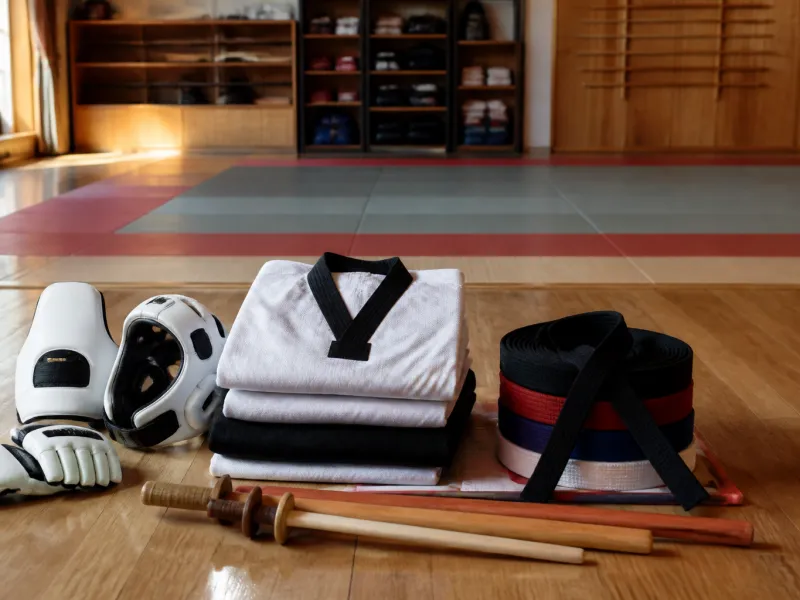
A taekwondo dobok looks simple at first glance, but the style of collar, the fabric weight and the cut all vary between federations and between sparring, forms and demonstration wear. Picking the right dobok means understanding the main styles in use today and how they are sized.
This guide covers the World Taekwondo (WT) V-neck style, the traditional ITF cross collar style, dedicated poomsae doboks, common fabrics, sizing, and how the belt fits into the overall uniform.
01
What a taekwondo dobok is
A dobok is the uniform worn in taekwondo, consisting of a jacket, trousers and a belt, or obi, following the same general layout as other martial arts uniforms. Unlike a karate gi or judogi, many modern dobok jackets are pulled on over the head rather than wrapped and tied at the front, which changes both the fit and the way the collar is constructed.
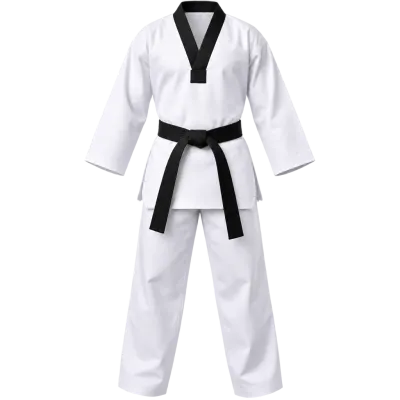 Matching productTaekwondo dobokAmazon →
02
WT V-neck style
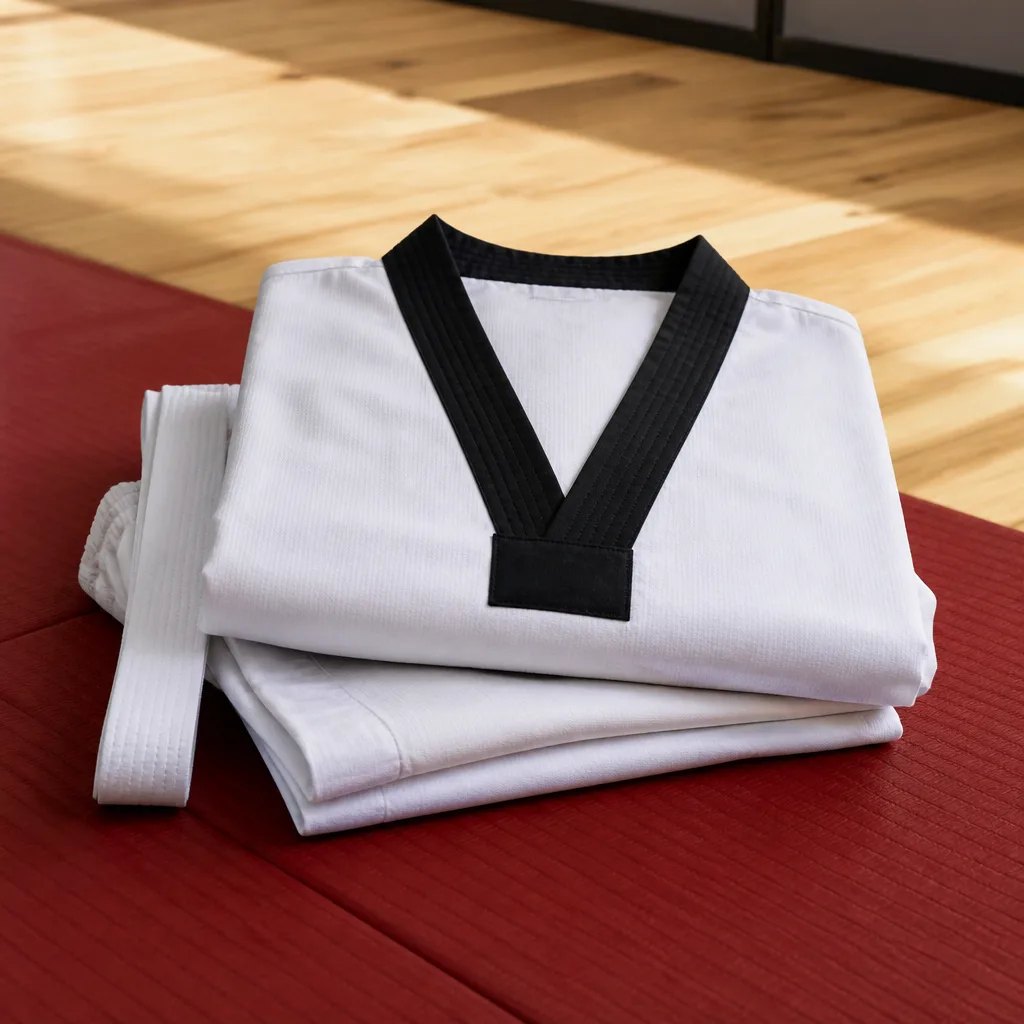
The style associated with World Taekwondo (WT) competition, often called the V-neck dobok, has become the most widely recognised modern taekwondo uniform. The jacket has a V shaped neckline rather than a wrapped, overlapping front, and is usually pulled on over the head, with the two sides closing at the waist. This cut sits close to the body, allows a very wide range of motion for the high, fast kicks central to Olympic style sparring, and shows off the electronic or fabric body protector worn underneath in competition.
 Matching productBo staffAmazon →
03
ITF cross collar style
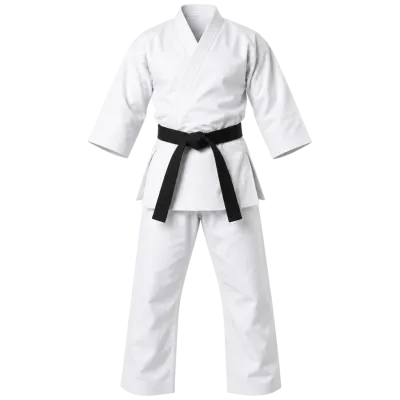
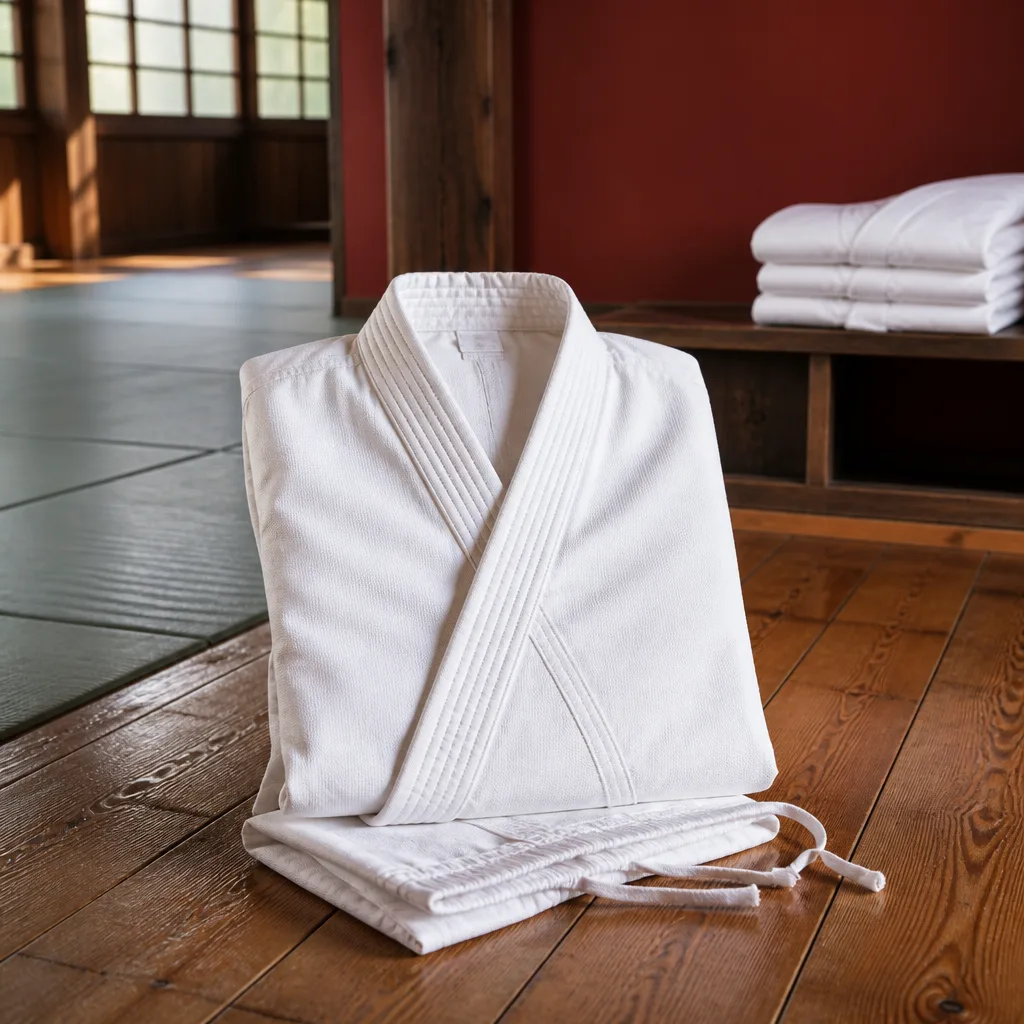
The style used within many International Taekwon-Do Federation (ITF) affiliated schools follows a more traditional cross over front, similar in general appearance to a karate gi, with the jacket wrapping left over right and fastening lower down at the waist rather than pulling on over the head. This style is closely associated with ITF pattern work and traditional forms training, and its fuller cut through the body is often preferred for a crisp, visible line during pattern demonstration.
 Matching productKarate giAmazon →
04
Poomsae doboks
Poomsae, the standardised forms performed in WT style taekwondo, has its own dedicated dobok style, distinct from the sparring V-neck cut. Poomsae doboks are typically cut with a more decorative collar and trim, sometimes in colours or patterns that reflect grade or role, and are tailored for a smooth, flowing silhouette that suits the visual presentation side of forms competition rather than the closer, sport cut used for sparring. If you compete in both sparring and poomsae, you may eventually want a dobok suited to each.
05
Fabrics and weight
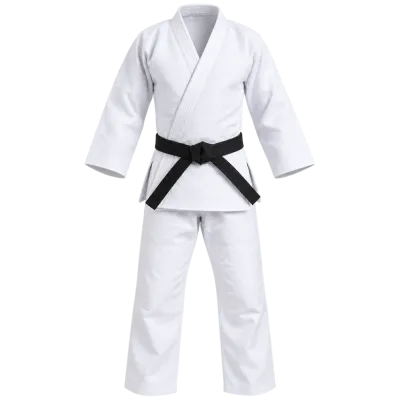
Dobok fabric ranges from very light, almost featherweight cotton and polyester blends favoured for sparring, where speed and airflow matter most, through to medium weight fabrics that hold a crisper shape for poomsae and pattern work. Because kicks and fast footwork dominate taekwondo, dobok are generally lighter overall than a judogi or a heavyweight kata gi, prioritising freedom of movement over the sturdiness needed to withstand constant gripping.
| Style | Typical weight feel | Best suited to |
|---|---|---|
| WT V-neck sparring | Light, stretch friendly | Sparring, competition, hot climates |
| ITF cross collar | Light to medium | Pattern work, traditional training |
| Poomsae dobok | Light, structured finish | Forms competition, demonstration |
 Matching productJudogiAmazon →
06
Sizing your dobok
Dobok are usually sized by height, similar to other gi styles, though the pull on V-neck cut and the wrapped ITF cut can fit differently even at the same labelled size, so it is worth checking a specific brand's chart where possible.
| Approx. height | Typical size label |
|---|---|
| 110 to 130 cm | 000 to 1 |
| 130 to 150 cm | 1 to 2 |
| 150 to 165 cm | 3 to 4 |
| 165 to 180 cm | 4 to 5 |
| 180 cm and above | 6 to 7 |
Sleeves should reach roughly to the wrist and trouser legs roughly to the ankle, allowing a little room for shrinkage after the first few washes. Our gi sizing and shrinkage guide covers general shrinkage handling that applies across dobok, gi and judogi alike.
07
Belts, protectors and choosing the right dobok
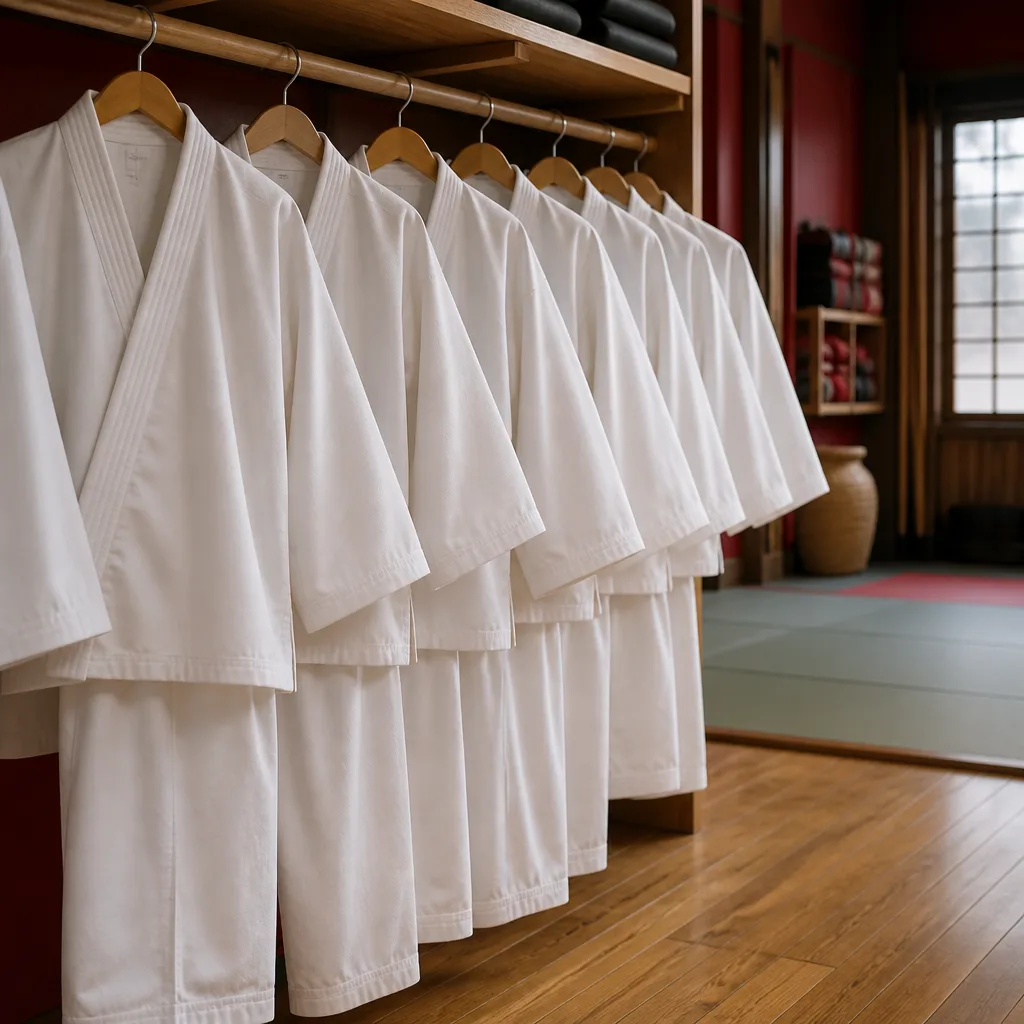
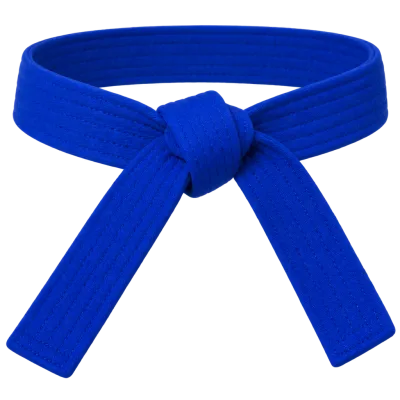
A dobok is completed by a belt worn around the waist, tied with a square knot in front, following the same general belt colour progression used across many striking arts, from white through a series of coloured grades to black. Belt colour systems vary between schools and federations, so treat any specific colour order as a guide to what is common rather than a universal standard. Our belt guide and tying instructions walks through how to tie a belt correctly step by step.
Sparring under WT rules is normally practised and competed in alongside a body protector, called a hogu, worn over the dobok jacket, together with forearm and shin guards, a head guard and a mouthguard. Because the hogu sits directly over the jacket, a close, athletic fitting V-neck dobok is particularly useful here, since a loose or bulky jacket can bunch up uncomfortably underneath the protector during fast exchanges. Poomsae and ITF pattern training generally do not require this additional equipment, since there is no direct sparring contact involved. Our dedicated guides on shin guards and mouthguards go into more detail on fitting protective gear correctly.
If you train mainly under a WT affiliated school and expect to spar regularly, a lightweight V-neck dobok cut for freedom of movement is usually the natural choice. If you train within an ITF affiliated school focused on patterns and traditional technique, a cross collar dobok closer in style to a classic gi is more likely to be expected. Many practitioners who compete seriously in both sparring and poomsae eventually own one dobok of each type, much as some karate and BJJ practitioners keep a lighter gi for hard training and a heavier one for gradings or demonstrations. There is no need to buy more than one dobok when starting out, since a good quality, mid weight dobok will comfortably cover general training in most schools for the first year or more.
 Matching productMartial arts beltAmazon →
08
Frequently asked questions
What is the difference between a WT and an ITF dobok?
The WT style uses a V-neck, pull on jacket suited to fast, high kicking sparring, while the ITF style uses a traditional wrapped, cross over front closer in appearance to a karate gi, often preferred for pattern work.
Do I need a separate dobok for poomsae?
Not necessarily for training, but competitors who take poomsae seriously often choose a dedicated poomsae dobok, cut and trimmed for forms presentation rather than sparring.
How should a dobok fit?
Sleeves should reach roughly to the wrist and trousers roughly to the ankle, with enough room through the body and shoulders for high kicks and fast footwork without excess loose fabric.
Does a taekwondo dobok shrink like other gi?
Yes, most cotton and cotton blend dobok shrink somewhat after washing, though typically less than a heavyweight karate gi or judogi given their lighter fabric. Washing on a cool cycle and air drying helps limit shrinkage.
Are dobok belt colours standardised?
No single global standard exists. Colour systems and the meaning of each grade vary between schools and federations, so always follow your own club's system.
Can a dobok be worn for other striking arts?
A taekwondo dobok is cut and constructed specifically for taekwondo's kicking heavy movement pattern, so while it may resemble a light karate gi at a glance, it is best kept for taekwondo training rather than substituted into a different art with its own fit expectations.
 Matching productSports detergentAmazon →
Explore
Read next
 Martial Arts and Their Equipment: A Complete OverviewAn overview of the martial arts covered on budoshop.com and the uniforms, protective gear and training weapons each one typically uses.
 Martial Arts Equipment Buying GuideA practical, step by step guide to buying the right martial arts equipment for your art and level, from your first uniform to protective ge…
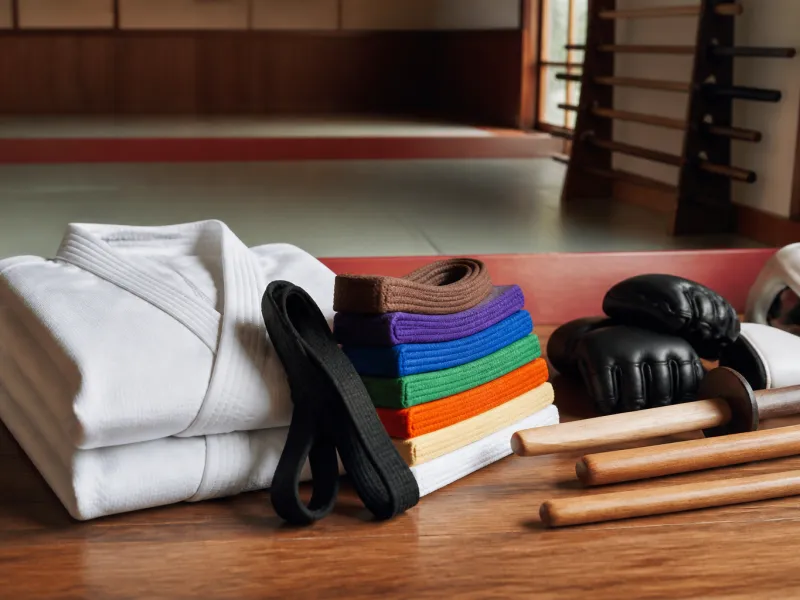 Uniforms and Belts ExplainedA guide to how gi, dobok and hakama are constructed, what federations allow, and how belt colours and grading systems work across schools.