
6 min read
Mouthguard guide: boil and bite, custom fit, fitting and hygiene
Compare boil and bite and custom mouthguards, learn how to fit one properly and how to keep it clean.
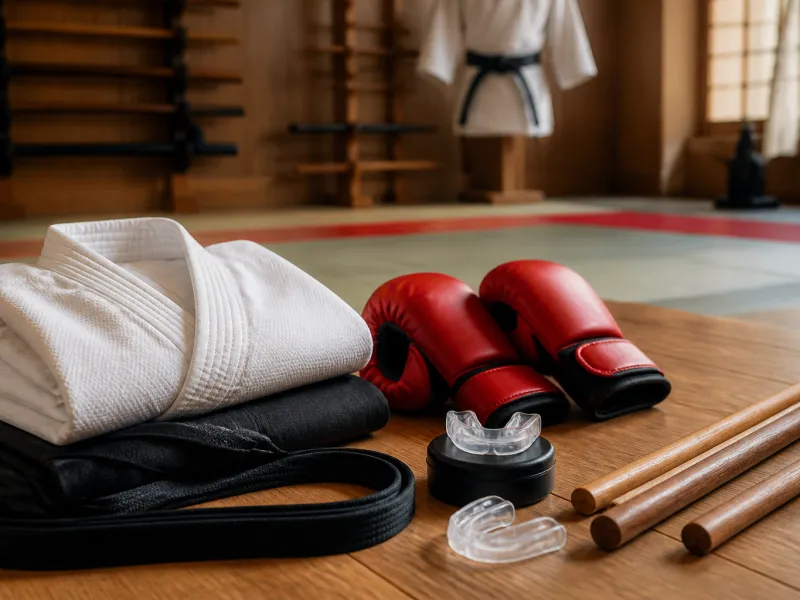
A mouthguard is one of the smallest pieces of equipment a martial artist owns, yet it protects the teeth, lips, cheeks and jaw during contact training and competition. Whether you train karate, boxing, kickboxing, Muay Thai, judo or MMA, understanding the different types of mouthguard, how to fit one properly and how to keep it clean will help you get reliable protection session after session.
This guide covers boil and bite mouthguards, custom fitted mouthguards, fitting steps, hygiene, wearing a mouthguard with braces, and when a mouthguard is typically required.
01
Why a mouthguard matters
During sparring, grappling or striking practice, accidental contact to the face and jaw is always possible, even in controlled training. A well fitting mouthguard cushions the teeth and helps spread impact across the jaw, reducing the risk of chipped or knocked out teeth and cut lips or cheeks. Many federations and gyms require one for any contact sparring, and even where it is not strictly required, wearing one for full or medium contact practice is generally considered good sense.
Beyond protecting the teeth themselves, a mouthguard can also reduce the discomfort of an accidental clash of heads or a stray elbow during grappling exchanges, since it keeps the lips and inner cheeks away from the sharp edges of the teeth on impact. For younger practitioners in particular, a properly fitted mouthguard is one of the simplest and most affordable pieces of protective equipment available.
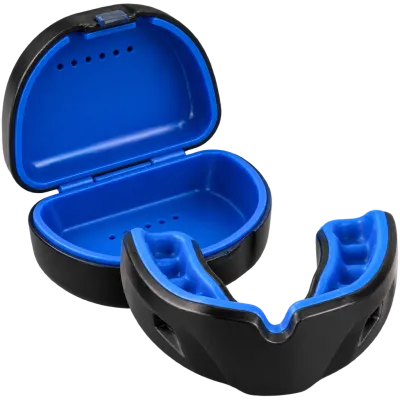 Matching productMouthguardAmazon →
02
Boil and bite mouthguards
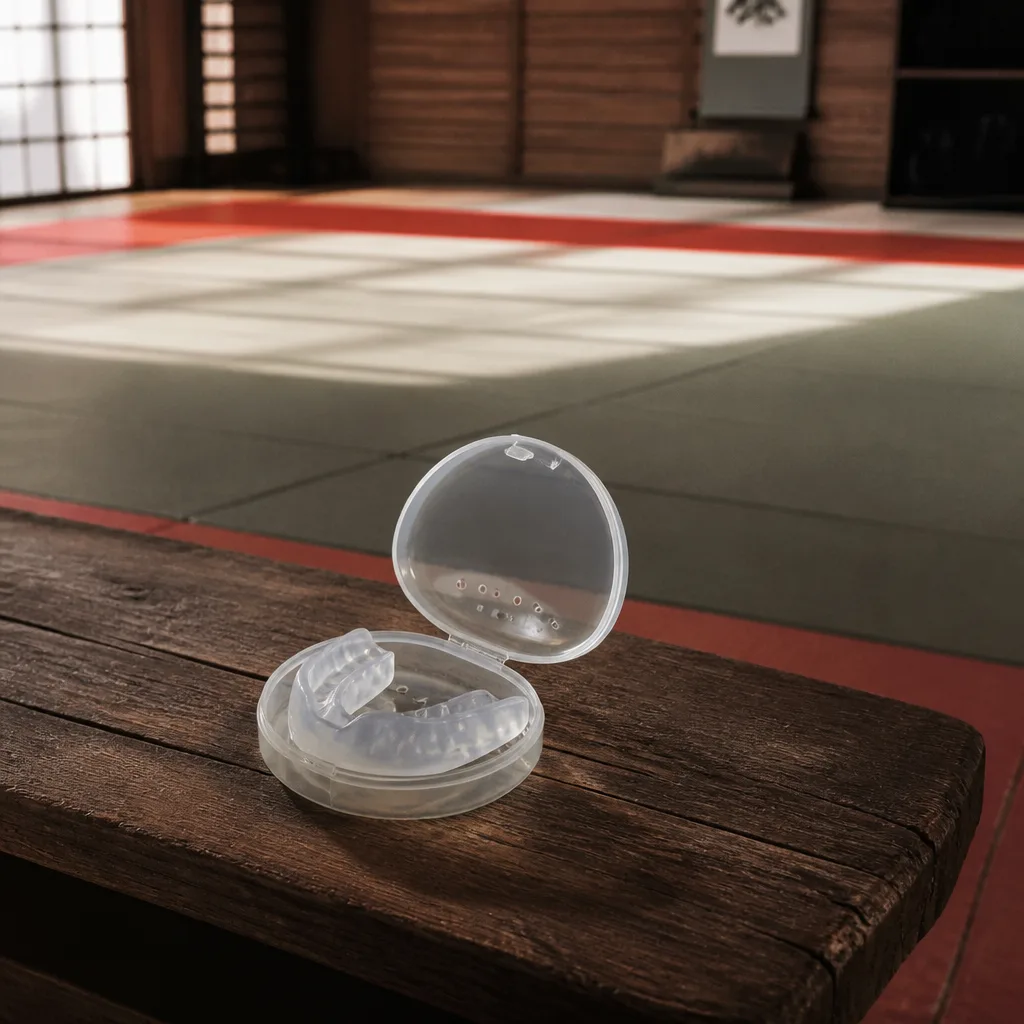
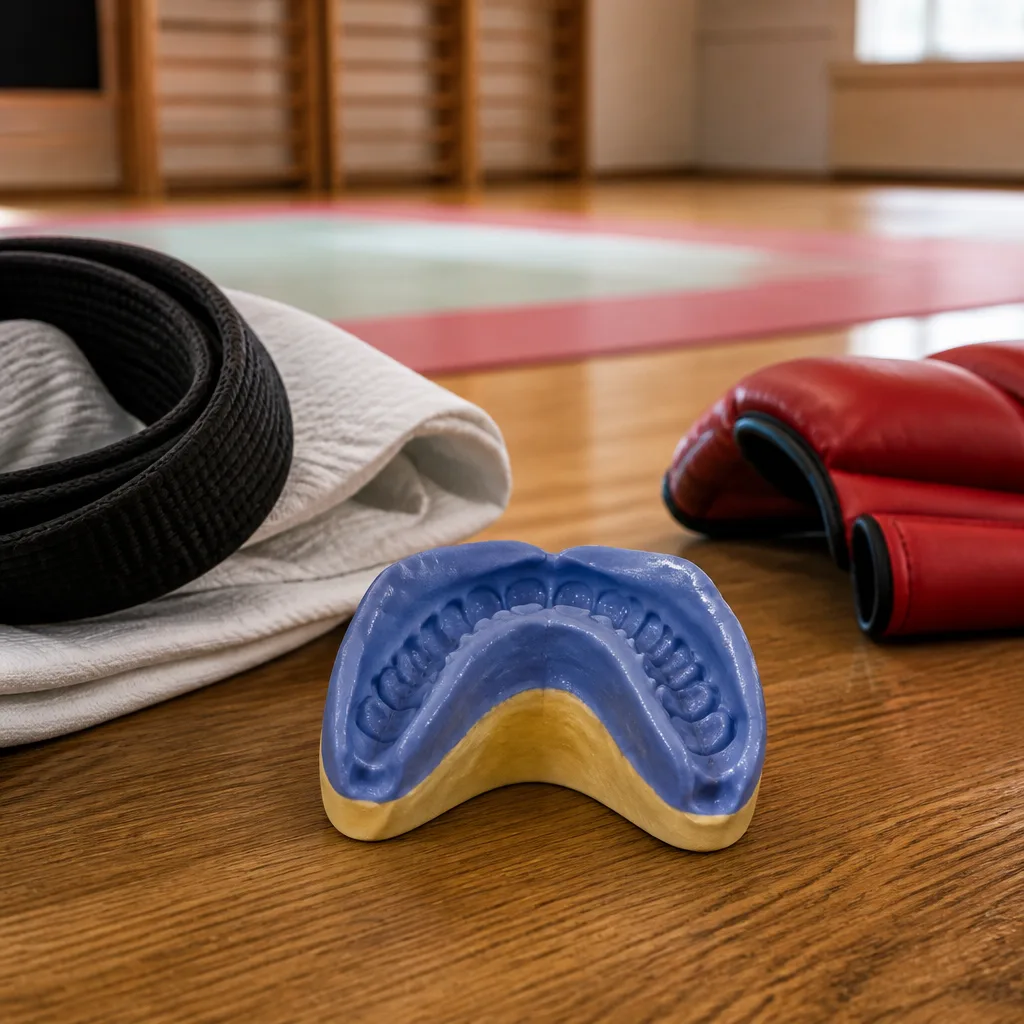
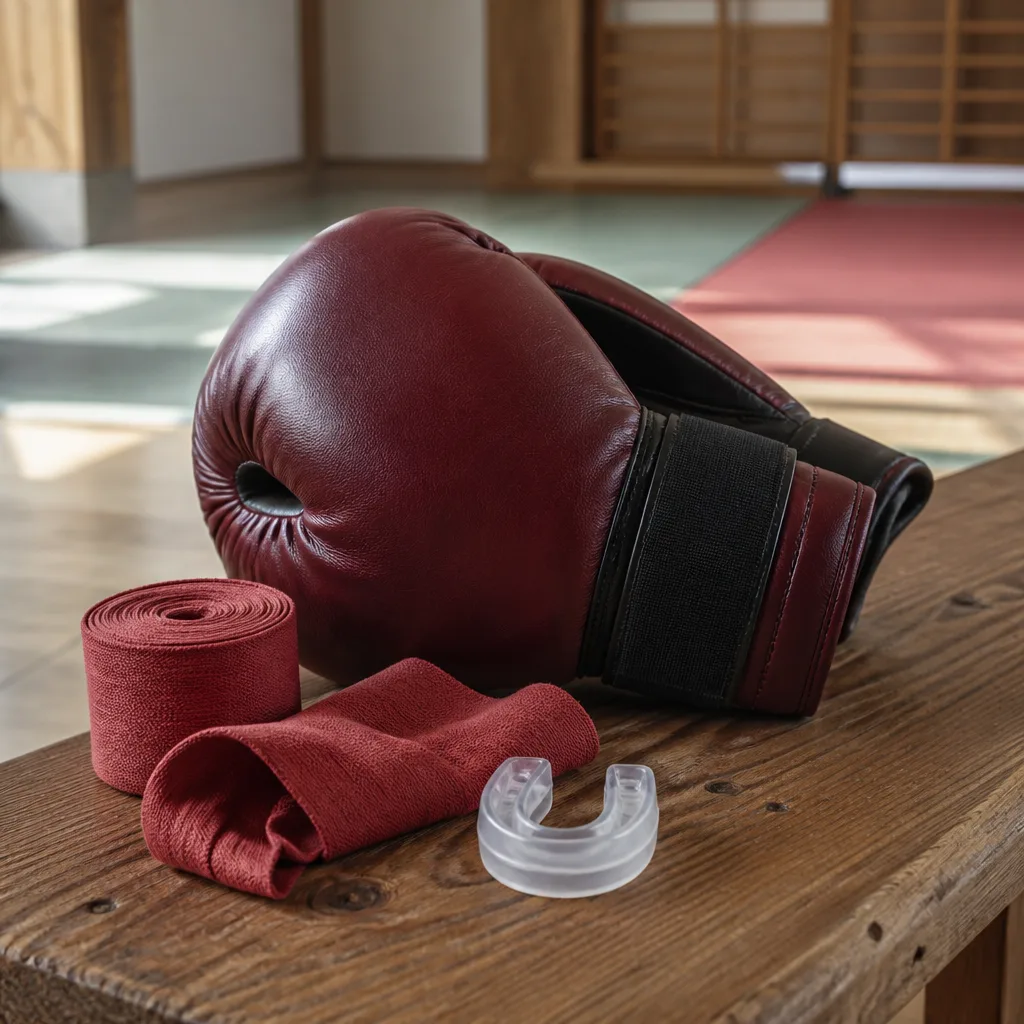
Boil and bite mouthguards are the most widely used type, made from a thermoplastic material that softens in hot water and is then bitten into to form a personalised fit around the teeth. They are affordable, available in most sports shops, and can usually be reshaped a limited number of times if the first attempt does not fit well. The trade off is that the fit, while much better than a generic one size guard, is still less precise than a custom made option, and the material is often a little thicker, which can affect speech and comfort for some wearers.
 Matching productBo staffAmazon →
03
Custom fitted mouthguards
A custom fitted mouthguard is made from a mould or digital scan of the wearer's own teeth, usually taken by a dental professional, and is then manufactured to match that shape precisely. This generally gives a thinner, more comfortable fit that stays in place better and interferes less with breathing and speech than a boil and bite version, which is one reason many competitive athletes choose one. Custom mouthguards typically cost more and take longer to obtain than a boil and bite guard, since manufacturing takes place after the impression or scan is completed.
Custom guards also make it easier to adjust thickness in specific areas, for example adding extra material over teeth that have previously been damaged, which a standard boil and bite guard cannot replicate. For anyone training frequently in a hard contact sport over the long term, this level of tailoring is often worth the additional cost and lead time.
04
Fitting steps for boil and bite guards
The exact instructions vary between products, so always follow the manufacturer's guidance, but the general steps are usually similar.
- Heat water to the temperature stated in the product instructions, well short of boiling unless the instructions specifically say otherwise.
- Soften the mouthguard in the hot water for the stated time, then allow it to cool briefly so it is safe to handle.
- Position the mouthguard over the upper teeth and bite down firmly while it is still soft.
- Use fingers, and gentle suction where the design allows, to press the material closely against the teeth and gum line.
- Hold the bite until the material begins to firm up, then remove it and cool it fully in cold water before checking the fit.
If the fit feels loose, gappy or uneven, most boil and bite guards can be reheated and reshaped a small number of times, though the material becomes less reliable each time it is reworked.
05
Hygiene and cleaning
Because a mouthguard sits directly in the mouth, hygiene deserves real attention. Rinse it with cool water immediately after use, and clean it regularly with a soft toothbrush and mild, non abrasive soap or a cleaner made for dental or sports appliances, avoiding toothpaste, which can be mildly abrasive on the material over time. Let it air dry fully before storing it in a ventilated case rather than a sealed bag, since trapped moisture encourages bacterial growth. A mouthguard that becomes discoloured, develops an odour that cleaning does not remove, or shows cracks or thinning should be replaced.
06
Mouthguards and braces
Wearing braces adds an extra consideration, since standard boil and bite guards are not designed to accommodate orthodontic brackets and wires and may not fit comfortably or protect effectively over them. Specific mouthguards designed for use with braces are available, with extra space and different material properties to fit around brackets, and a dental professional can advise on the most suitable option for an individual's orthodontic treatment. Anyone with braces training in a contact sport should raise the topic with their orthodontist or dentist rather than relying on a standard guard, since fit needs may also change as treatment progresses and teeth gradually shift position.
07
When a mouthguard is required
Requirements differ between sports, organisations and even between different levels of the same sport. Combat sports with striking to the head, such as boxing, kickboxing, Muay Thai and MMA, commonly require a mouthguard for any sparring or competition, and many karate and taekwondo federations require one for contact sparring formats as well. Grappling focused sports without striking, such as some styles of judo or Brazilian jiu jitsu, may not universally require one, though many practitioners choose to wear one anyway for general dental protection during scrambles and accidental contact. Always check the specific rules of your gym, dojo or the federation running an event, since requirements are set locally rather than by a single global standard.
08
Frequently asked questions
How often should I replace my mouthguard?
Replace it whenever it shows visible wear, thinning, cracks, a persistent odour, or when it no longer fits snugly, and consider more frequent replacement for growing children and teenagers whose teeth are still changing position.
Can I reuse a boil and bite mouthguard by reshaping it?
Most boil and bite guards can be reheated and refitted a small number of times, but the material becomes less reliable with repeated reshaping, so treat this as a way to fix a poor first attempt rather than a routine habit.
Is a custom fitted mouthguard worth it for a beginner?
For light or occasional training, a well fitted boil and bite guard is usually sufficient, while a custom guard tends to appeal more to those training frequently or competing regularly, given its higher comfort and cost.
Do I need a mouthguard for non contact training?
For drilling, forms or light technical practice without contact, a mouthguard is often not required, but check your gym or dojo's own policy, since some require one for any sparring regardless of intensity.
Can children share a mouthguard?
No, a mouthguard should always be an individual item fitted to one person's teeth, both for hygiene reasons and because a poorly fitted, shared guard offers unreliable protection.
 Matching productKids karate giAmazon →
Explore
Read next
 Martial Arts and Their Equipment: A Complete OverviewAn overview of the martial arts covered on budoshop.com and the uniforms, protective gear and training weapons each one typically uses.
 Martial Arts Equipment Buying GuideA practical, step by step guide to buying the right martial arts equipment for your art and level, from your first uniform to protective ge…
 Uniforms and Belts ExplainedA guide to how gi, dobok and hakama are constructed, what federations allow, and how belt colours and grading systems work across schools.