
5 min read
Judogi Guide: Weave, Weight and IJF Rules
A clear guide to judogi construction, weight, IJF fit rules, blue and white competition gi, and sizing.
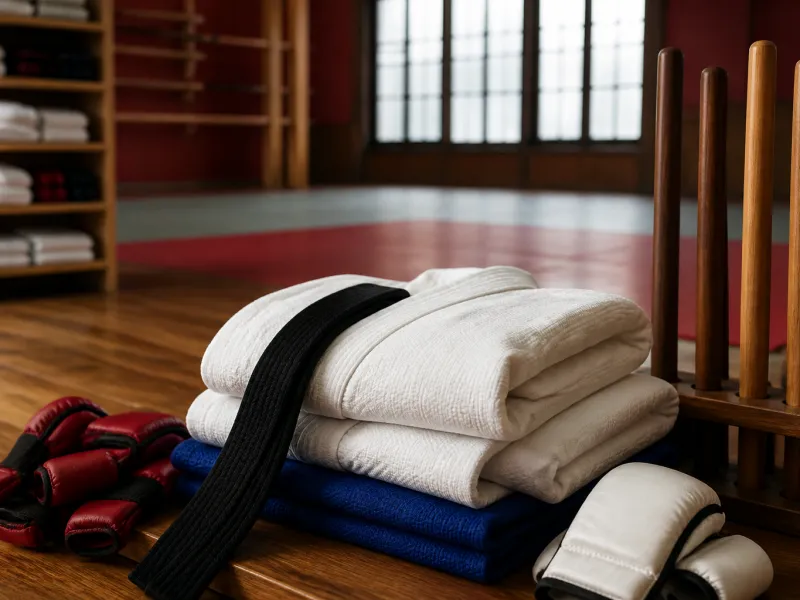
Judo places enormous stress on a uniform. Every grip, throw and groundwork exchange pulls, twists and drags the jacket and trousers, which is why a judogi is built heavier and tougher than most other martial arts uniforms. Choosing the right one means understanding weave, weight and the rules that govern competition gi.
This guide covers the difference between single weave and double weave judogi, typical weights, the International Judo Federation (IJF) rules on sleeve length and jacket fit, the meaning of blue and white judogi in competition, and how to size a judogi correctly.
01
What makes a judogi different
A judogi is built to survive constant gripping, pulling and throwing. Compared with a karate gi, the jacket is cut fuller through the body to allow a strong grip without tearing, the fabric is heavier and more tightly woven, and the seams and collar are reinforced far more heavily. The trousers are also reinforced at the knees, since groundwork puts repeated pressure there.
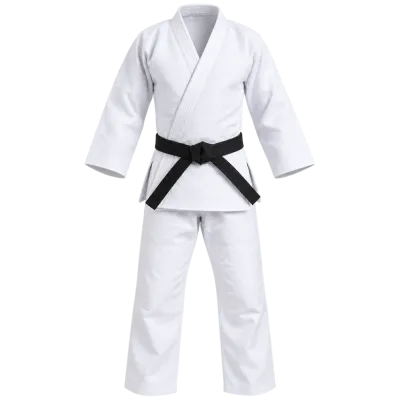 Matching productJudogiAmazon →
02
Single weave versus double weave
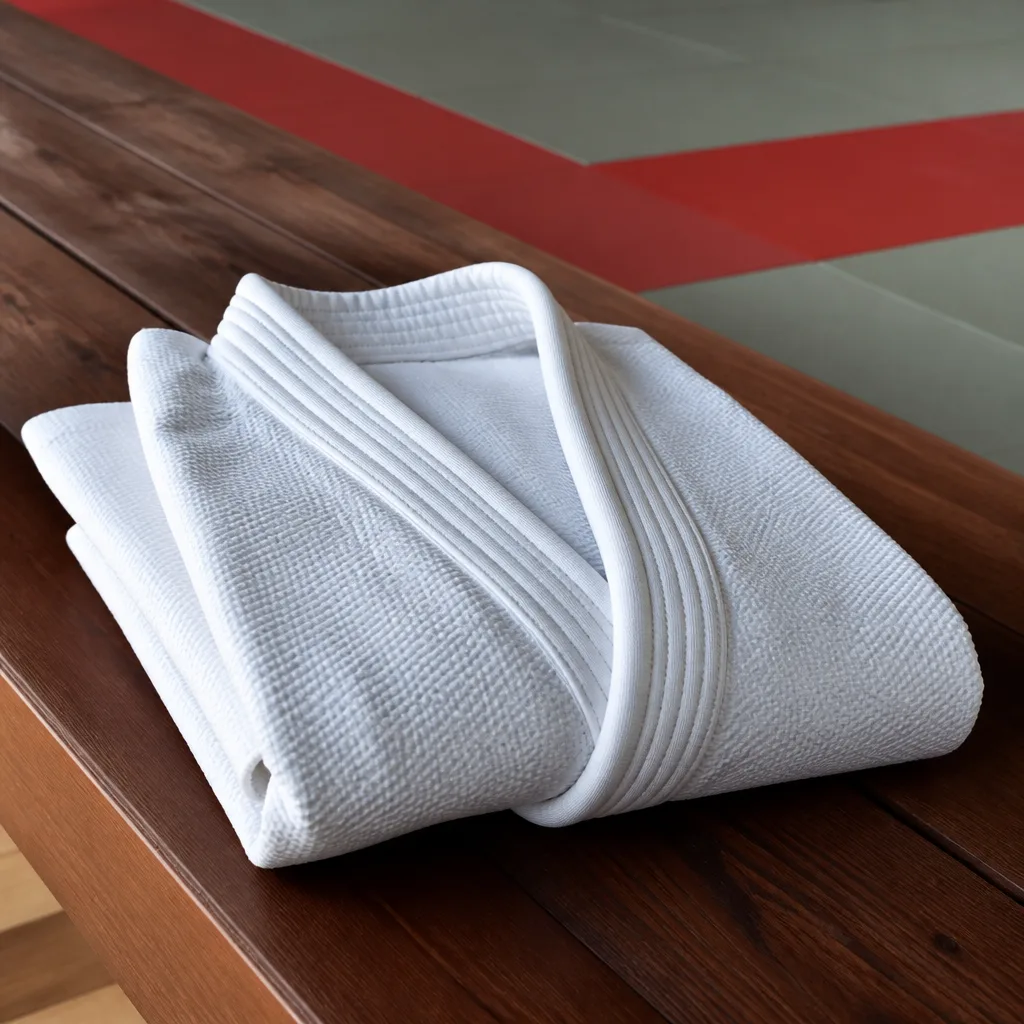
Judogi fabric is generally described as single weave or double weave, which refers to how the jacket is constructed rather than just how heavy the cloth is.
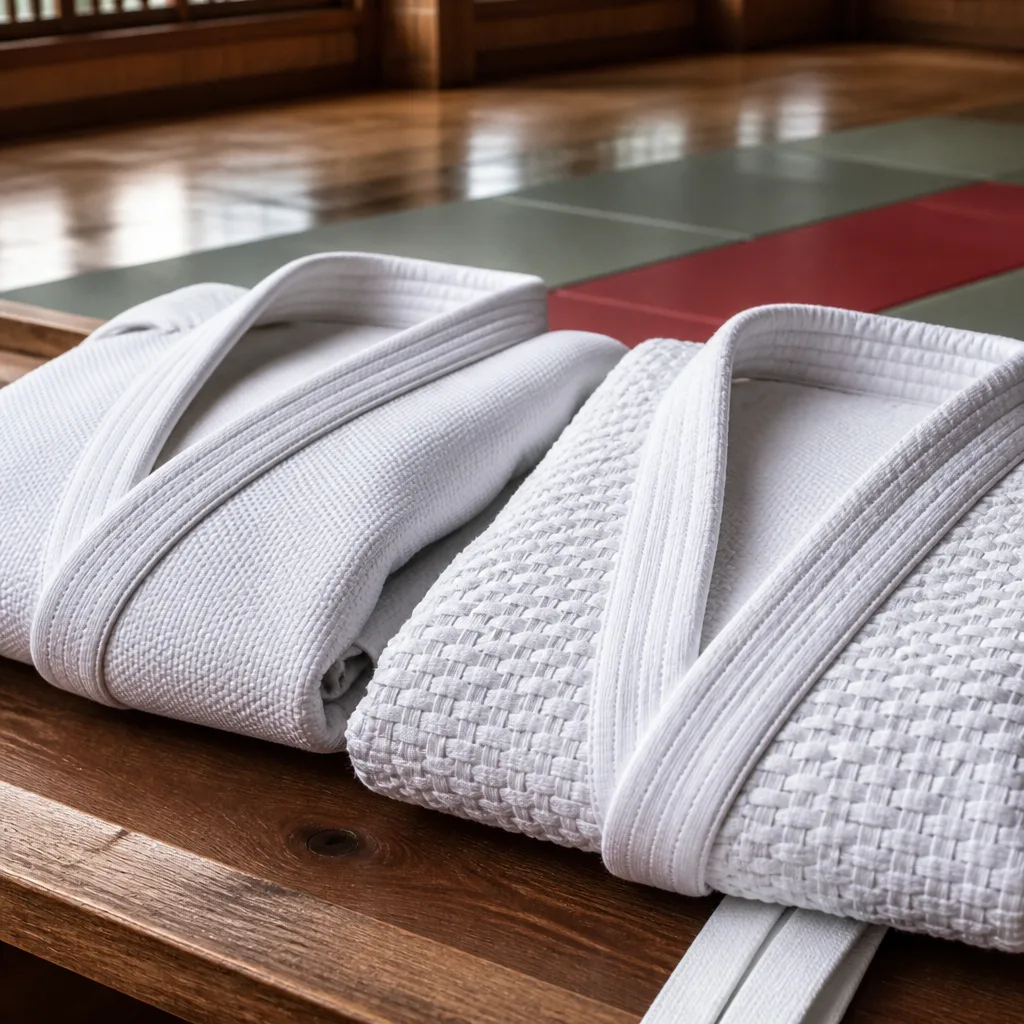
- Single weave judogi use a single layer of woven fabric throughout the jacket. They are lighter, more flexible and cooler to train in, which suits fast paced randori and warmer climates, but they generally wear out faster under heavy competitive use.
- Double weave judogi use a double layer, often woven as one piece rather than two fabrics sewn together, giving a much stiffer, harder wearing jacket that resists tearing during aggressive gripping. Double weave jackets are heavier, warmer and take longer to break in, but they are the standard choice for serious competition.
Trousers are almost always single weave even on a double weave jacket, since the extra bulk of double weave fabric would restrict movement in the legs without adding much practical benefit.
03
Judogi weight and construction
Judogi weight is usually given in gsm rather than ounces, and competition grade jackets are noticeably heavier than a typical karate gi. Weights for adult competition judogi commonly fall in the region of 450 to 750 gsm, with double weave jackets generally sitting at the upper end of that range and single weave jackets nearer the lower end. Lighter training and children's judogi, often single weave, can fall below that range for comfort and cost.
| Type | Typical weight | Feel | Best suited to |
|---|---|---|---|
| Lightweight single weave | Below 450 gsm | Light, flexible, cool | Beginners, children, warm climates |
| Standard single weave | 450 to 600 gsm | Balanced weight and durability | Regular club training |
| Double weave | 600 to 750 gsm | Stiff, very durable | Competition, heavy randori |
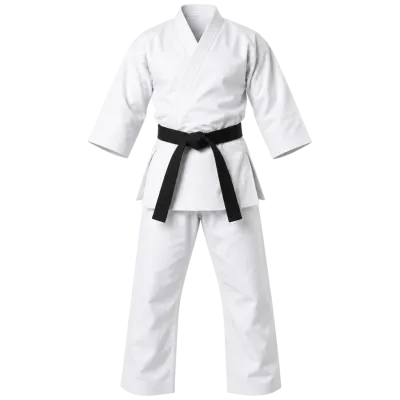 Matching productKarate giAmazon →
04
IJF rules on sleeve length and jacket fit
Competitors training toward IJF sanctioned events should be aware that the federation sets detailed specifications for how a judogi must fit, not just what it is made of. In general terms, the jacket sleeve should reach no further than the wrist and no shorter than around the middle of the forearm when the arm is extended, and there must be enough space between the sleeve and the arm to allow a finger, but not a closed fist, to pass through with some ease. The jacket itself must be long enough to cover the hips, and the skirt of the jacket, when overlapped, should reach a set minimum distance across the body. Trouser legs are governed by similar rules, needing to reach no shorter than around the mid calf.
These rules exist partly for safety and partly to prevent a jacket cut so tight, or trousers so short, that they give an unfair grip or agility advantage. Because exact figures are periodically reviewed by the federation, always check the current IJF rulebook or ask your national federation before a graded competition rather than relying on general guidance alone.
05
Blue and white judogi in competition
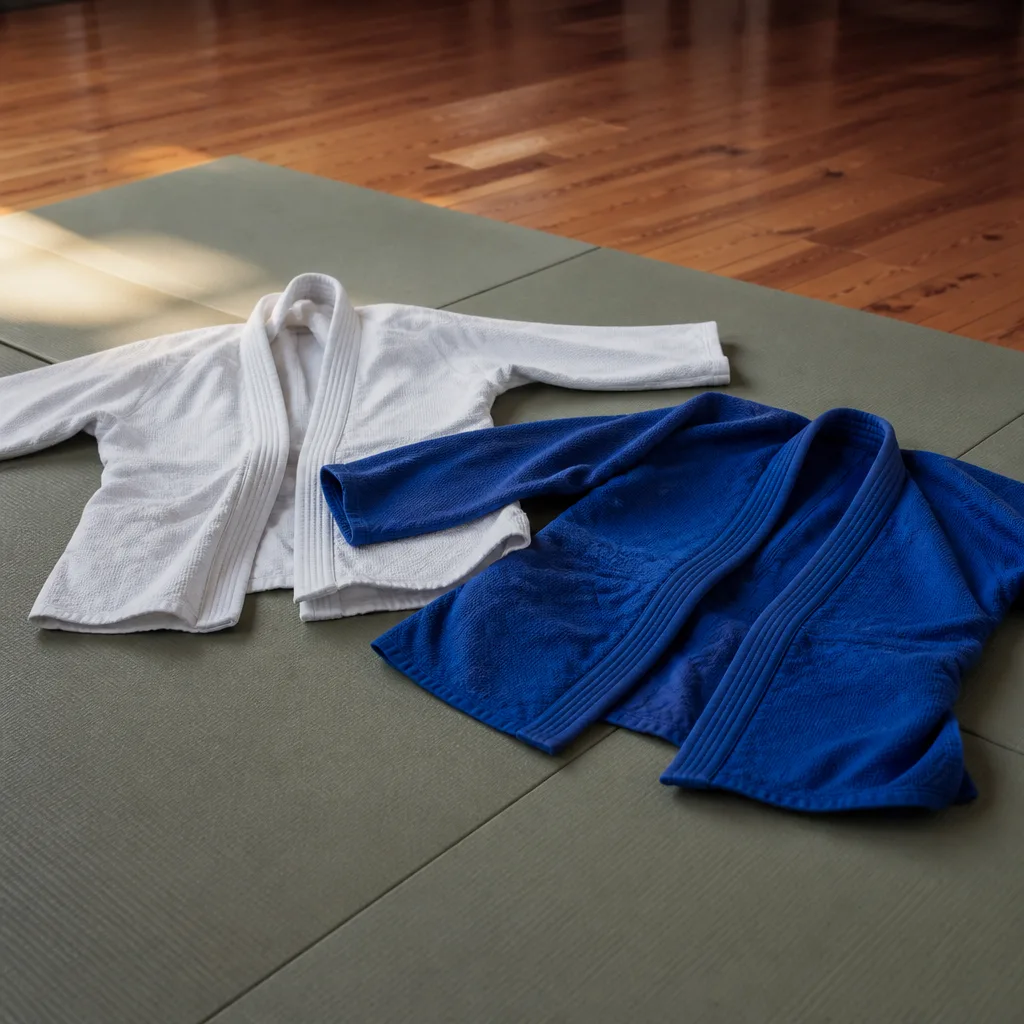
In many judo competitions, especially at higher levels, one athlete wears a white judogi and the opponent wears a blue judogi so that officials, coaches and spectators can easily tell the two competitors apart during fast exchanges. Blue judogi are otherwise built to the same weight, weave and fit standards as white ones. At club level and in gradings, a white judogi is standard, and a blue one is usually reserved for competitors who take part in tournaments requiring the colour distinction.
06
Sizing your judogi
Judogi are typically sold by numbered size linked to height, similar to a karate gi, though the fuller competition cut means many people find they need a slightly larger size than they would choose in another discipline. Because double weave fabric is stiffer and shrinks less predictably than single weave, it is worth checking a brand's own size chart rather than relying on numbers alone.
| Approx. height | Typical size label |
|---|---|
| 120 to 140 cm | 0 to 1 |
| 140 to 160 cm | 2 to 3 |
| 160 to 175 cm | 3 to 4 |
| 175 to 190 cm | 4 to 5 |
| 190 cm and above | 5 to 6 |
As with any gi, allow for some shrinkage after the first few washes, particularly with single weave cotton fabric. Our gi sizing and shrinkage guide covers general shrinkage handling in more depth, and our belt guide explains how to tie the obi that completes a judogi once you have the right size.
 Matching productMartial arts beltAmazon →
07
Caring for a heavy judogi
Because double weave judogi are thick and dense, they take longer to dry than a lighter gi and can develop odour if left damp in a bag. Wash on a cool or warm cycle, avoid high heat drying, and hang the jacket fully open so air can reach the inside layers. A well cared for double weave judogi, though a significant investment of time to break in, can last for years of regular training. See our general gi care and washing guide for a full routine.
 Matching productSports detergentAmazon →
08
Frequently asked questions
What is the difference between single weave and double weave judogi?
Single weave uses one layer of fabric, giving a lighter, more flexible jacket. Double weave uses a doubled layer, giving a stiffer, heavier and generally more durable jacket favoured for competition.
How heavy should a competition judogi be?
Adult competition judogi commonly fall in the region of 450 to 750 gsm, with double weave jackets typically at the heavier end. Always check current federation requirements before an official event.
Why do some judoka wear blue and others white?
Blue and white judogi are used together in many competitions purely to help officials and spectators distinguish the two athletes. Both colours meet the same construction standards.
Do I need an IJF approved judogi for club training?
No. IJF specifications mainly matter for sanctioned competitions. For club training and grading, a well constructed judogi that fits comfortably and meets your club's general expectations is normally sufficient.
How much does a judogi shrink?
Shrinkage varies by fabric and brand, but single weave cotton judogi typically shrink more than treated or blended fabrics. Many practitioners size up slightly and wash on cooler settings to manage this.
Explore
Read next
 Martial Arts and Their Equipment: A Complete OverviewAn overview of the martial arts covered on budoshop.com and the uniforms, protective gear and training weapons each one typically uses.
 Martial Arts Equipment Buying GuideA practical, step by step guide to buying the right martial arts equipment for your art and level, from your first uniform to protective ge…
 Uniforms and Belts ExplainedA guide to how gi, dobok and hakama are constructed, what federations allow, and how belt colours and grading systems work across schools.