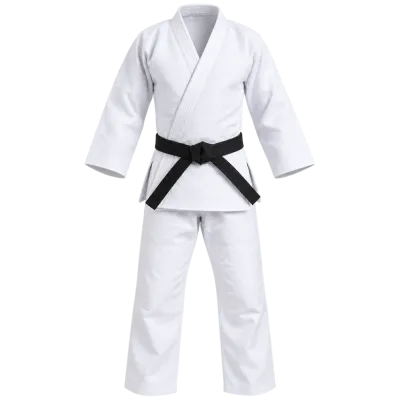
Gi weight describes how heavy the fabric of a martial arts uniform is, usually expressed in ounces per square yard for the finished garment or in grams per square metre, gsm, for the raw fabric. A heavier gi generally means a thicker, more durable weave, while a lighter gi is thinner and cooler to train in.
Competition judogi commonly fall in a range of roughly 450 to 750 gsm, with federation rules such as those from the IJF setting limits alongside weight, so a gi that is too light or too heavy for the category may not pass inspection. Karate and taekwondo uniforms tend to run lighter overall, since those arts involve less constant fabric grabbing than judo or Brazilian jiu jitsu, where gi weight has a bigger effect on how hard a uniform is to grip.
Choosing a weight is a balance between durability, comfort in a warm training space and how the fabric behaves under grips. A pearl weave or single weave fabric at the same stated weight can still feel different in hand. See our gi sizing and shrinkage guide for how weight interacts with fit after washing.