
6 min read
Aikido hakama guide: when it is worn, fabrics, sizing and folding
A practical guide to the aikido hakama: fabrics, sizing by height, tying, folding and care.
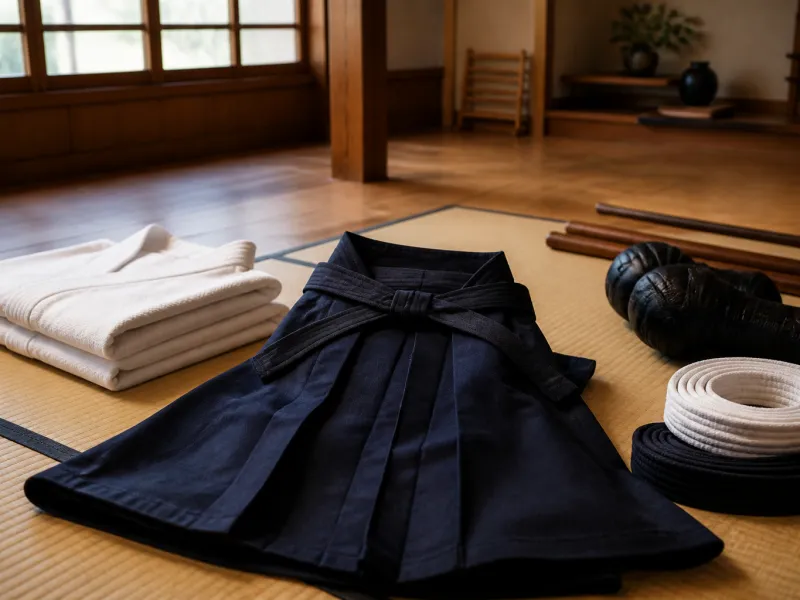
The hakama is one of the most recognisable pieces of traditional martial arts clothing, a wide, pleated garment worn over the keikogi in aikido as well as in kendo and iaido. For many aikido students, receiving permission to wear the hakama marks a meaningful step in training, and getting the fit, fabric and folding right makes the garment far more comfortable and durable.
This guide covers when the hakama is worn in aikido, the common fabrics, how to size one by height, and how to fold and care for it so the pleats keep their shape over years of practice.
01
What the hakama is and its role in aikido
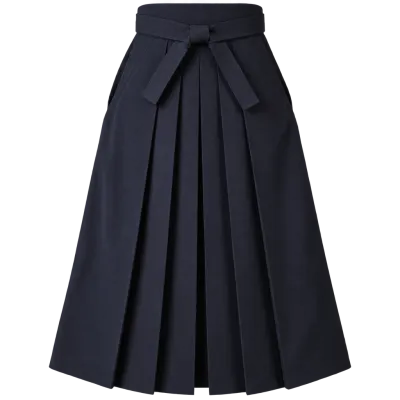
The hakama is a wide, split (or occasionally non split) garment tied at the waist over a keikogi and worn with an obi underneath. In aikido it has seven pleats, five at the front and two at the back, which are traditionally said to represent virtues such as courtesy, courage and sincerity, though interpretations vary between schools. Beyond its symbolism, the hakama also has a practical role: its wide cut conceals the exact footwork of the wearer, which historically made it harder for an opponent to read incoming movement.
 Matching productHakamaAmazon →
02
When the hakama is worn
Practice varies significantly between aikido organisations and individual dojo. In some schools every student wears a hakama from the very first class, in others it is introduced once a student has trained for a set period, and in many it is awarded at a particular kyu grade or upon reaching black belt (dan) level. There is no single international standard, so the clearest source of guidance is always your own instructor or federation. For background on grading structures more broadly, see our belt guide and tying guide.
 Matching productMartial arts beltAmazon →
03
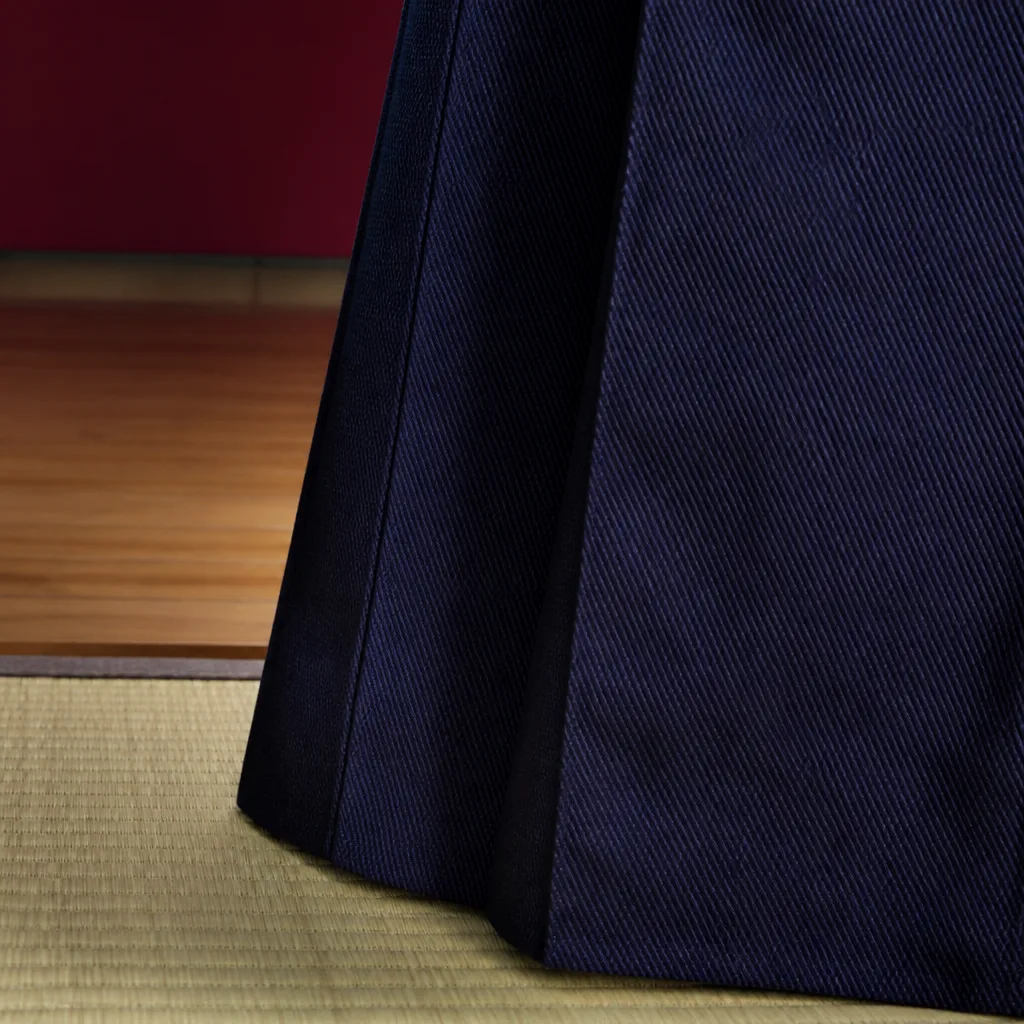
Fabrics: cotton, polyester and blends
Hakama are made in a few common fabric types, each with different weight, drape and care needs.
- Cotton, often a twill weave, gives a heavy, crisp drape and holds pleats well, but it is heavier, slower to dry and can shrink if washed incorrectly.
- Polyester, sometimes called tetron or a similar trade term, is lighter, dries quickly, resists wrinkling and is generally more affordable to care for, though the drape is a little less crisp than cotton.
- Cotton and polyester blends aim for a middle ground, offering some of the weight and drape of cotton with easier care.
For warm climates or frequent training, a lighter polyester or blend hakama is often more practical, while many practitioners prefer cotton for its traditional look and feel once they train less frequently or mainly for gradings and demonstrations. Some practitioners keep two hakama for this reason: a lighter one for regular weekly training and a heavier cotton one reserved for gradings, seminars and formal demonstrations where appearance matters more and the garment is worn for shorter periods.
Colour is worth a brief mention alongside fabric. Black and indigo (a deep blue, sometimes called kon) are the most common colours in aikido, with the exact shade and any permitted variation usually set by the individual dojo or organisation rather than a single international standard, so it is worth checking with your own instructor before choosing a colour if you are unsure.
04
Sizing the hakama by height
Hakama are conventionally sized using a numbered system tied to the wearer's height rather than waist or hip measurements, though the exact length of the garment (measured from waist to hem) also depends on how it is worn, since some styles are tied higher on the waist than others. The table below gives commonly used approximate ranges as a starting point, but always check the maker's own size chart where available, since numbering can vary slightly between manufacturers.
| Height (approx.) | Common hakama size |
|---|---|
| 150 to 155 cm | Size 18 to 19 |
| 155 to 160 cm | Size 20 to 21 |
| 160 to 165 cm | Size 22 |
| 165 to 170 cm | Size 23 |
| 170 to 175 cm | Size 24 to 25 |
| 175 to 180 cm | Size 25 to 26 |
| 180 to 185 cm | Size 27 |
| 185 cm and above | Size 28 or made to measure |
A hakama that is too short will ride up and expose the ankles during throws and rolls, which is both untidy and, in a formal grading, considered poor etiquette. One that is too long can be trodden on during footwork, so when in doubt it is safer to size slightly short than too long, and to hem it if needed once you know your regular training height (some practitioners' torso to leg proportions mean the standard height based chart is only a starting estimate).
05
Parts of the hakama and how it is tied
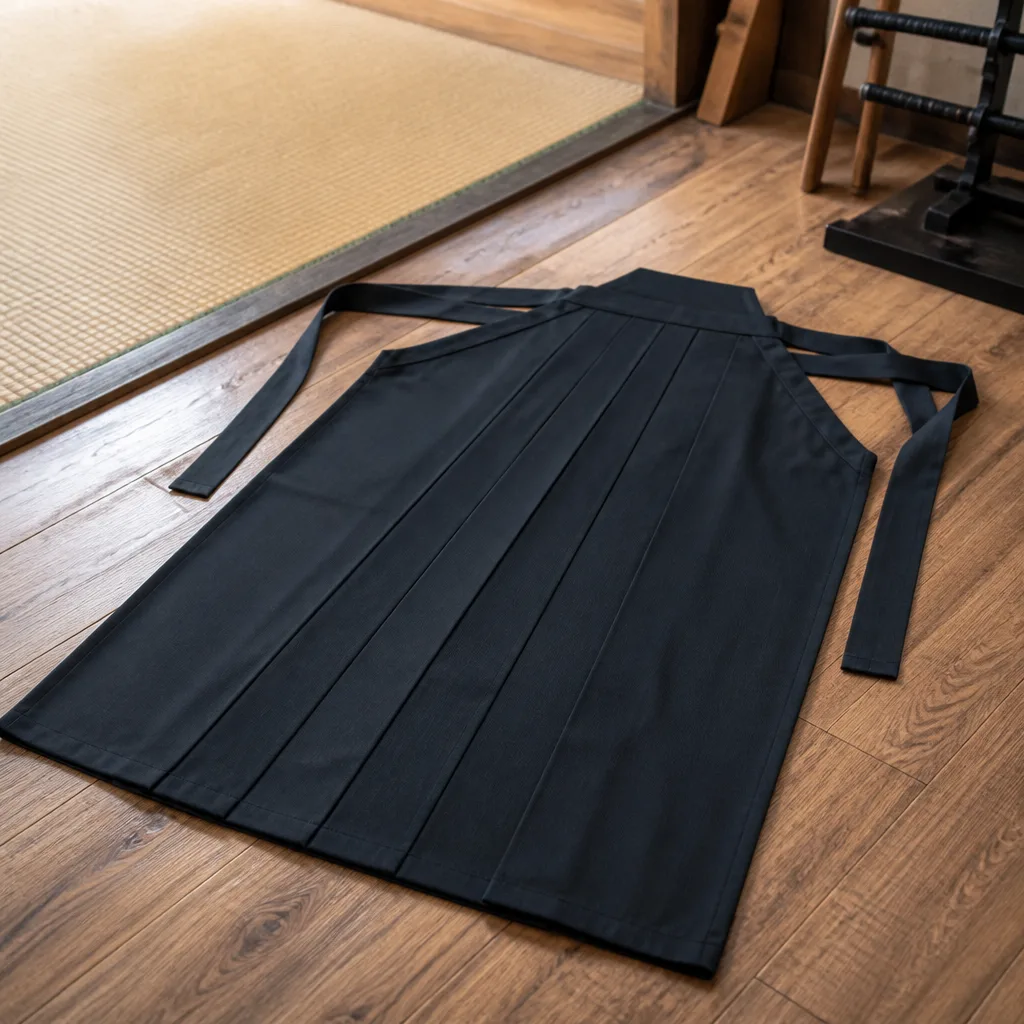
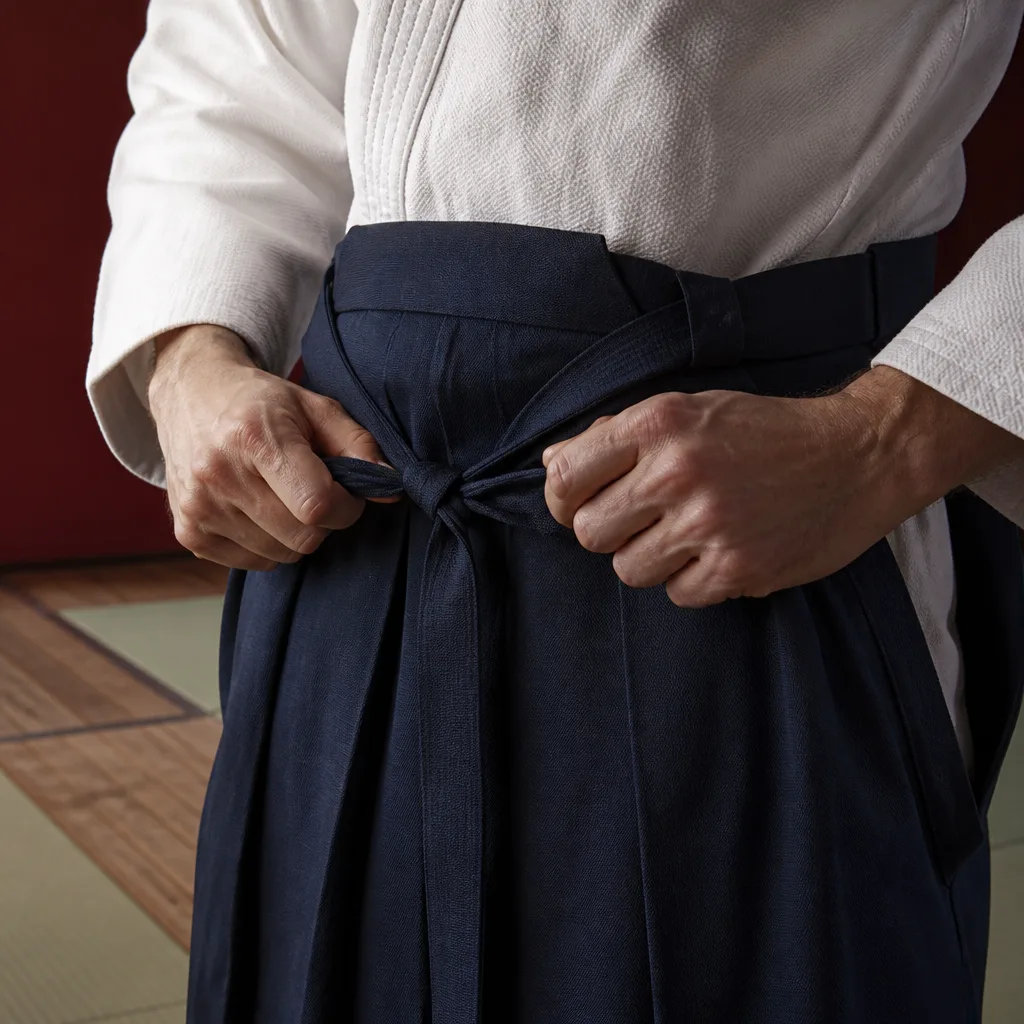
A hakama has four long ties called himo, two at the front and two at the back, along with a stiffened board at the back called the koshiita that sits against the lower back for support. The front himo are wrapped around the waist and tied, then the koshiita is positioned, and the back himo are brought forward and tied to secure everything in place. Different schools teach slightly different tying methods, so it is worth learning the version your own instructor demonstrates rather than assuming a single universal technique.
06
Folding the hakama correctly
Folding the hakama neatly after each session protects its pleats and is considered good etiquette in most dojo. The general sequence is to lay the hakama flat, bring the himo together and straighten them, then fold the pleats inward one at a time so they stack evenly, before folding the whole garment in half or thirds depending on the storage bag. Many practitioners learn the exact folding sequence directly from a senior student or instructor, since watching it done once is far easier than reading a description.
07
Caring for your hakama
Hakama are not usually washed after every session, since frequent washing can soften the fabric and loosen the pleats. Instead, air the hakama out after training and spot clean any marks. When washing is needed, cotton hakama in particular should be treated gently to control shrinkage, following the general guidance in our gi care and washing guide. Store the folded hakama flat or in its bag rather than hanging it for long periods, since hanging can pull the pleats out of shape over time.
 Matching productSports detergentAmazon →
08
Frequently asked questions
Do all aikido students eventually wear a hakama?
Policy differs by school. Some dojo have every student wear one from the start, others reserve it for a certain grade, so it is best to ask your own instructor what applies in your dojo.
Is a heavier cotton hakama better than a lighter polyester one?
Neither is better in general terms, they suit different priorities: cotton offers a traditional drape and crisp pleats, while polyester is lighter, quicker to dry and easier to maintain.
How do I know if my hakama is the right length?
With the hakama tied at your normal training height, the hem should sit close to the top of the foot without dragging on the floor or riding up above the ankle during movement.
Can I machine wash my hakama?
Many polyester and blend hakama tolerate gentle machine washing on a cool setting, but cotton versions are often safer hand washed or washed on a delicate cycle to limit shrinkage and keep the pleats intact.
What is the stiff board at the back of the hakama for?
That is the koshiita, and it sits against the lower back to keep the back of the hakama upright and to help the himo stay securely tied during movement.
Explore
Read next
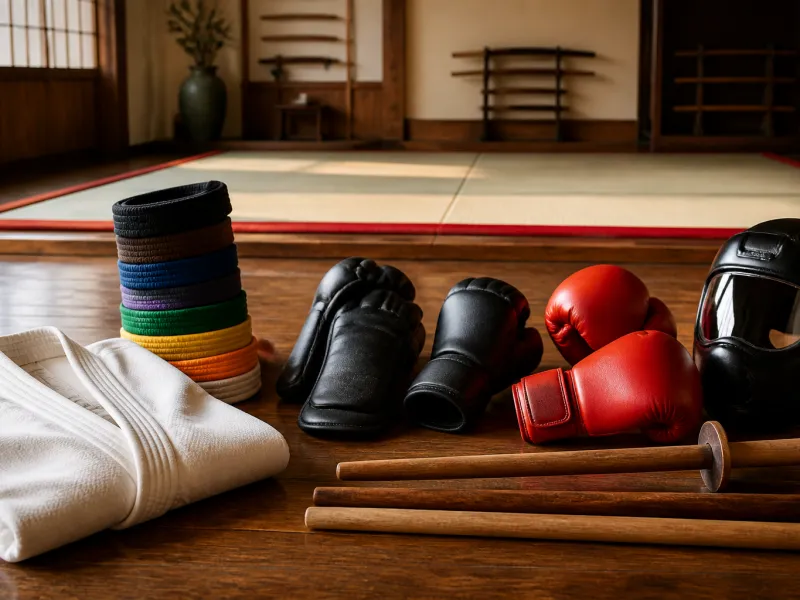 Martial Arts and Their Equipment: A Complete OverviewAn overview of the martial arts covered on budoshop.com and the uniforms, protective gear and training weapons each one typically uses.
 Martial Arts Equipment Buying GuideA practical, step by step guide to buying the right martial arts equipment for your art and level, from your first uniform to protective ge…
 Uniforms and Belts ExplainedA guide to how gi, dobok and hakama are constructed, what federations allow, and how belt colours and grading systems work across schools.