
6 min read
Setting up a home dojo: space, mats and mounting a bag
How to plan a home dojo, from space and flooring to mirrors, bag mounting, ventilation and everyday etiquette.
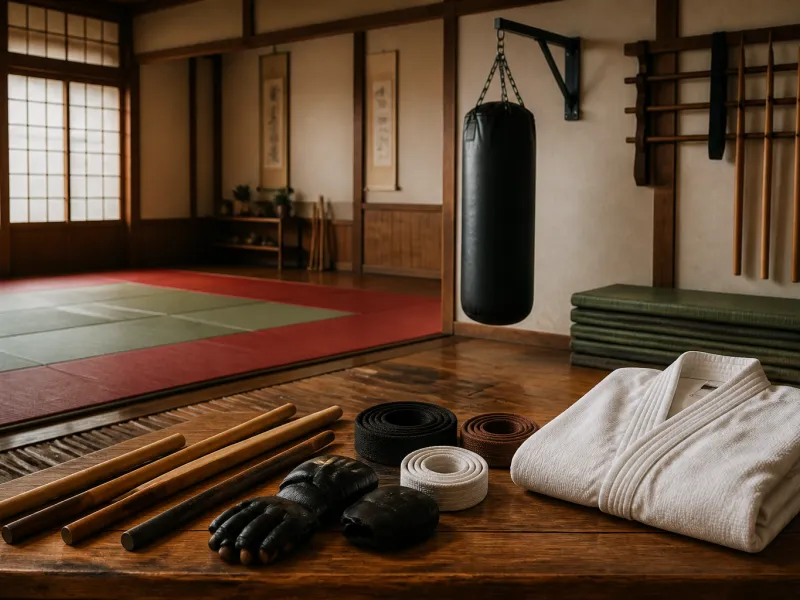
Many practitioners eventually want a small space at home to drill kata, work on solo grappling movement, hit a bag or simply stretch without waiting for the next class. A home dojo does not need to be large or expensive. With a little planning around space, flooring, mirrors and ventilation, even a spare room, garage or corner of a living room can become a useful training area.
This guide covers how to plan the space itself. For the surface you train on, see our dedicated mats and flooring guide, and for what gear to prioritise first, our first gear guide.
01
Planning the space you have
Before buying anything, measure the room and think about how you actually move in your art. Striking arts such as karate or taekwondo need enough length to step forward and back through a technique without hitting furniture, generally at least 2.5 to 3 metres (about 8 to 10 feet) of clear floor in one direction. Grappling arts such as judo or BJJ benefit from a wider open area since throws and rolling movement extend in more directions.
A ceiling height of at least 2.2 to 2.4 metres is worth checking if you plan to practise techniques involving raised arms, weapons, or any jumping movement. Garages, basements and converted spare rooms are popular choices because they are separated from daily living space and tolerate some noise and occasional contact with walls.
02
Flooring basics
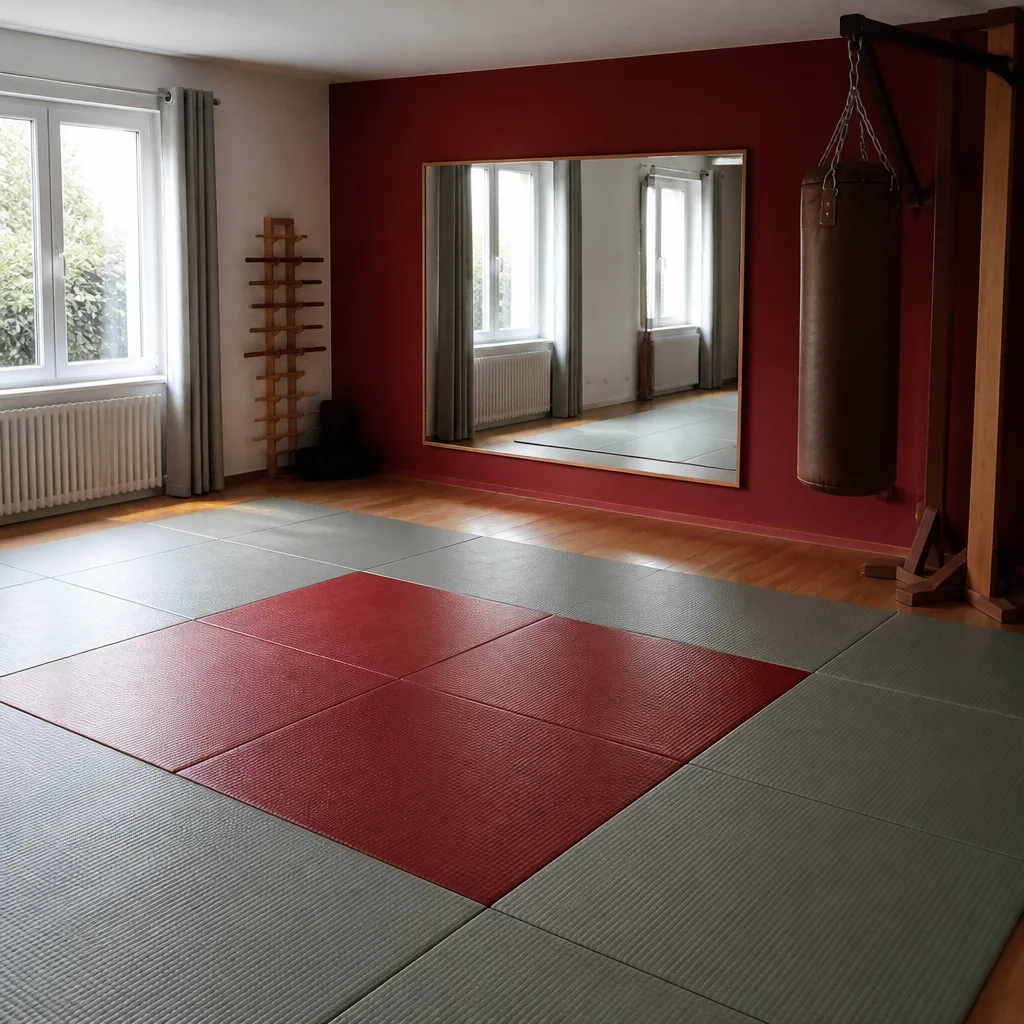
The floor is the single most important investment in a home dojo. Hard tile or concrete under a thin mat transmits impact badly and increases injury risk during falls, throws or bag work. A layer of interlocking puzzle mats, typically 20 to 40 millimetres thick, is the most common home solution because it is affordable, easy to install and can be removed when the room is needed for something else.
Grappling focused home dojos, where falls and mat work are frequent, generally benefit from a thicker or denser mat than a space used mainly for striking drills or forms. A full comparison of mat types, thicknesses and cleaning is covered separately in our mats and flooring guide.
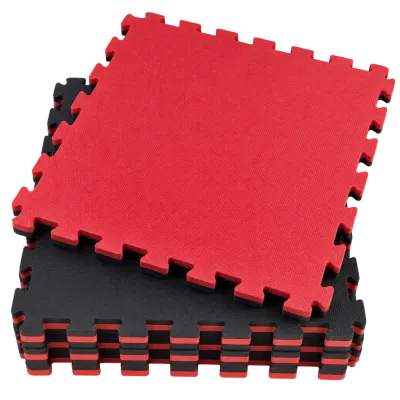 Matching productPuzzle matsAmazon →
03
Mirrors for solo practice
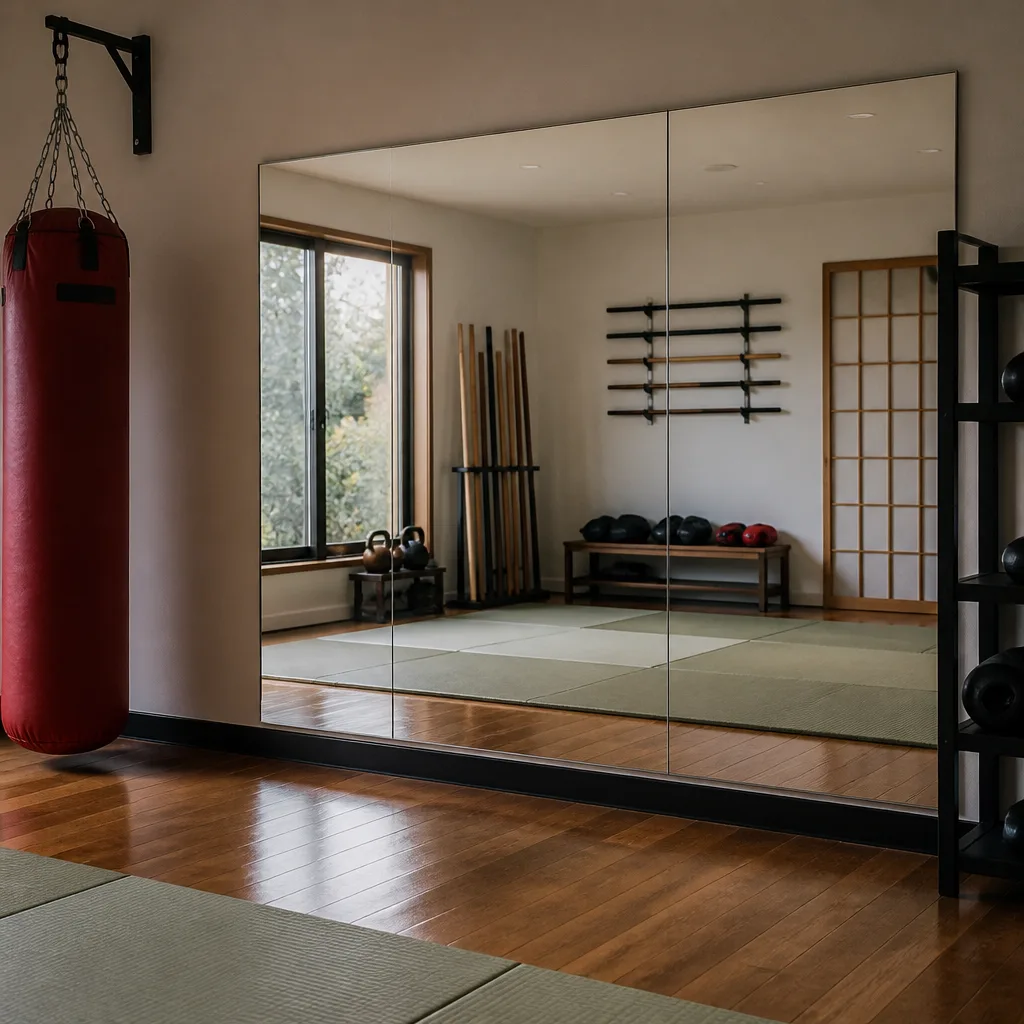
A wall mirror is one of the most useful additions for solo kata, forms or striking practice, since it lets you check stance, alignment and technique without a training partner or instructor present. A single large mirror, at least 1.2 metres wide, mounted at a height that shows your full stance, is generally more useful than several small mirrors.
Safety glass or an acrylic mirror panel is worth considering in a space where bags are struck nearby or where equipment could be knocked into the wall, since ordinary glass mirrors can shatter on impact.
04
Mounting a heavy bag safely
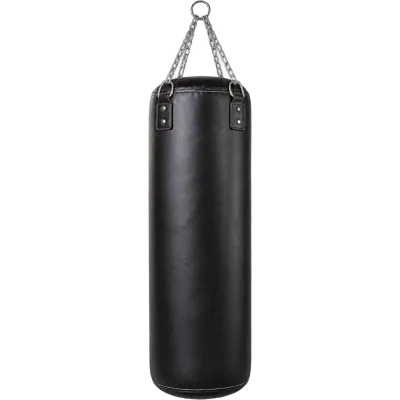
A heavy bag needs a secure ceiling joist, a purpose built wall bracket rated for the bag's weight, or a freestanding base filled with sand or water. Mounting a bag to drywall or a ceiling panel without locating a structural joist or beam is a common and serious mistake that can cause the mount to fail under repeated impact.
Leave clear space around a hanging bag, generally at least a metre on each side, so that swinging motion does not bring it into contact with walls, mirrors or other equipment. If ceiling height is limited, a freestanding bag avoids the need for overhead mounting entirely, though it takes up more permanent floor space.
 Matching productHeavy bagAmazon →
05
Ventilation and comfort
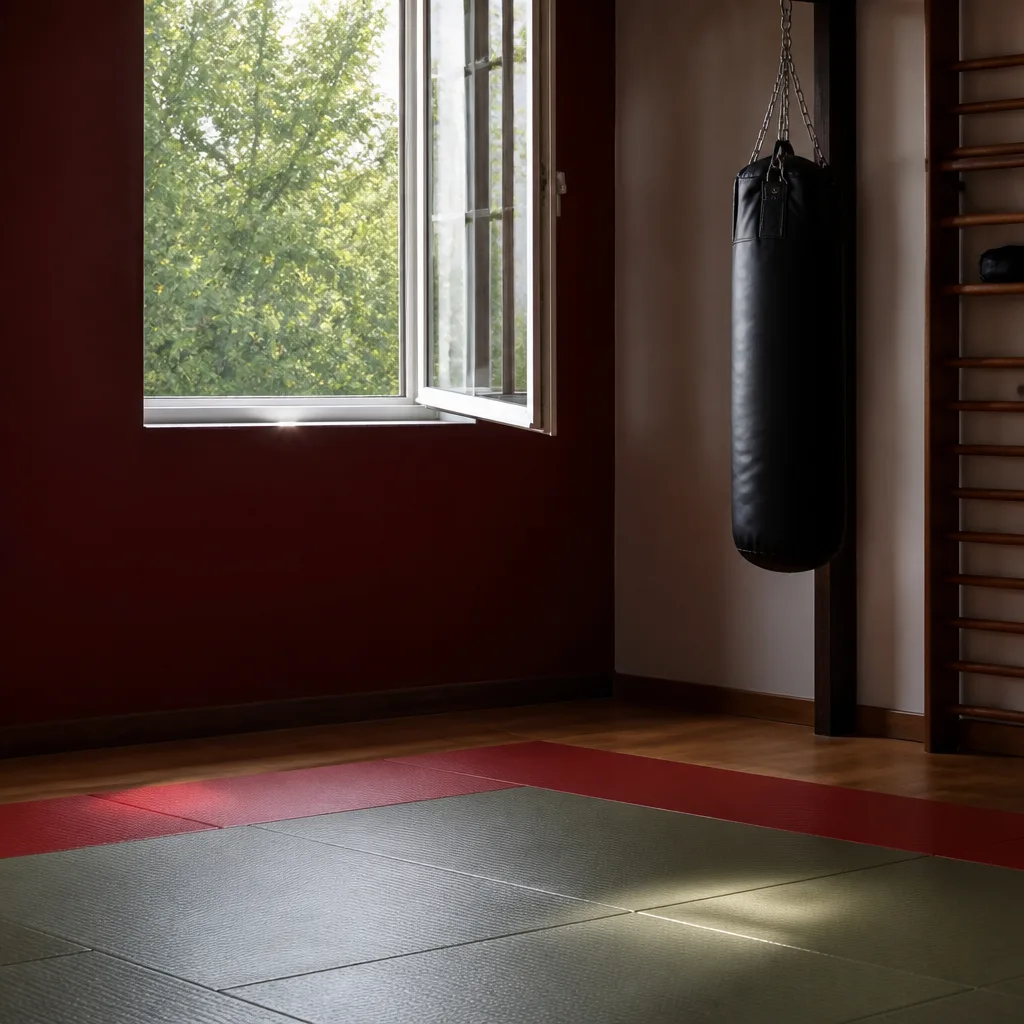
Training raises body temperature quickly, and a small enclosed room without airflow becomes uncomfortable and can affect focus and endurance. A window that opens, a standing fan, or a small extractor fan in a garage conversion all help keep the space usable year round. Good airflow also helps mats and any stored uniforms dry out between sessions and reduces the chance of odour building up in the room itself.
Lighting matters more than it might seem: a room that is too dim makes it harder to check technique in a mirror and can hide trip hazards around mat edges, so a bright, even light source is worth prioritising over decorative lighting.
06
Storage and organisation
| Item | Suggested storage | Why it matters |
|---|---|---|
| Gi and uniforms | Open shelf or ventilated hooks, not a sealed bag | Prevents damp odour building up between sessions |
| Belts | Hung flat or coiled loosely | Avoids permanent creasing of the stiffening layer |
| Weapons such as bo or bokken | Wall rack, out of reach of children | Keeps wooden weapons straight and safely stored |
| Protective gear | Open mesh bag or rack, air dried after use | Padding and foam trap moisture and odour easily |
| Mats when not in use | Stacked flat or rolled, away from direct sun | Prevents warping and colour fading over time |
 Matching productMartial arts beltAmazon →
07
Etiquette in a home space
Many practitioners like to bring a little of the etiquette from their dojo into the home space, such as a short bow, or rei, on entering and leaving the training area, and keeping the mat area tidy and free of shoes. This is entirely a personal or family choice rather than a requirement, and different schools and instructors have different traditions around it.
If children share the home dojo, agreeing on a few simple rules, such as no running on the mats outside of drills and no unsupervised use of weapons, keeps the space safe without needing constant supervision for every session. Our kids martial arts gear guide covers sizing and safety equipment specific to younger training partners.
A visible, simple set of house rules, written down and kept near the entrance to the training area, helps everyone in a shared household remember the basics without a parent needing to repeat them before each session. This is particularly useful when the space doubles as a playroom, garage or living area outside training hours.
 Matching productKids karate giAmazon →
08
Building the space out over time
A home dojo rarely needs to be finished all at once. Many practitioners start with just enough mat to cover the main movement area and a single bag or set of pads, then add a mirror, better ventilation or additional flooring once they know how often the space actually gets used. Approaching the build as a series of small, reversible steps, rather than one large purchase, also makes it easier to adjust the room if training habits or available space change later.
Second hand mats, mirrors and racks are common in this kind of setup, since the useful lifespan of a mat or mirror is largely unaffected by who owned it first, provided it is in sound condition. Checking mats carefully for cracking, excessive compression or a sagging core before buying second hand is a sensible precaution regardless of price.
09
Frequently asked questions
How much space do I really need for solo kata practice?
A clear area of roughly 2.5 to 3 metres in the longest direction of movement is enough for most solo forms practice, though larger patterns with more travelling steps benefit from additional room.
Can I train on carpet instead of mats?
Carpet over a solid subfloor gives some cushioning for light striking and forms practice, but it is not a substitute for proper mats when falls, throws or ground work are involved. See our mats and flooring guide for the differences.
Is a home heavy bag necessary for most arts?
No, a bag is most useful for arts with a strong striking component. Many grappling focused practitioners never need one, while others use it purely for conditioning.
What is the minimum ceiling height for a home dojo?
Around 2.2 to 2.4 metres works for most standing practice. Arts involving overhead weapon movement or jumping techniques are more comfortable with additional clearance.
How do I stop mats sliding on a hard floor?
Interlocking puzzle mats generally grip each other and the floor well once the full set is assembled. A thin non slip underlay can help on very smooth tile or polished concrete.
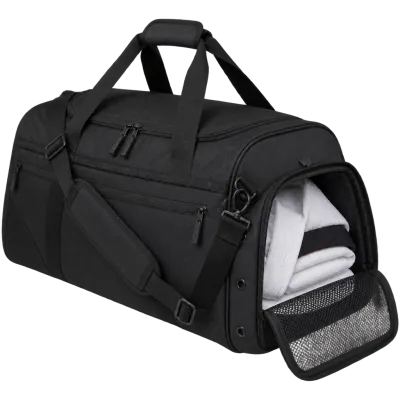 Matching productGym bagAmazon →
Explore
Read next
 Martial Arts and Their Equipment: A Complete OverviewAn overview of the martial arts covered on budoshop.com and the uniforms, protective gear and training weapons each one typically uses.
 Martial Arts Equipment Buying GuideA practical, step by step guide to buying the right martial arts equipment for your art and level, from your first uniform to protective ge…
 Uniforms and Belts ExplainedA guide to how gi, dobok and hakama are constructed, what federations allow, and how belt colours and grading systems work across schools.