
6 min read
Mats and flooring for martial arts training
A comparison of puzzle mats, tatami and roll out mats, thickness by art, and how to clean and store them.
The surface you train on affects safety, comfort and how long a home or club floor lasts. Martial arts mats range from thin foam puzzle tiles to traditional tatami and heavy roll out wrestling mats, and the right choice depends heavily on the art you practise and whether the space is shared with other uses.
This guide compares the main mat types, recommended thickness by art, and how to keep mats clean and in good condition. For the rest of a home training space, see our home dojo setup guide, and for a first uniform and other early purchases, our first gear guide.
01
Puzzle mats
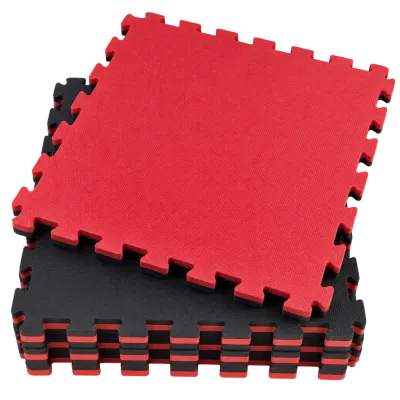
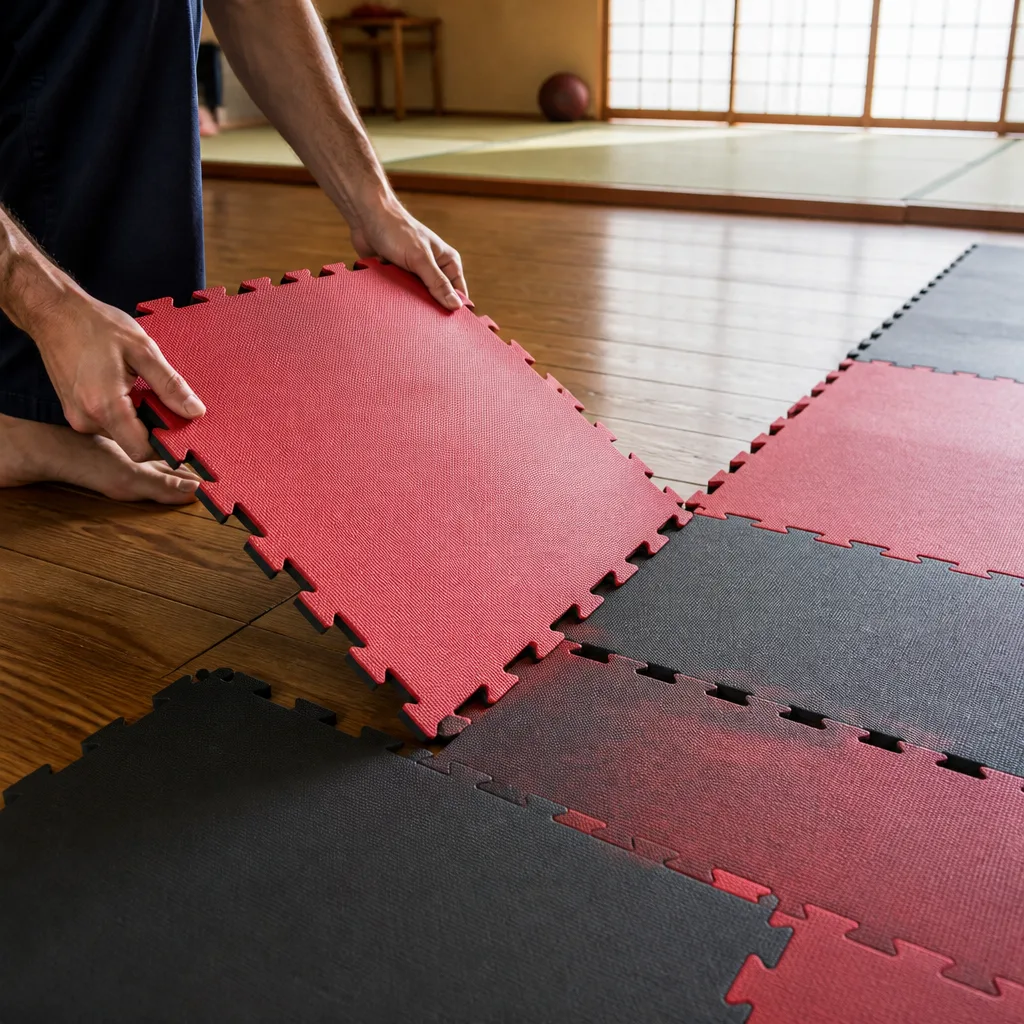
Interlocking EVA foam puzzle mats are the most common choice for home dojos and many smaller clubs. Individual tiles, typically around 1 metre square, connect with jigsaw style edges to cover any size of room, and can be taken apart for storage or moving. Thickness generally ranges from 20 to 40 millimetres, with thicker tiles giving more cushioning for falls and throws.
Puzzle mats are lightweight, relatively affordable per square metre, and easy for one person to install without tools. Their main drawback is that the seams between tiles can shift apart under heavy sliding movement or repeated hard falls in the same spot, so they suit striking practice, light grappling and general fitness use better than high intensity throwing.
 Matching productPuzzle matsAmazon →
02
Tatami
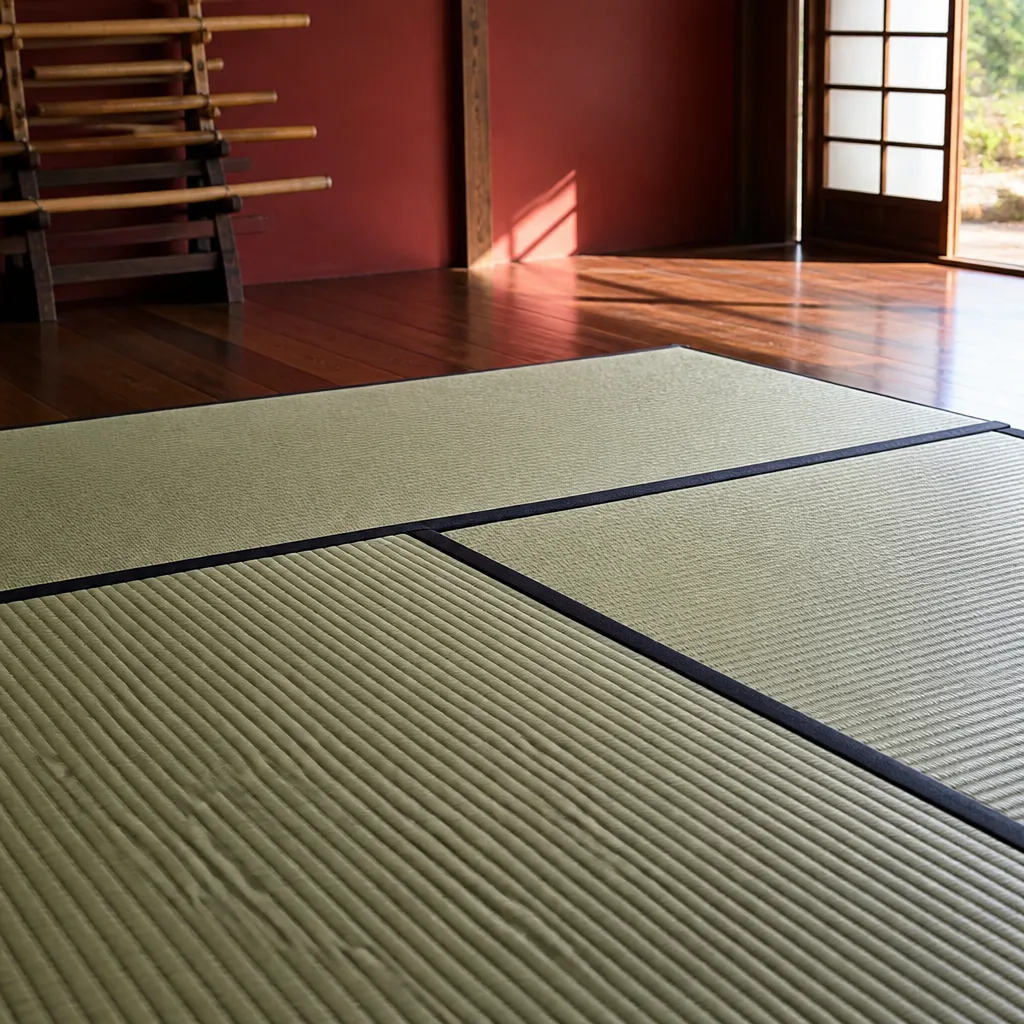
Tatami is the traditional Japanese flooring historically used in dojo, made from a rice straw or compressed fibre core covered in a woven rush or synthetic surface. Modern training tatami is usually a dense foam core with a textured vinyl or rush style top layer, designed to be firm enough for stable footing in judo and karate while still absorbing impact from falls.
Tatami style mats are common in dedicated judo and traditional karate schools because the surface offers good grip for bare feet and a stable base for throwing techniques. They are typically heavier and more expensive per square metre than simple foam puzzle mats, and are more often found in permanent club installations than in home dojos, though smaller tatami style tiles for home use are also available.
 Matching productKarate giAmazon →
03
Roll out mats
Roll out mats are a single continuous sheet, usually made from closed cell foam with a durable vinyl surface, and are the standard choice for wrestling and much grappling specific training. Because there are no seams across the main training area, they handle sliding, scrambling and repeated takedowns without the surface shifting the way puzzle tile seams sometimes do.
Their main limitation is size and weight: a full roll out mat can be heavy and awkward for one person to move, and it generally needs a dedicated space to be unrolled and stored, which makes it less practical for a room used for other purposes during the week.
04
Thickness by art
| Art or use | Typical mat thickness | Notes |
|---|---|---|
| Karate, taekwondo (mainly standing work) | 20 to 30 mm | Firm footing matters more than deep cushioning |
| Judo, throwing based arts | 30 to 50 mm, or dedicated tatami | Falls need real shock absorption |
| BJJ, grappling and ground work | 30 to 40 mm roll out or dense puzzle mat | Seam stability matters for sliding movement |
| General fitness or light solo drilling | 15 to 20 mm | Lighter, easier to store between sessions |
| Kids classes | 30 mm or more | Extra cushioning for falls during games and drills |
 Matching productKids karate giAmazon →
05
Cleaning and hygiene
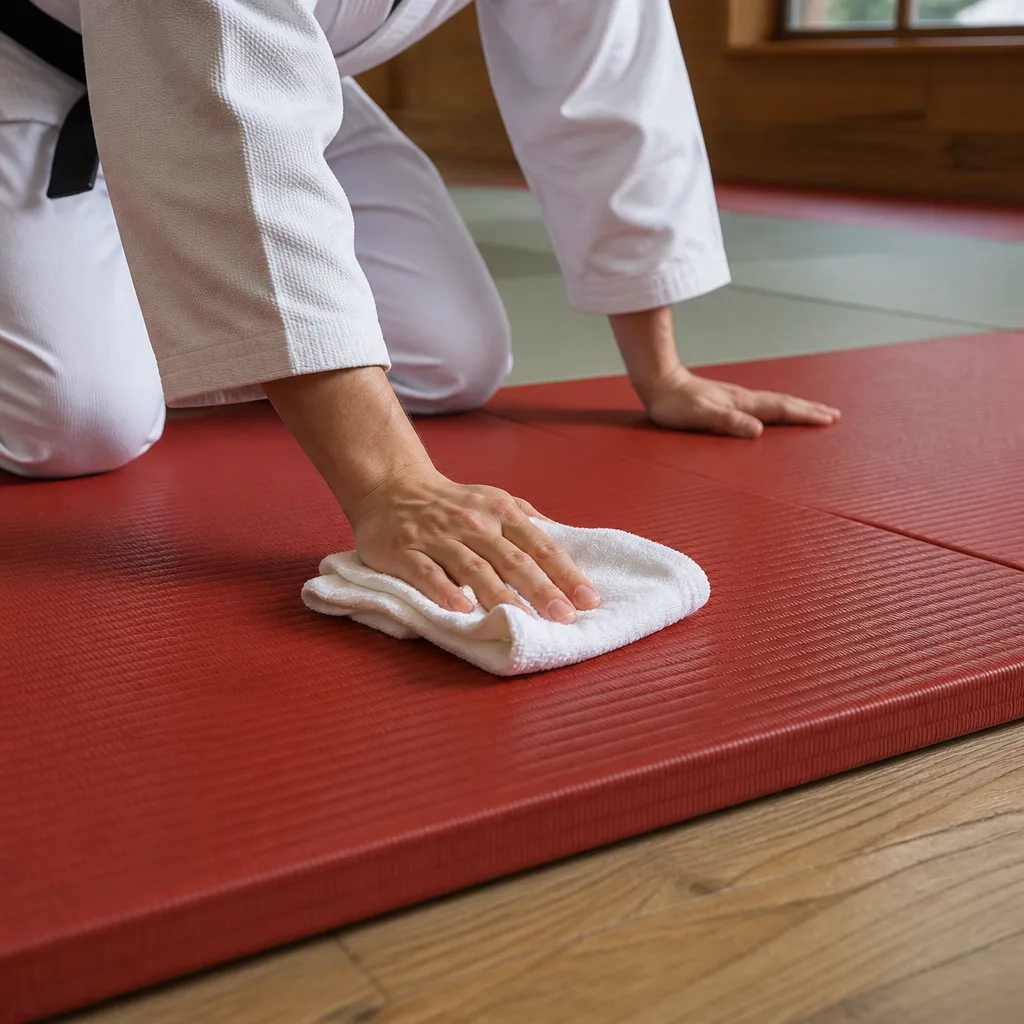
Mats collect sweat, skin contact and dust, so regular cleaning matters both for hygiene and for the surface itself. A damp mop or cloth with a mild, mat safe cleaner after each session, or at minimum after each week of regular use, keeps most foam and vinyl surfaces in good condition. Strong solvents and undiluted bleach can dry out and crack foam or vinyl over time, so a diluted, gentle cleaner is generally the safer routine choice.
Puzzle mat seams can trap dust and moisture underneath, so occasionally lifting a few tiles to sweep and dry the subfloor helps prevent mould, particularly in humid climates or ground floor rooms.
06
Fitting mats to the room
Measuring the room accurately before ordering avoids awkward gaps or excessive cutting. Puzzle mats are the most forgiving for irregular room shapes since edge pieces can usually be trimmed to fit around door frames or alcoves. Roll out mats and larger tatami installations suit rectangular rooms best, since cutting a continuous sheet mat is more involved and can affect its structure at the cut edge.
Leaving a small buffer zone around the edges of the main training area, rather than covering the mat right up to the walls, gives a visual boundary and some space to step back safely during drills.
07
Storage between uses
Puzzle mats can be disassembled and stacked flat when the room is needed for another purpose, which is one of their main advantages for shared living spaces. Roll out mats need enough floor length to roll and unroll, and storing them rolled rather than folded avoids permanent creases that can weaken the surface. Whatever the mat type, keeping it dry and out of direct sunlight during storage extends its useful life considerably.
A dedicated corner, cupboard or under bed space set aside for folded mat tiles makes it far more likely that a home dojo actually gets rebuilt and used regularly, rather than left disassembled for weeks because putting it away and setting it up again feels like too much effort.
09
Frequently asked questions
Can I use puzzle mats for judo throws at home?
Thicker puzzle mats, generally 40 millimetres or more, can handle light throwing practice, though the seams may shift under repeated hard falls compared with a continuous roll out mat or dedicated tatami.
How often should training mats be replaced?
There is no fixed schedule. Watch for compressed, hardened foam that no longer springs back, visible cracking, or seams that no longer hold together, all of which reduce the cushioning that keeps falls safe.
Is tatami necessary for judo, or is a foam mat enough?
Traditional tatami is the historical and common surface for judo, valued for its grip and stability, but a sufficiently thick, dense foam mat with a grippy surface can be a practical substitute, particularly in a home setting.
What is the best way to clean mats used by children?
A mild, mat safe disinfectant used after each session, combined with regular airing of the room, is a sensible routine, especially since children's classes often involve close floor contact and games.
Do mats need an underlay on a hard floor?
A thin non slip underlay can help stop puzzle mats sliding as a whole unit on very smooth tile or polished concrete, though it is not essential on carpet or a textured floor.
 Matching productJudogiAmazon →
Explore
Read next
 Martial Arts and Their Equipment: A Complete OverviewAn overview of the martial arts covered on budoshop.com and the uniforms, protective gear and training weapons each one typically uses.
 Martial Arts Equipment Buying GuideA practical, step by step guide to buying the right martial arts equipment for your art and level, from your first uniform to protective ge…
 Uniforms and Belts ExplainedA guide to how gi, dobok and hakama are constructed, what federations allow, and how belt colours and grading systems work across schools.