
6 min read
Kids' martial arts gear: sizing, safety and motivation
A practical guide to sizing for growth, safety gear, uniforms, belts and motivation in children's martial arts equipment.
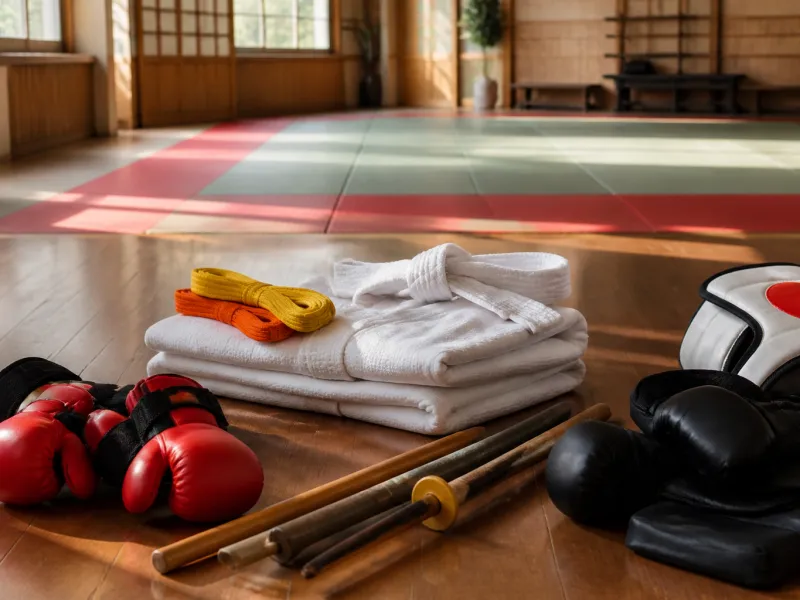
Buying martial arts equipment for a child comes with its own set of questions that do not apply to adult gear: how much room to leave for growth, which protective equipment actually matters at a young age, and how to keep a child motivated through the gradual process of belts and grading. This guide covers sizing, safety gear, uniforms and belts specifically for children, and a few practical notes on motivation along the way.
For general guidance on what any beginner needs first, see our first gear guide, and for home training space shared with children, our home dojo setup guide.
01
Sizing for a growing child
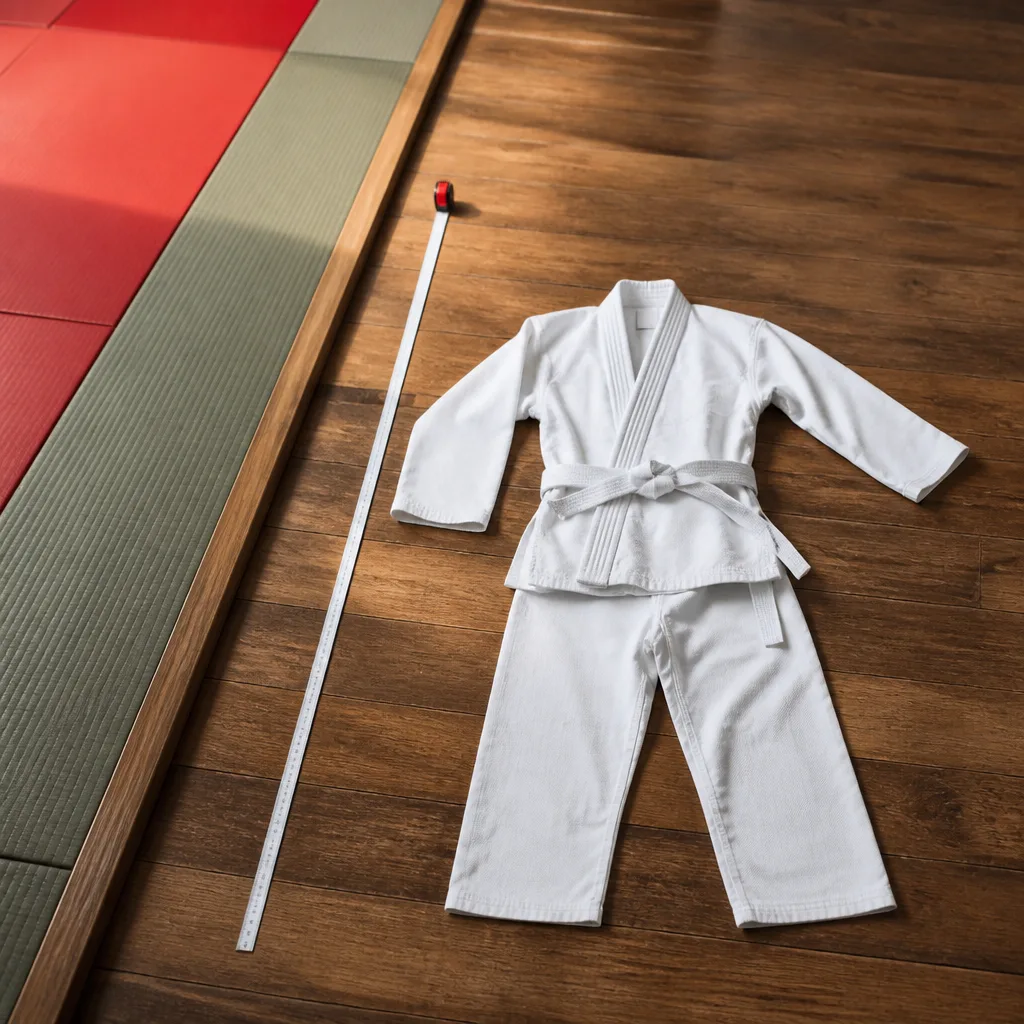
Children's uniforms and protective gear are typically sized by height rather than the chest or waist measurements often used for adults, since height is easier to measure accurately and changes predictably as a child grows. Most gi and dobok size charts list a height range for each size, for example a range spanning roughly 10 centimetres, which gives some natural room to grow into over a season of training.
Buying slightly ahead of a child's current height, rather than an exact fit, is common practice among parents, since children can outgrow a snug uniform within a few months. That said, sizing too far ahead makes a jacket or dobok unsafe or impractical to move in, particularly for grappling arts where excess loose fabric can be gripped awkwardly, so a size with one growth step of headroom is usually a reasonable balance.
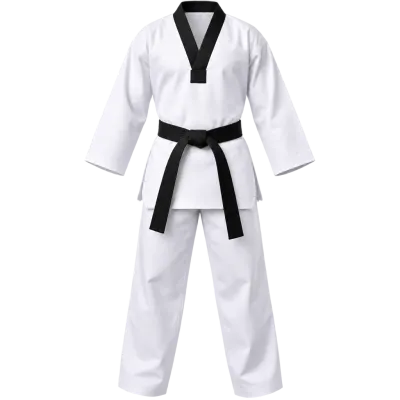 Matching productTaekwondo dobokAmazon →
02
Safety gear priorities
For young children, safety equipment such as padded head guards, shin guards and properly fitted mouthguards matters more, not less, than for adults, since children have less developed control over strike power and timing during sparring drills. Many clubs running children's classes use more conservative contact rules and correspondingly lighter, more heavily padded gear than the adult equivalent.
A mouthguard for a child should be checked more frequently than an adult's, since growing teeth and jaws mean a good fit at the start of a season may need adjusting or replacing within a year. Boil and bite mouthguards are the common option for children because they can be refitted as needed, and our mouthguard guide covers fitting in detail.
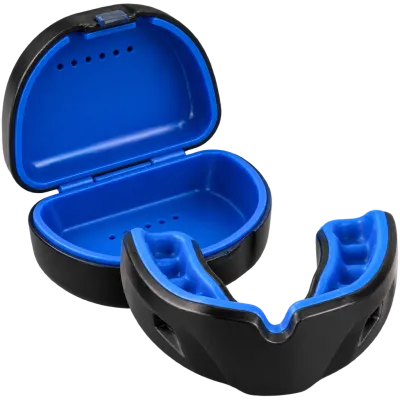 Matching productMouthguardAmazon →
03
Uniforms built for kids
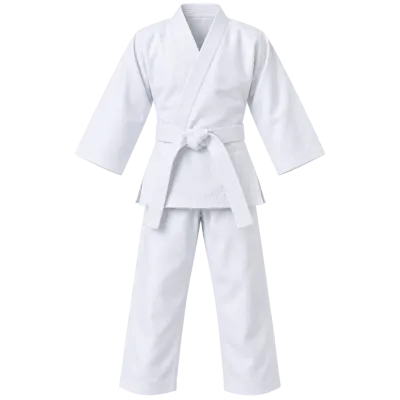
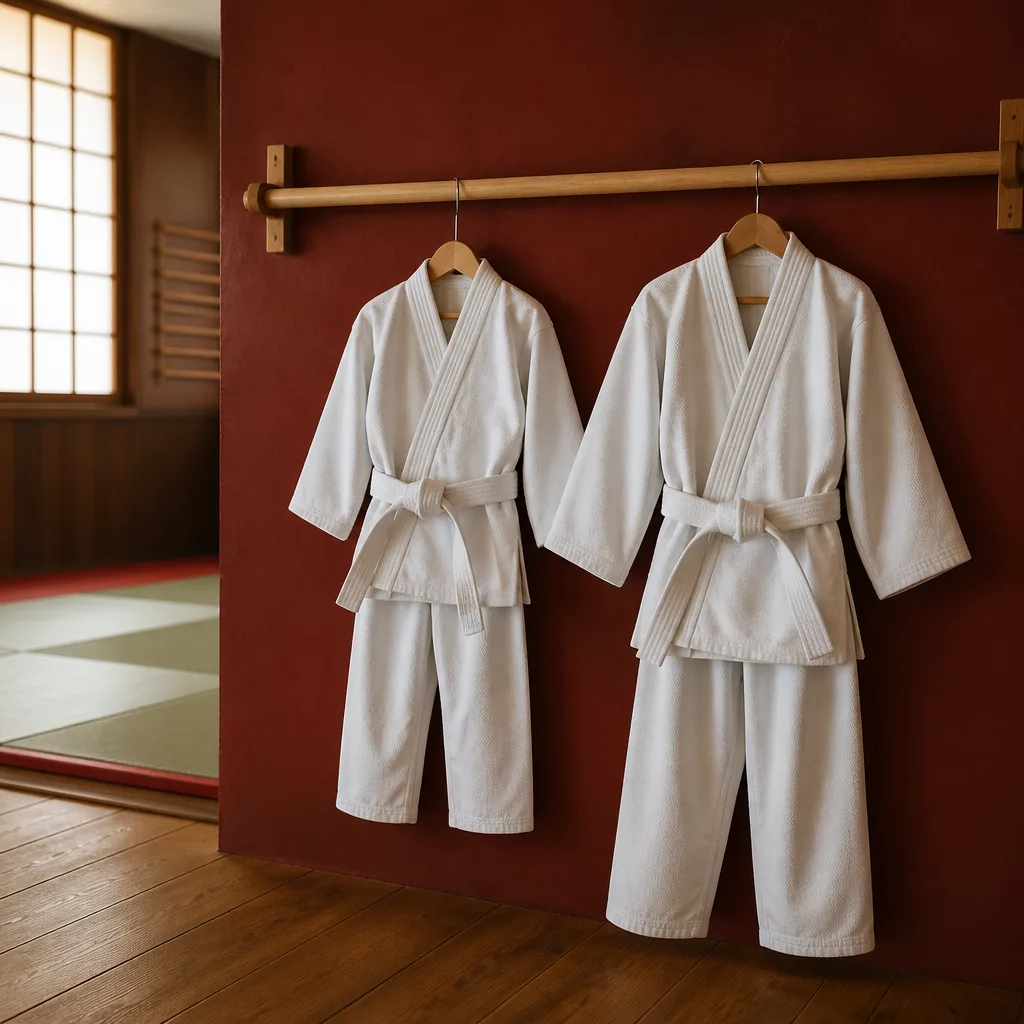
Children's gis and doboks are generally lighter in weight than adult competition uniforms, since a heavy competition weight jacket, common in adult judo at 450 to 750 gsm, would be uncomfortable and restrictive for a small child moving through drills for an hour. Lighter fabric also dries faster, which matters for busy family laundry schedules.
Reinforced knees and elbows are a useful feature to look for in children's grappling uniforms specifically, since young students tend to spend more unstructured time on the floor during games and drills than adults typically do in a structured class.
 Matching productKids karate giAmazon →
04
Sizing by height: a general guide
| Approximate height | Typical uniform size range | Notes |
|---|---|---|
| 100 to 120 cm | Smallest children's sizes | Very light fabric weight, short sleeve and trouser length |
| 120 to 140 cm | Small to medium children's sizes | Most common range for early primary school age students |
| 140 to 160 cm | Large children's or youth sizes | Often overlaps with the smallest adult sizes for some brands |
| 160 cm and above | Youth or smallest adult sizes | Compare a specific size chart rather than relying on age alone |
Because age and height vary so much between individual children, always check a specific size chart against a current height measurement rather than relying on age recommendations alone.
05
Belts and grading for children
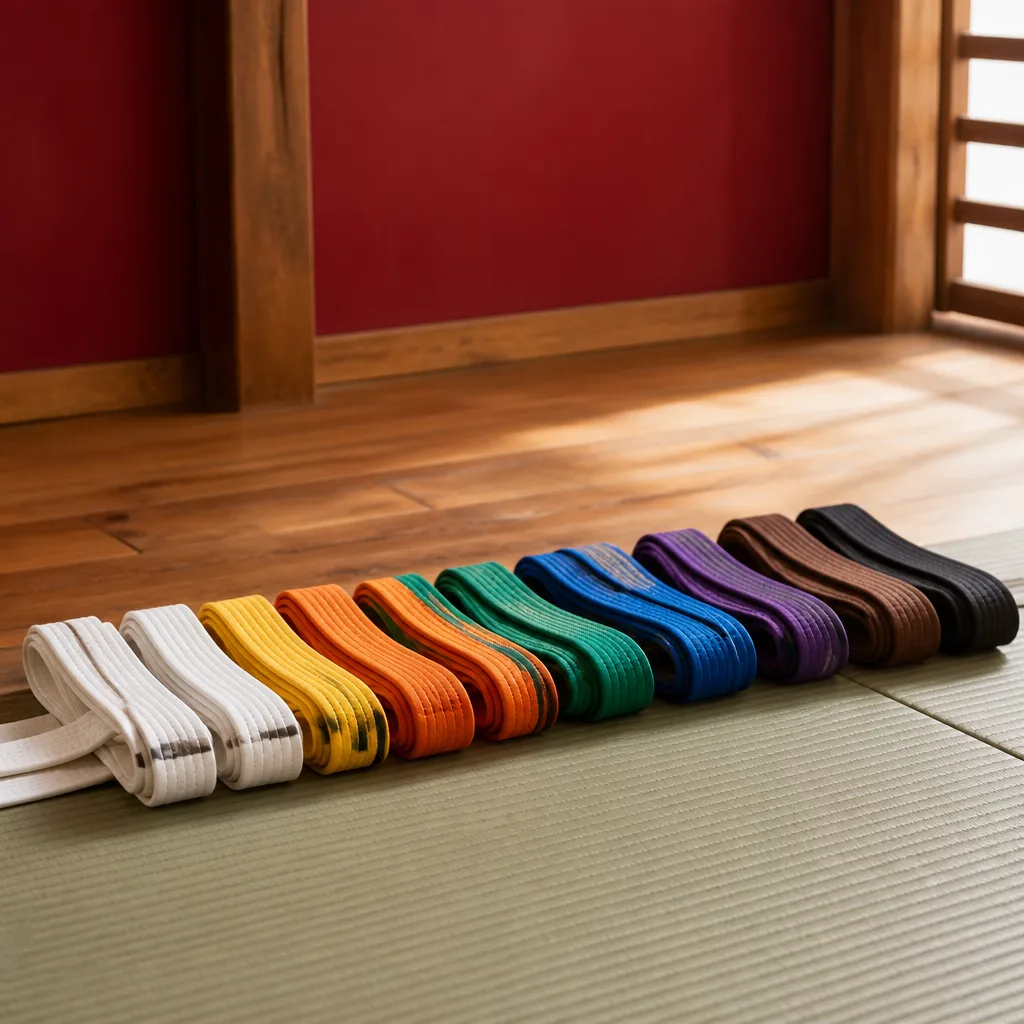
Many schools use a more finely graded belt system for children than for adults, sometimes adding extra stripes or intermediate colours between the main kyu grades, specifically to give younger students more frequent, achievable milestones. This is a teaching choice made by individual schools rather than a universal rule, and it varies considerably between styles and clubs.
A child's belt, like an adult's, is generally treated as part of the fabric and stitching that should not be washed frequently, since repeated washing can cause the internal layers to separate. Wiping with a damp cloth is a gentler option when a belt gets dirty. Our belt guide and tying instructions covers structure and tying technique in more depth.
 Matching productMartial arts beltAmazon →
06
Keeping motivation through the gear itself
For many children, gear is part of what makes training feel real and exciting, and involving a child in choosing their own bag or having them help fold and hang their gi after class can build a sense of ownership over their training. Letting a child see visible progress, such as a new stripe on a belt or simply a properly fitted uniform that shows they are growing, often supports motivation more directly than any equipment choice on its own.
Avoiding equipment that is uncomfortable, whether from poor sizing or a stiff, unwashed uniform, removes one of the more common, avoidable reasons a child loses enthusiasm for training in the first place.
07
Buying without overspending as children grow
Because children move through sizes quickly, many parents avoid buying at the top of a size range for each item and instead prioritise a correctly fitted uniform and any genuinely required protective gear, treating everything else as optional until a child shows they are sticking with the art. Passing uniforms and gear on to a younger sibling or another family at the club once a child outgrows them is common practice and a practical way to reduce how often new equipment needs to be bought outright.
Checking gear condition regularly, rather than assuming it still fits or still protects properly, matters more for children than adults simply because growth can outpace how often families think to check. A quick fit check at the start of each new term is a simple habit that catches most sizing problems before they become a safety issue.
08
Bags and everyday practicalities
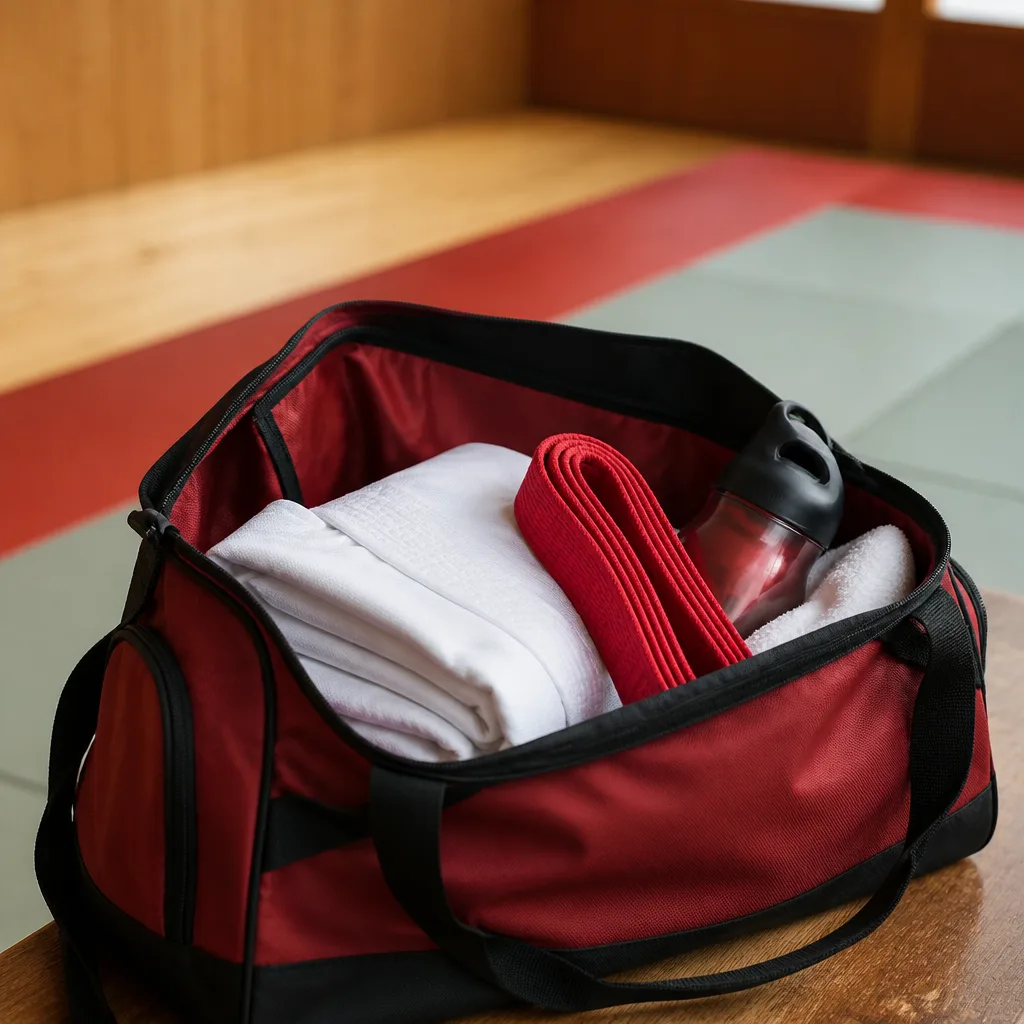
A lightweight bag a child can carry themselves, with enough room for a folded uniform, a belt, a water bottle and a small towel, helps build independence around getting ready for class. Mesh panels or a separate ventilated compartment for a used uniform help reduce odour building up in a bag that may sit in a car or school locker for hours before it gets home and can be aired properly.
Labelling gear with a child's name, particularly belts and any shared protective equipment used at a club, avoids mix ups in busy children's classes where several students may have very similar looking uniforms and gear.
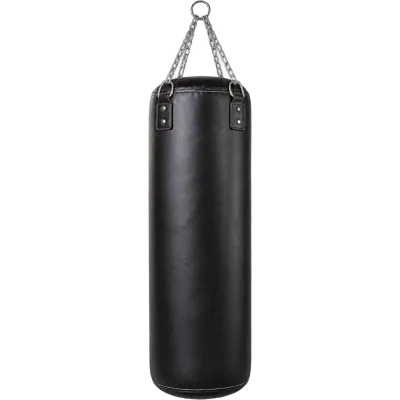 Matching productHeavy bagAmazon →
09
Frequently asked questions
How much bigger than current size should I buy for a growing child?
One size step ahead of a child's current height is a common, practical choice, giving room to grow without the uniform being unsafe or impractical to move in immediately.
Do young children really need full protective gear for light sparring?
Most clubs running children's classes require at least a mouthguard and, once any sparring contact begins, shin guards or head guards appropriate to that club's specific contact rules, so check directly with the instructor.
How often should a child's mouthguard be replaced?
More often than an adult's, since growing teeth and jaws change the fit. Checking at the start of each new training season is a sensible habit.
Is a lighter uniform less durable for an active child?
Not necessarily. Children's uniforms are made lighter deliberately for comfort and movement, and reinforced stitching at the knees and elbows helps them handle active floor work well.
Should a child's belt be washed the same way as their gi?
No, belts are generally treated more gently than the rest of the uniform. A damp cloth wipe is a common approach rather than a full machine wash.
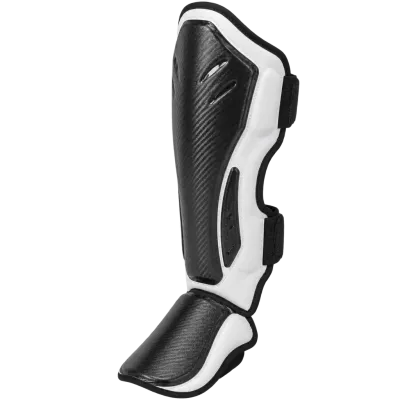 Matching productShin guardsAmazon →
Explore
Read next
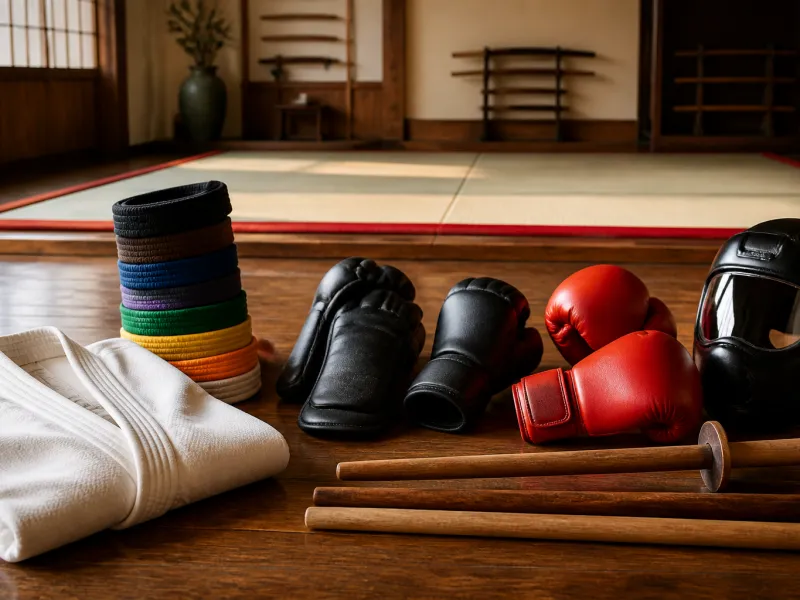 Martial Arts and Their Equipment: A Complete OverviewAn overview of the martial arts covered on budoshop.com and the uniforms, protective gear and training weapons each one typically uses.
 Martial Arts Equipment Buying GuideA practical, step by step guide to buying the right martial arts equipment for your art and level, from your first uniform to protective ge…
 Uniforms and Belts ExplainedA guide to how gi, dobok and hakama are constructed, what federations allow, and how belt colours and grading systems work across schools.