
6 min read
Training at Home: Setting Up a Home Dojo
How to set up a safe, effective space to train martial arts at home, from mats and a heavy bag to solo drills and keeping a consistent routine.
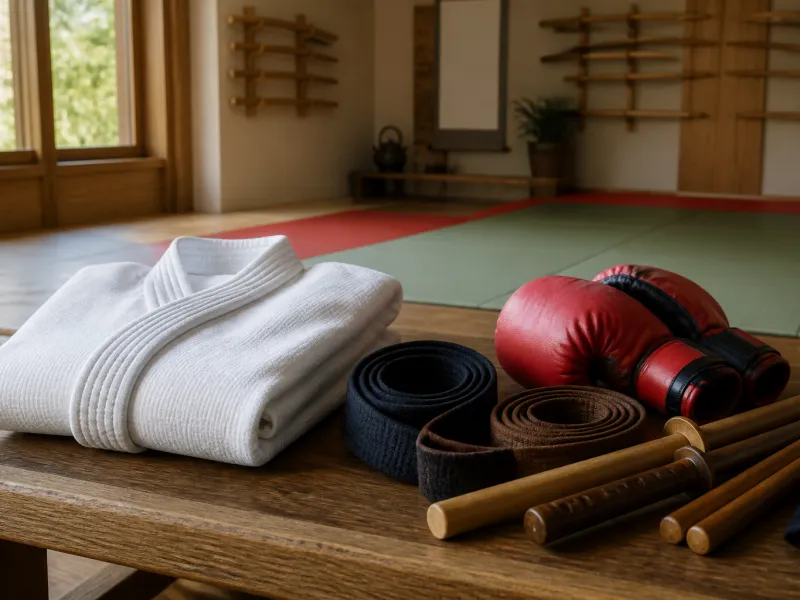
Training at home cannot fully replace supervised class time, especially for techniques involving a partner or weapons, but a well set up space lets you reinforce what you learn, keep moving between sessions and build a consistent habit. This guide covers the practical side of a home dojo: choosing space and mats, useful equipment, safe solo drills and how to keep a routine going.
Always follow your instructor's guidance on which techniques are safe to practise alone, and never attempt sparring, throws or weapons work without appropriate supervision and space until you are confident and experienced.
01
Choosing and preparing your space
Most home training does not need a large area. A clear space roughly 2 by 2 metres is enough for warm ups, solo drills and many kata or forms, while striking a bag or working with a partner needs more room to move freely without hitting furniture or walls. Check the ceiling height if your art includes weapons or jumping techniques, and clear the area of loose rugs, low furniture and breakable objects before every session.
Flooring matters as much as floor space. A hard floor is fine for many standing drills, but any falling, rolling or ground work needs cushioning. If you train on a hard surface without dedicated mats, keep sessions to techniques that do not involve falls.
02
Mats and flooring
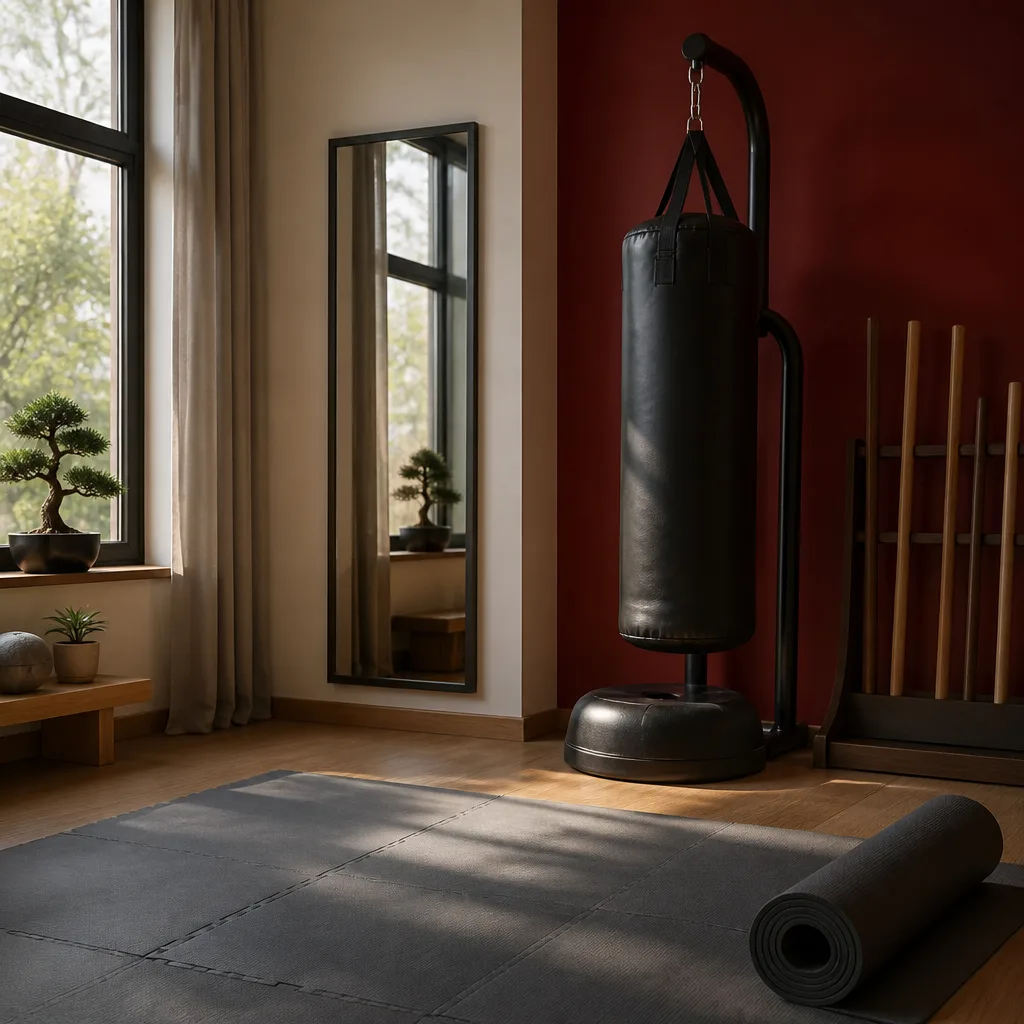
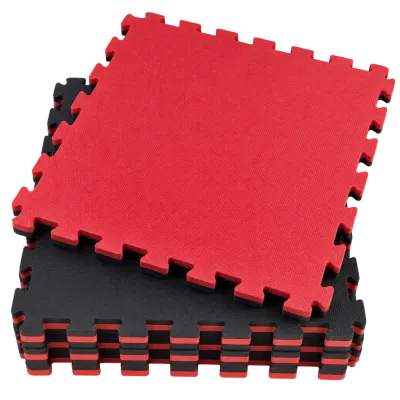
Tatami style mats or foam puzzle mats are the most common home solution, since interlocking pieces can be laid out before a session and stored away afterwards in a smaller footprint. Thickness matters for impact absorption: thinner mats, often used for standing practice and light drilling, offer less cushioning than thicker mats intended for falls and ground work. Check the manufacturer's thickness in centimetres and choose according to what you actually plan to practise, since a mat built for standing drills is not necessarily adequate for breakfalls. See our mats and flooring guide for a full comparison of mat types and how to size an area.
| Mat type | Good for | Notes |
|---|---|---|
| Thin foam puzzle mats | Standing drills, light footwork | Easy to store, limited fall protection |
| Thick foam or tatami style mats | Breakfalls, ground work, throws | Bulkier to store, better impact absorption |
| Roll out mats | Larger continuous surfaces | Fewer seams, heavier to move |
 Matching productPuzzle matsAmazon →
03
Heavy bag and stand
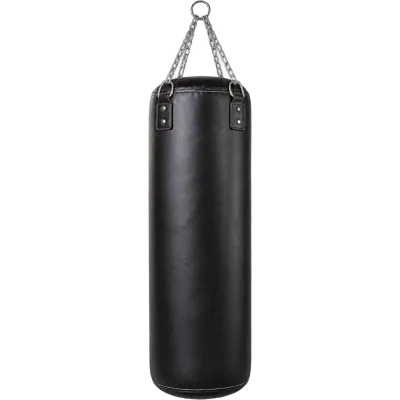
A heavy bag supports striking practice for karate, taekwondo, boxing, kickboxing and MMA, letting you work power, combinations and conditioning without a partner. A freestanding bag with a weighted or water filled base suits homes without a suitable ceiling beam or wall bracket, while a hanging bag needs a secure mounting point rated for the bag's weight, since an insecure mount is a genuine safety risk. Whichever type you choose, check the floor space around it is clear, and wear appropriate hand protection, since bare knuckle bag work at full power carries real risk of injury over time.
 Matching productHeavy bagAmazon →
04
Pads with a partner
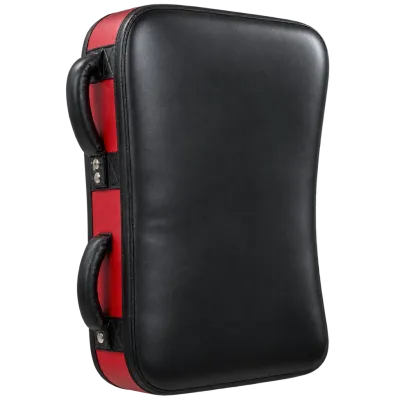
If you train with a partner or family member at home, focus mitts and kick shields let you practise timing, distance and power in a controlled way that a static bag cannot fully replicate, since a partner can move, react and hold targets at different heights and angles. Agree on pace and power before starting, use clear verbal signals to start and stop, and keep sessions well within both partners' comfort and skill level. Pad holding itself is a skill, and an inexperienced holder can mistime a pad and be struck incorrectly, so start slowly.
 Matching productKick shieldAmazon →
05
Makiwara and solo striking tools
A makiwara is a traditional striking post, historically used in karate to condition the hands and refine striking alignment through repeated, controlled contact. It is an advanced tool that should be introduced gradually and only with correct technique, since improper use risks injury to the hands and wrists. A padded wall target, sometimes called a makiwara pad, offers a gentler alternative for home use, giving some resistance feedback without the conditioning intensity of a traditional post. See the makiwara and wall pad glossary entries for more on the distinction.
06
Mirrors
A wall mirror is one of the most useful and least expensive additions to a home training space, since it lets you check stance, posture and technique alignment without a partner or instructor present. Position it so you can see your full body during stances and kicks, and use it particularly when practising kata or forms, where consistent alignment matters as much as power.
07
Training with weapons safely at home
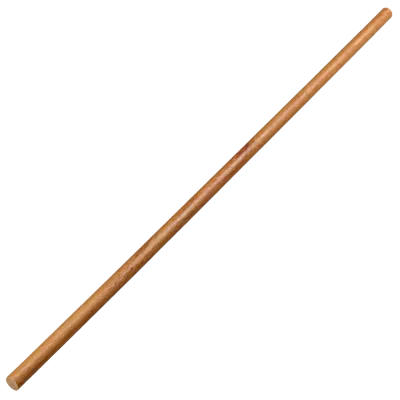
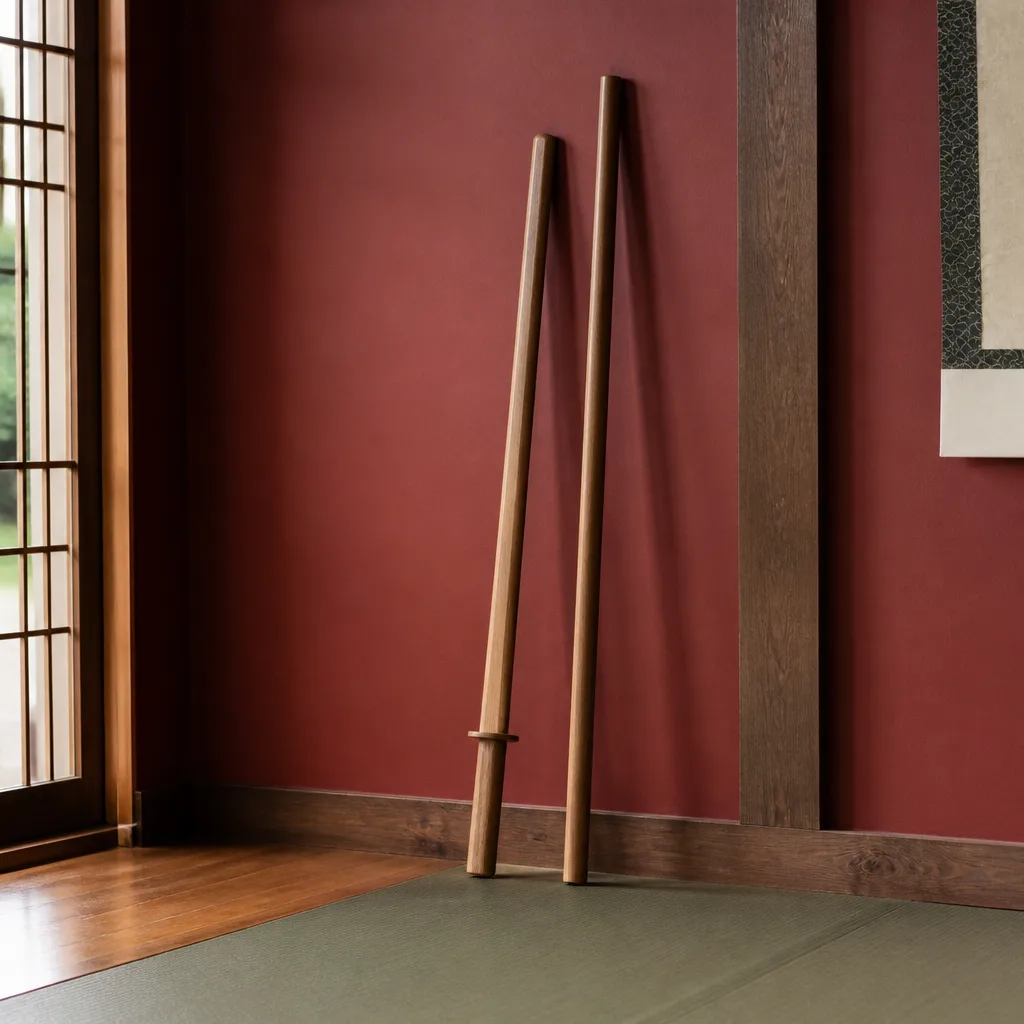
Wooden training weapons such as the bo staff, jo staff and bokken can be practised at home for solo forms once your instructor has taught the correct technique, but they need enough clear space that a full swing cannot reach furniture, walls, light fittings or another person. Check ceiling height for overhead movements, and store weapons safely out of reach of children when not in use. Bladed or edged training tools, and live blades used in advanced iaido and related practice, are not appropriate for unsupervised home use for anyone without significant experience and should be handled strictly according to your instructor's rules. See the weapons training guide for an overview by art and level.
 Matching productBo staffAmazon →
08
Warm up and solo drills
A short warm up before any home session reduces injury risk and improves the quality of practice that follows. A simple structure works well for most arts.
| Phase | Approximate time | Focus |
|---|---|---|
| General warm up | 5 to 8 minutes | Light cardio, joint mobility |
| Dynamic stretching | 3 to 5 minutes | Movement specific to kicks, stances or footwork |
| Solo drills | 10 to 20 minutes | Basic techniques (kihon), combinations, footwork |
| Kata or forms practice | 10 to 20 minutes | Sequence accuracy, balance, breathing |
| Cool down | 5 minutes | Static stretching, breathing |
Basic techniques, known as kihon in several Japanese arts, are well suited to solo home practice, since they focus on repetition and form rather than reacting to a partner. Footwork, stance transitions and shadow sparring, where you move and strike against an imagined opponent, all translate well to a home setting with modest space.
09
Kata practice
Kata, or forms, are set sequences of movements found across many arts, and they are ideally suited to solo home training because they are designed to be practised alone. Use a mirror to check stance and alignment, break a long kata into shorter sections when first learning it, and only add speed and power once the sequence itself is accurate. Recording yourself on a phone propped against a stable surface can also help you spot timing or balance issues that are hard to notice while performing the sequence.
10
Keeping a routine
The biggest challenge of home training is usually consistency rather than equipment. A realistic, repeatable schedule beats an ambitious one that is hard to sustain. Many students find that setting a fixed time, keeping sessions short on busy days rather than skipping them entirely, and briefly noting what was practised each session helps maintain momentum between classes. Treat home training as a complement to instruction, not a replacement for it, and bring questions about technique back to your instructor rather than trying to resolve them alone. Our home dojo setup guide and beginners' first gear guide offer further detail on building out a home space over time.
11
Frequently asked questions
Can I learn a martial art entirely at home?
Not safely or fully. Partner work, sparring, throws and weapons technique need supervised instruction. Home training is best used to reinforce what you already learn in class.
What is the minimum equipment to start training at home?
A clear space, appropriate footwear or bare feet depending on your art, and a mirror are often enough to begin. Mats, a bag and pads can be added as your training develops.
Is it safe to practise kicks and strikes on a home heavy bag?
Yes, with appropriate hand and foot protection and correct technique. Poor technique repeated on a bag can reinforce bad habits or cause injury over time, so check form with your instructor.
How much space do I actually need?
Many solo drills and kata fit in a few square metres. Striking equipment, weapons and any partner work need considerably more clear space, so plan according to what you intend to practise.
Should children train unsupervised at home?
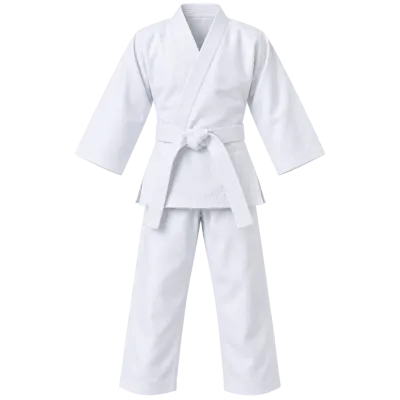
Children should always be supervised by an adult during home practice, particularly around equipment such as bags, mats and any weapons.
 Matching productKids karate giAmazon →
Explore
Read next
 Martial Arts and Their Equipment: A Complete OverviewAn overview of the martial arts covered on budoshop.com and the uniforms, protective gear and training weapons each one typically uses.
 Martial Arts Equipment Buying GuideA practical, step by step guide to buying the right martial arts equipment for your art and level, from your first uniform to protective ge…
 Uniforms and Belts ExplainedA guide to how gi, dobok and hakama are constructed, what federations allow, and how belt colours and grading systems work across schools.