
6 min read
Weapons training guide: bo, jo, bokken, sai, tonfa and nunchaku
A practical overview of bo, jo, bokken, sai, tonfa and nunchaku, covering sizing, safety and storage.
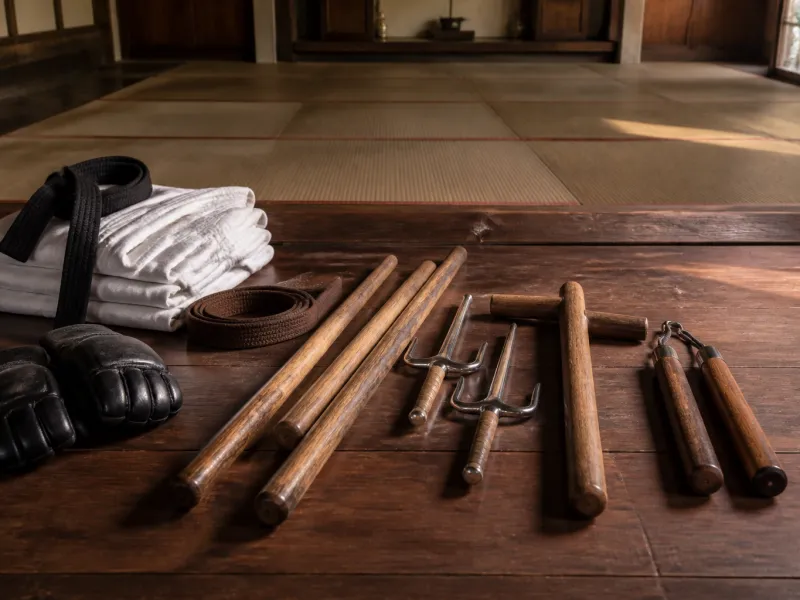
Traditional training weapons appear across many martial arts, from the long bo staff of karate and kobudo to the wooden bokken used in aikido and iaido, and the short paired sai and tonfa of Okinawan weapons systems. Training with a weapon adds an extra layer of coordination, distance management and discipline, and it comes with its own set of sizing, safety and storage considerations.
This guide gives a practical overview of the most common training weapons: bo, jo, bokken, sai, tonfa and nunchaku, along with general safety practice, storage advice and a few general legal notes that vary by country.
01
Overview of traditional training weapons
Most traditional weapons training uses wood, since wooden weapons are durable, relatively forgiving on impact compared with metal, and widely accepted for practice. Padded foam versions of several of these weapons also exist and are commonly used for beginners, for partner drills involving contact, or for children's classes, since they greatly reduce the risk of injury while the underlying technique is learned.
The table below gives a general comparison of typical length and common materials for the weapons covered in this guide, useful as a quick reference when you are new to a style and hearing several unfamiliar names at once.
| Weapon | Typical length | Common materials |
|---|---|---|
| Bo staff | around 180 cm | oak, rattan, hickory, foam padded practice versions |
| Jo staff | around 127 cm | oak or similarly dense wood |
| Bokken | around 100 cm | oak, Japanese white oak |
| Sai | around 45 to 55 cm | metal, or blunt synthetic training versions |
| Tonfa | around 45 to 55 cm | wood, synthetic materials |
| Nunchaku | two sections of around 30 cm each | wood, foam padded or plastic training versions |
 Matching productBo staffAmazon →
02
Bo staff: wood types and lengths
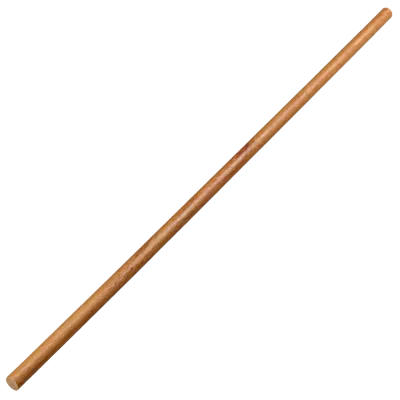
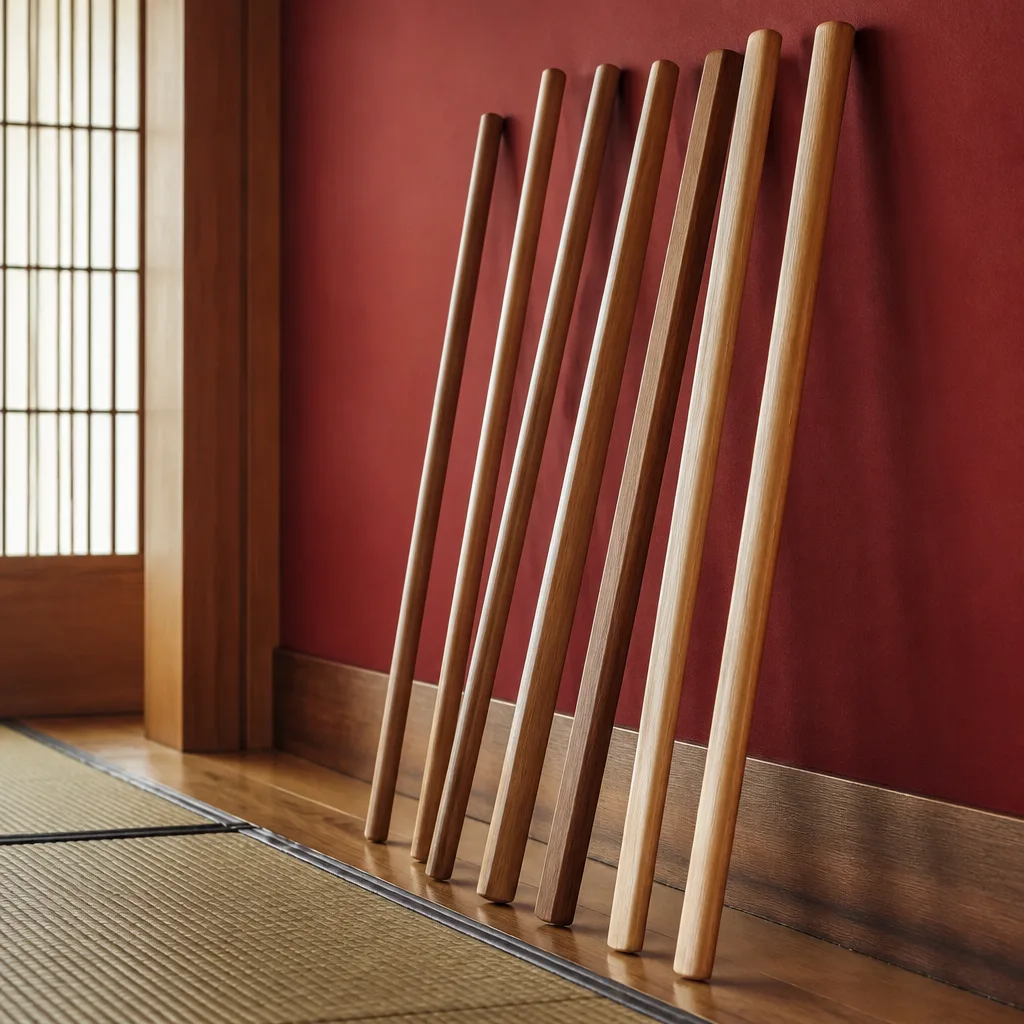
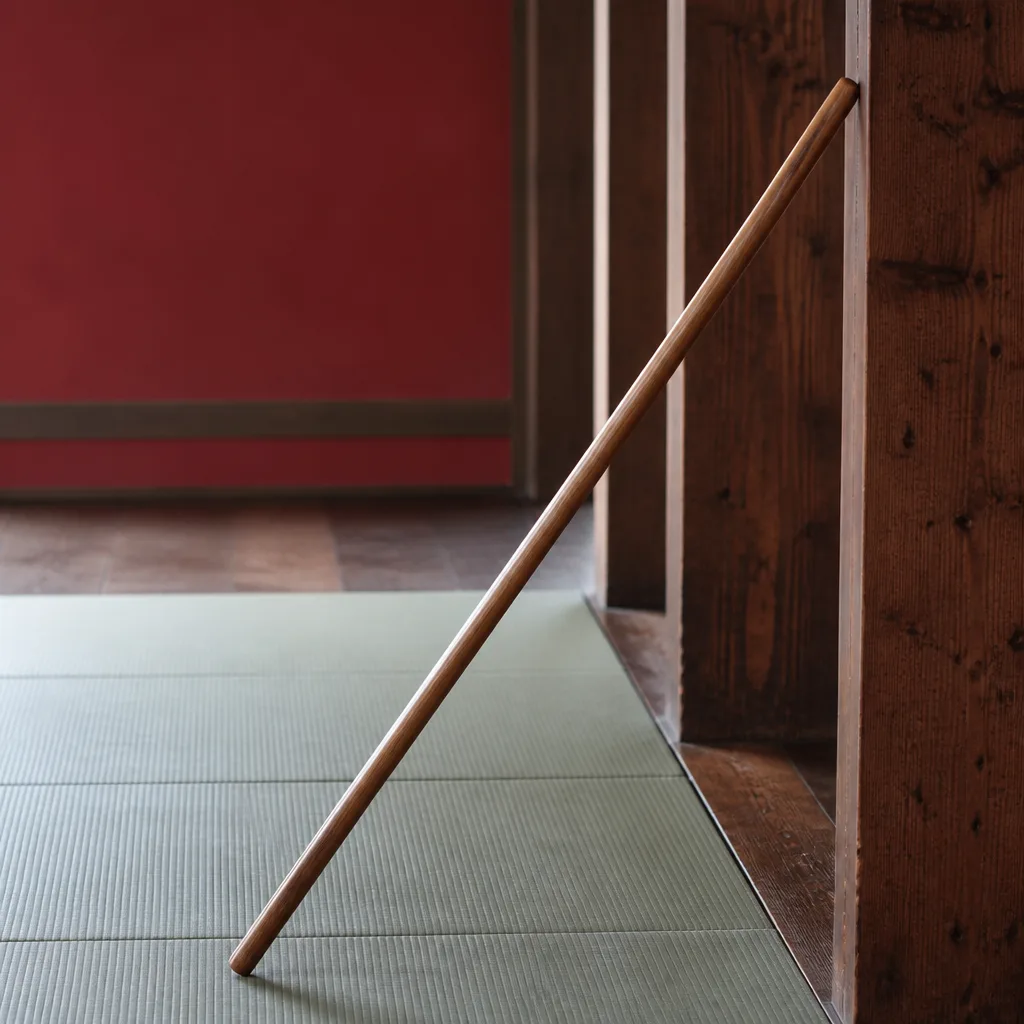
The bo is a long staff, traditionally around 180 cm (roughly six feet), though shorter versions exist for smaller practitioners or younger students. Common woods include oak, which is heavy and very durable, and rattan or hickory, which are lighter and have some flex, absorbing shock better on contact. Diameter is typically around 2.5 to 3 cm. Beginners often start with a lighter wood or a padded practice bo before progressing to a heavier hardwood staff as their technique and strength develop.
03
Jo staff: dimensions and use
The jo is a shorter staff, most often around 127 cm long with a diameter of about 2.4 cm, closely associated with aikido weapons training (aiki jo) as well as some styles of jodo. Its shorter length allows for quicker, closer range techniques than the bo, including strikes, blocks and joint control applications when paired with empty hand movement. Jo are usually made from oak or a similarly dense, straight grained wood to withstand repeated strikes against a bokken or another jo.
 Matching productBokkenAmazon →
04
Bokken: wooden sword training
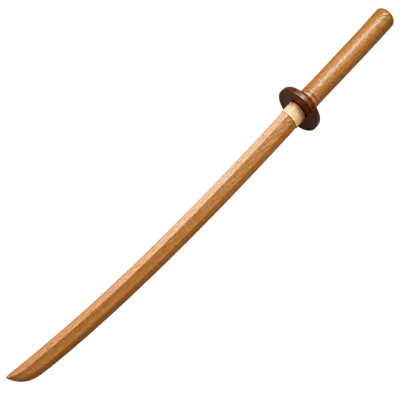
A bokken is a wooden practice sword, generally modelled on the length and curve of a Japanese long sword, used widely in aikido, iaido and kenjutsu. Bokken are typically carved from a single piece of hardwood such as oak or Japanese white oak, and their weight and balance are meant to closely mirror a real blade so that cutting angles, distance and timing translate to live sword work. A bokken is not sharp, but it is solid and unforgiving on impact, so full speed partner drills with a bokken require careful supervision and progressive training. This differs from an iaito, a blunt metal practice sword used mainly for solo forms, which our glossary entry on the iaito explains in more detail.
 Matching productHakamaAmazon →
05
Sai and tonfa: paired weapons
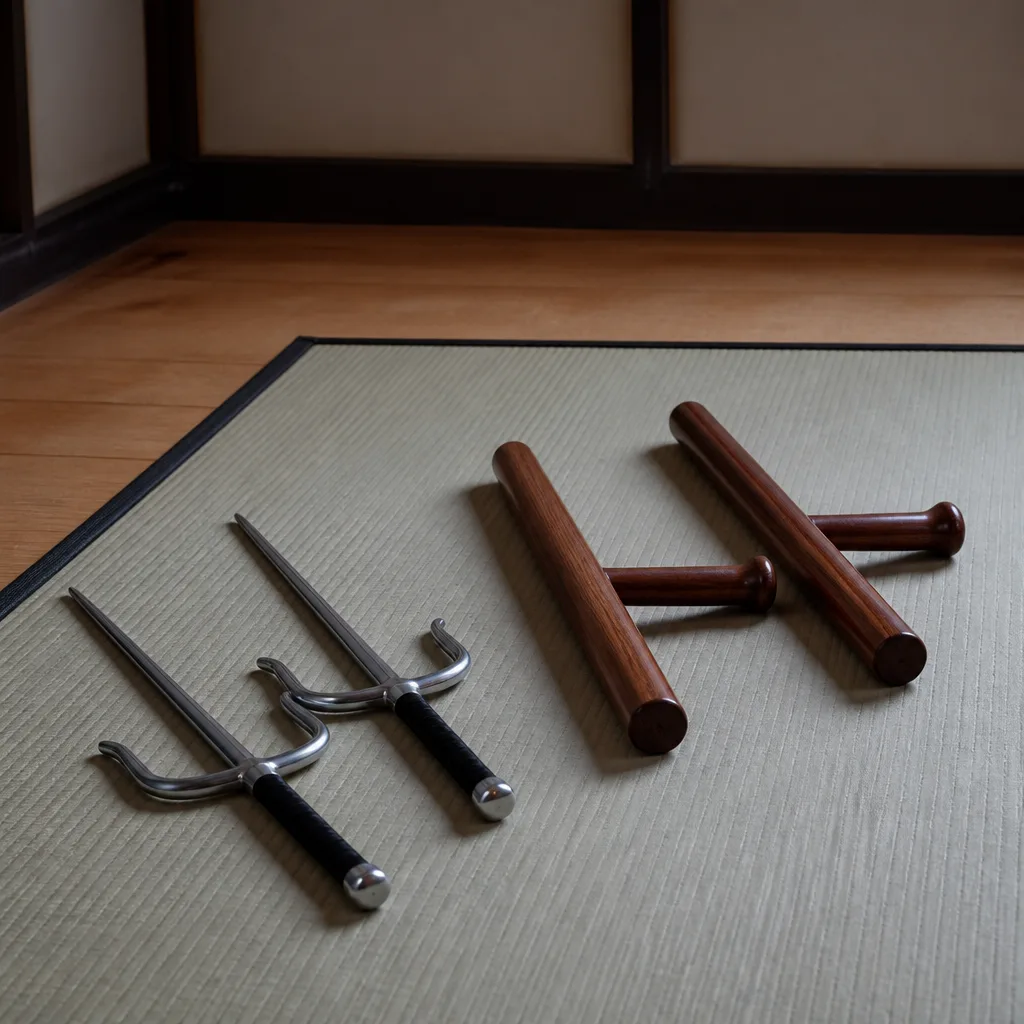
Sai are metal, dagger shaped weapons with two curved prongs guarding the handle, traditionally used in pairs (and sometimes a third carried at the belt). They are gripped along the forearm for blocking as well as by the handle for striking, and their weight is concentrated toward the handle end. Tonfa are wooden or synthetic batons with a perpendicular side handle, historically associated with Okinawan kobudo and also the design basis for some modern police batons. Both weapons demand careful handling since a mistimed spin or release can strike the user or a training partner, so instruction usually progresses slowly from static handling to partner drills.
 Matching productMartial arts beltAmazon →
06
Nunchaku: training versions and safety
Nunchaku consist of two sticks connected by a cord or chain, and they are among the most demanding traditional weapons to control safely because of how easily momentum can carry them back toward the user. For this reason, foam padded or lightweight plastic training nunchaku are strongly recommended for beginners, with solid wood versions reserved for experienced practitioners under direct supervision. Even experienced users generally train nunchaku technique slowly at first when learning a new pattern, only building up speed once the movement is consistent.
07
General safety practices
A few safety habits apply across all traditional weapons training.
- Always check wooden weapons for cracks, splinters or loose fittings before use, and retire any weapon that shows damage.
- Maintain clear distance from training partners and spectators when swinging any weapon, especially during the first repetitions of a new technique.
- Progress from slow, controlled solo practice to partner drills only once basic control is consistent.
- Use padded or foam versions for children's classes or early stage partner work.
- Follow your instructor's guidance on grip, since an incorrect grip is a common cause of a weapon slipping during a technique.
08
Legal considerations and storage
Rules on owning, carrying and transporting training weapons vary considerably between countries and even between regions within a country, and some jurisdictions treat certain weapons, particularly nunchaku, more strictly than others. Because these rules change and differ locally, always check current regulations in your own country or region before purchasing or transporting a weapon, and ask your dojo how they expect weapons to be carried to and from class. Travelling with a training weapon, whether by car or public transport, may also be treated differently to keeping it at home or at the dojo, so it is worth confirming what is expected before your first class if you are unsure.
At home, store training weapons out of reach of children, ideally in a dedicated bag, rack or cabinet, and keep them away from damp conditions that can warp wood or promote rust on any metal fittings. A wall mounted rack keeps weapons visible and easy to inspect for damage, while a padded bag is more practical for anyone regularly transporting weapons to and from a dojo. For general storage ideas that also apply to mats and other training equipment, see our home dojo setup guide.
 Matching productHeavy bagAmazon →
09
Frequently asked questions
What is the difference between a bo and a jo?
The bo is the longer of the two, around 180 cm, while the jo is shorter, around 127 cm, which gives it a different range and a distinct set of techniques, often practised alongside empty hand aikido movement.
Is a bokken sharp?
No, a bokken has no edge, but it is a solid piece of hardwood and can cause injury on hard contact, so it should always be handled and used under proper supervision.
Are foam training weapons a good option for beginners?
Yes, foam or padded versions of bo, jo, nunchaku and similar weapons are widely used for beginners and children, since they allow technique to be learned with a much lower risk of injury.
Can I legally own a training weapon such as nunchaku where I live?
This depends entirely on local law, which varies widely and changes over time, so it is important to check current rules in your own country or region rather than assume what applies elsewhere.
How should I store wooden weapons at home?
Keep them somewhere dry, out of direct sunlight and out of reach of children, ideally in a rack or padded bag, and check them periodically for cracks or warping.
 Matching productKids karate giAmazon →
Explore
Read next
 Martial Arts and Their Equipment: A Complete OverviewAn overview of the martial arts covered on budoshop.com and the uniforms, protective gear and training weapons each one typically uses.
 Martial Arts Equipment Buying GuideA practical, step by step guide to buying the right martial arts equipment for your art and level, from your first uniform to protective ge…
 Uniforms and Belts ExplainedA guide to how gi, dobok and hakama are constructed, what federations allow, and how belt colours and grading systems work across schools.